Don’t call it a bubble, friends!
Microsoft has bet heavily on OpenAI to fuel its own AI efforts, spearheaded by Microsoft Copilot. So far, Copilot has been something of a dud for any serious real-world use case, requiring constant human intervention to fact check and correct errors. Much the same is true for Google Gemini, Grok, and other artificial intelligence platforms, which so far seem to have found a niche as expensive meme creation tools — nowhere near providing the promised productivity boost. That isn’t stopping the speculation, though.
Best picks for you
The assumption is that one day LLMs and other technology fostered by Google Gemini and OpenAI ChatGPT actually will be a great and infallible productivity tool for genuine work. It already is decent for providing basic overviews of highly-covered, well-sourced topics, even as hallucinations and sycophancy continue to dog the tech, particularly in situations where accountability is more critical.
Despite today’s downsides, many companies are salivating at the idea of cheap virtual humans replacing real humans who need money to eat and time to sleep. Big Tech is racing to meet this possibility with panicked fervour, and recent analyses from FT and HSBC (via Fortune) suggest that things are potentially getting a bit … irrational.

OpenAI’s monstrous cloud demands are fuelling a debt bubble that have dire consequences for global economic stability. (Image credit: Microsoft)
Recent data shows that companies are increasingly relying on debt, rather than real revenue and cashflow to fund commitments to OpenAI and vice-versa. OpenAI has made a truly staggering $1.4 trillion (with a T) in commitments for compute to meet its projected needs, despite posting a “paltry” $20 billion in revenues this annum. To put it into context, $20 billion represents just 1.43~% of that $1.4 trillion commitment. It’s a truly insane gap.
OpenAI is exploring a range of revenue-generating initiatives to change its fortunes, including in-line ads within ChatGPT. Although a lot of it revolves around replacing human workers with AI, particularly in hospitality and customer service sectors. It would be theoretically far cheaper for very large companies to replace their human workers with ChatGPT, even if those contracts cost millions. That is, if it can provide customers with a satisfactory experience. Gartner previously projected that many companies turning to AI to replace workers are already reversing course. But I digress.
HSBC projects that even if OpenAI is making $200 billion by 2030, it would still need a staggering $207 billion in funding to stay afloat. As OpenAI scales, so does its costs. Its expensive frontier models like Sora 2 and GPT-5 cost millions of dollars a day to run, requiring enormous amounts of compute. These models are given away at cost in attempts to drive adoption, create lock-in, and essentially alter human behavior. You can think of it similarly to Spotify, which spent well over a decade completely unprofitable until it had basically re-written the way humans consume music and how labels distribute music. OpenAI is trying to achieve a similar result on a far, far larger, and potentially far more damaging scale.
Spotify collapsing wouldn’t have had any impact on the global economy. But, if we get to a point where it seems the economics of “AI” and LLMs simply don’t work — it could have a similar impact on markets to the dot com bubble or the credit crunch. There’s simply so much invested in these companies and initiatives right now, that inability to service the debt would trigger a wave of instability.
Microsoft and others are increasingly turning to debt to fund its AI craze

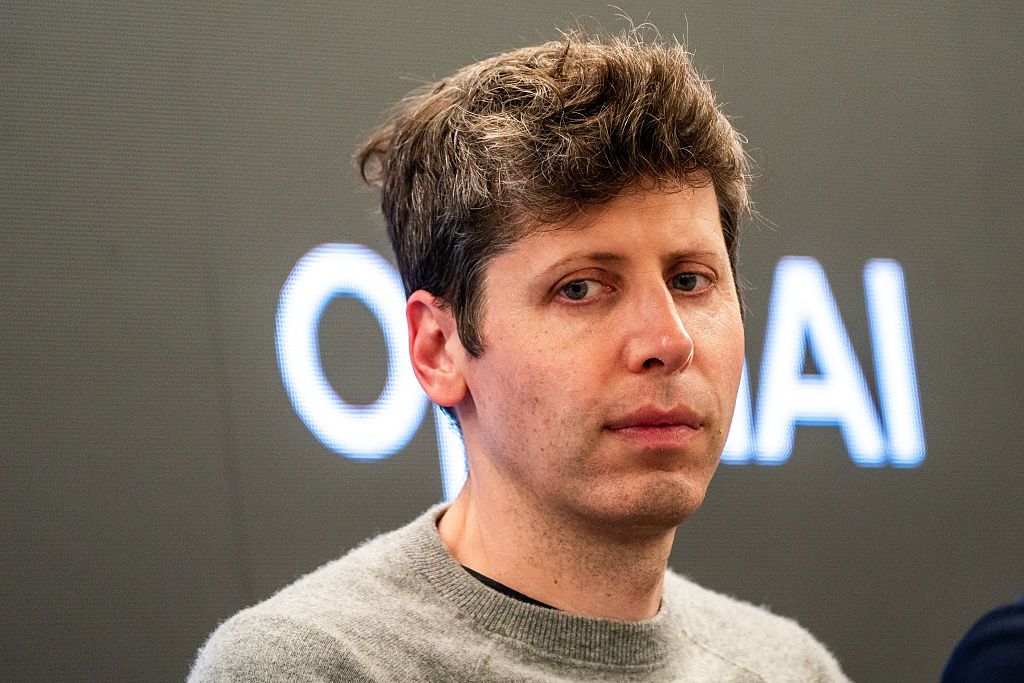
Microsoft CEO Satya Nadella has previously described how it physically can’t source enough electricity to connect GPUs it has in stock. (Image credit: Simon Dawson/Bloomberg via Getty Images)
Whether it’s power constraints, model inbreeding damaging long-term viability of data quality, or simply because it actually sucks and is nothing more than a novelty — it could be the case that AI is simply not destined to make real money. This is one reason why Microsoft has been focusing on efficiency and low-power consumption in its home-grown MAI models. Microsoft has focused its efforts on the constraints of global compute and energy markets as the tech’s biggest bottleneck. But, like others, it’s betting the bulk of its AI future on OpenAI, and that bet is exactly that. A gamble.
The fragility of this whole ecosystem is increasingly coming to light. FT reports that of the $1.4 trillion compute commitments OpenAI has made, its partners are actually turning to debt themselves to meet those demands. Softbank, Oracle, CoreWeave, Blue Owl Capital, Crusoe, Vantage, and other venture capital firms and cloud providers have taken on a staggering $96 billion in debt in 2025 to give OpenAI the compute it’s asking for. OpenAI is reportedly on the hook to meet these commitments whether or not demand materializes, too.
The commitments are spread across the next eight years, and could trigger a cash flow crisis if OpenAI fails to find the funding to pay up. HSBC’s most optimistic estimates suggest that OpenAI will hit 3 billion weekly active users by 2030, with 300 million of those paying a subscription. Even with this scale, Microsoft and other OpenAI partners could be on the hook to plough hundreds of billions more into OpenAI to keep it cash flow positive. OpenAI recently restructured its deal with Microsoft to that end, to help it find other sources of revenue and compute.
Some of this analysis likely excludes fresh constraints, too, like the DRAM price crisis AI has triggered. Compute is going to get more expensive, not less expensive, with wafer and silicon capacity fully constrained. Microsoft CEO Satya Nadella recently explained how the company is leaving compute on the literal shelf because it physically can’t source the electricity it needs to meet demand. Will Microsoft et al. need to become energy suppliers on top of server companies? There’s also no guarantee that energy costs in general will remain stable either, as global politics and climate change also continue to play a role.
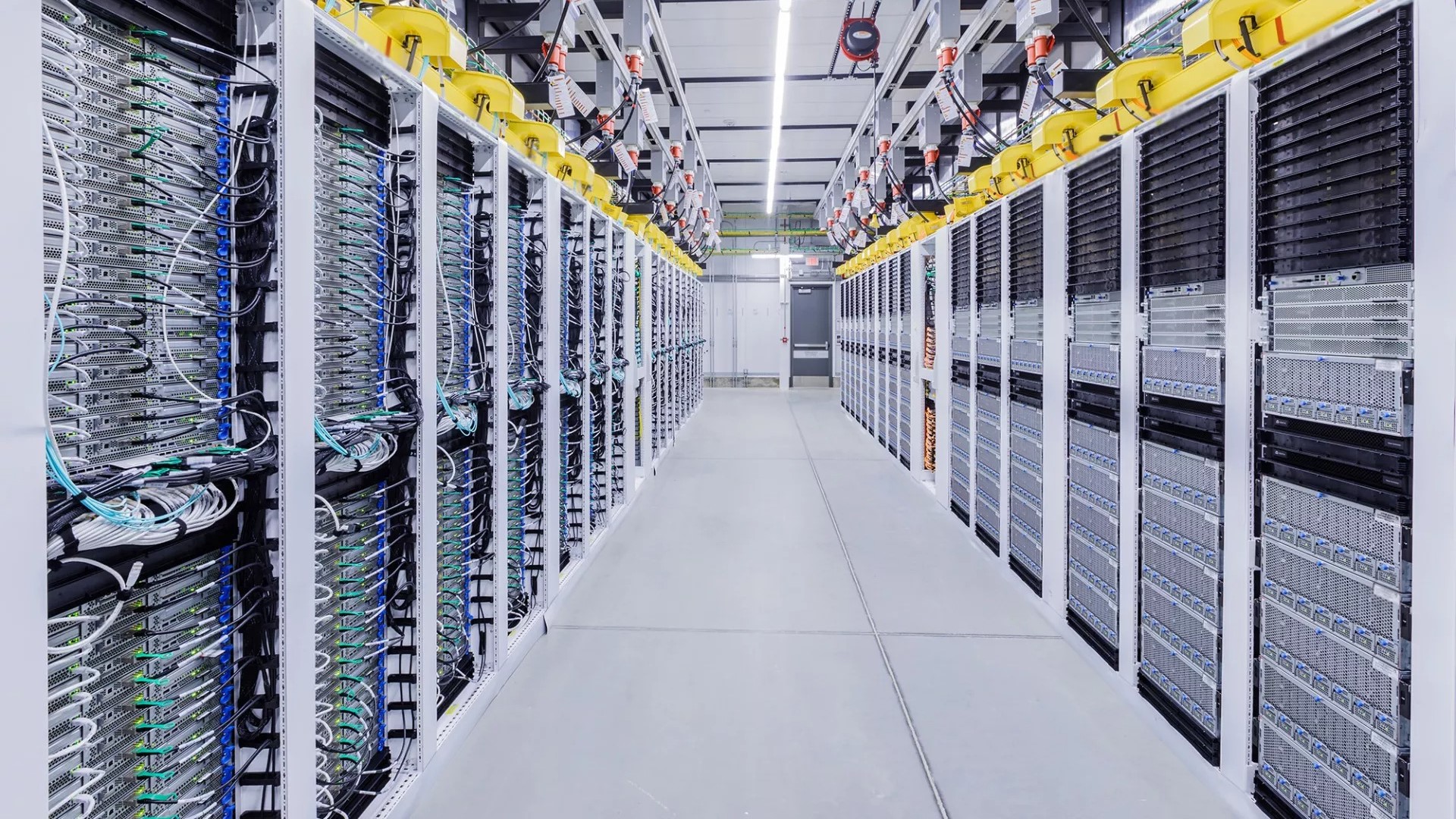
Microsoft Azure is one of the biggest cloud arrays in the entire world, and it’s nowhere near big enough to meet OpenAI’s scaling requirements. (Image credit: Microsoft)
OpenAI and other AI companies have been lobbying to make LLMs a matter of national security to that end, seeking full-blown government backing and guarantees. The delicate balance of debt and speculation threatens to wipe out billions if connected companies default and become insolvent, which will drive a wave of corrections hitting the biggest players like NVIDIA and Microsoft.
All of this falls apart if humans don’t adopt the tech. This is why you’ve seen Meta cram its lame chatbots into WhatsApp and Instagram. This is why Notepad and Paint now have useless Copilot buttons on Windows. This is why Google Gemini wants to “help you” read and reply to your emails. They’re trying to change our habits, because all of the projections rely on people becoming truly dependent on the technology. Whether or not it’s actually a good thing for society isn’t considered to be a factor.
They’re forcing it on us because if we don’t use it, if we don’t subscribe to it, buy products through it, or click on ads through it — the debt structure will inevitably implode. It will wipe out billions in unpaid loans. And as usual, the banks will be bailed out, and the tax payer will have to foot the bill. Higher costs, decreased employment opportunities, higher interest rates, and likely another round of sticky inflation. But hey, I’m sure all the big players will have cashed out their stocks way before any of that happens.
In reality, LLM technology is here to stay, but the constraints are becoming untenable. The efficacy and efficiency of the models at hyperscales has become the real bottleneck. Electricity and water requirements are impacting tax payers. Crucially, will people ever want to pay for this stuff? It’s not ideal that OpenAI’s success may depend on big companies using it to replace human workers at huge scales. How will people pay for OpenAI if nobody has a job? Where will OpenAI get its training data if the human-led information economy falls apart? The business model seems like a bit of a negative feedback loop, at least on the face of it.
Costs will have to come down rapidly in my view for any of this to actually work. It probably won’t be LLM research alone that fuels the next wave of innovation as a result, but energy and server technology breakthroughs. But that’s an exploration for another article.
Will OpenAI and others hit the profitability before the debt bubble bursts? It’ll be interesting to see what the next five years brings.
Black Friday 2025 | Quick Links

Follow Windows Central on Google News to keep our latest news, insights, and features at the top of your feeds!