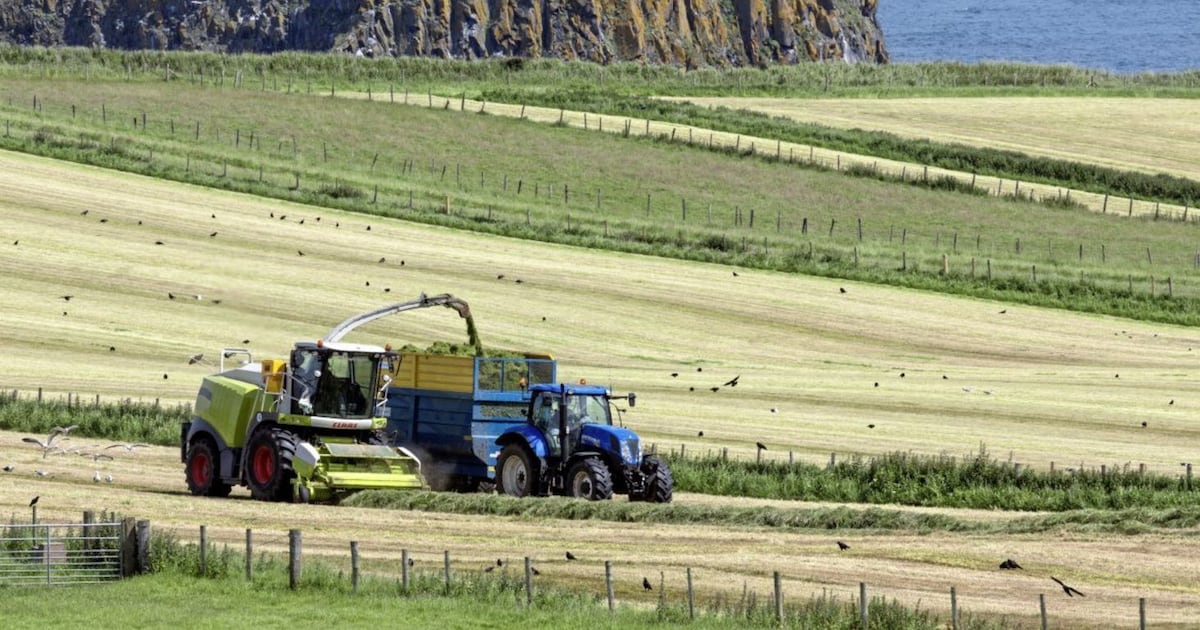
Rural women in the north are among those that could facing a “disproportionate” impact from the government’s future carbon-cutting budgets, according to a campaign group.
It comes at the end of a four-month consultation led by the Department for Agriculture, Environment and Rural Affairs (DAERA) into preparing for the north’s fourth carbon budget, due for 2038.
Carbon budgets, which set out the maximum amount of greenhouse gases that can be emitted in a five-year period, are now a statutory requirement following the introduction of the Climate Change Act in 2022.
Read more: What is required under Northern Ireland’s Climate Change Act?


The legislation was introduced with the aim of providing a system of reducing greenhouse gas emissions – namely reaching net-zero in the north by 2050.
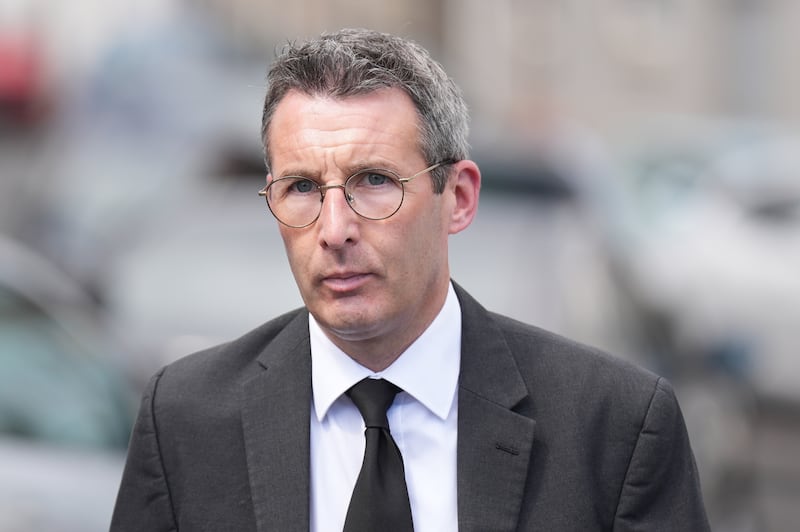 DAERA minister Andrew Muir said that the consultation was part of the department’s way of ensuring a “fair and just” gradual transition towards net-zero PICTURE: NIALL CARSON/PA
In launching the consultation, DAERA minister Andrew Muir said his department wanted to “allow for gradual transition which can be delivered in a fair and just way” as they work towards reducing emissions.
In their response, the Women’s Resource and Development Agency (WRDA) said it supported the carbon budget, but urged policymakers to “adopt a gender-sensitive approach to climate action”.
Speaking to The Irish News, WRDA policy assistant Meghan Hoyt said that climate change was “not gender-neutral” and that like “any big, multifaceted crisis or problem”, it will impact society along the “structures that are already embedded”.
“The structure of gender discrimination, of patriarchy – whatever name or label you want to put on it – obviously comes into play when we’re talking about climate change and how we address climate change,” she said.
“And I would say the same goes for other intersecting oppressed groups.”
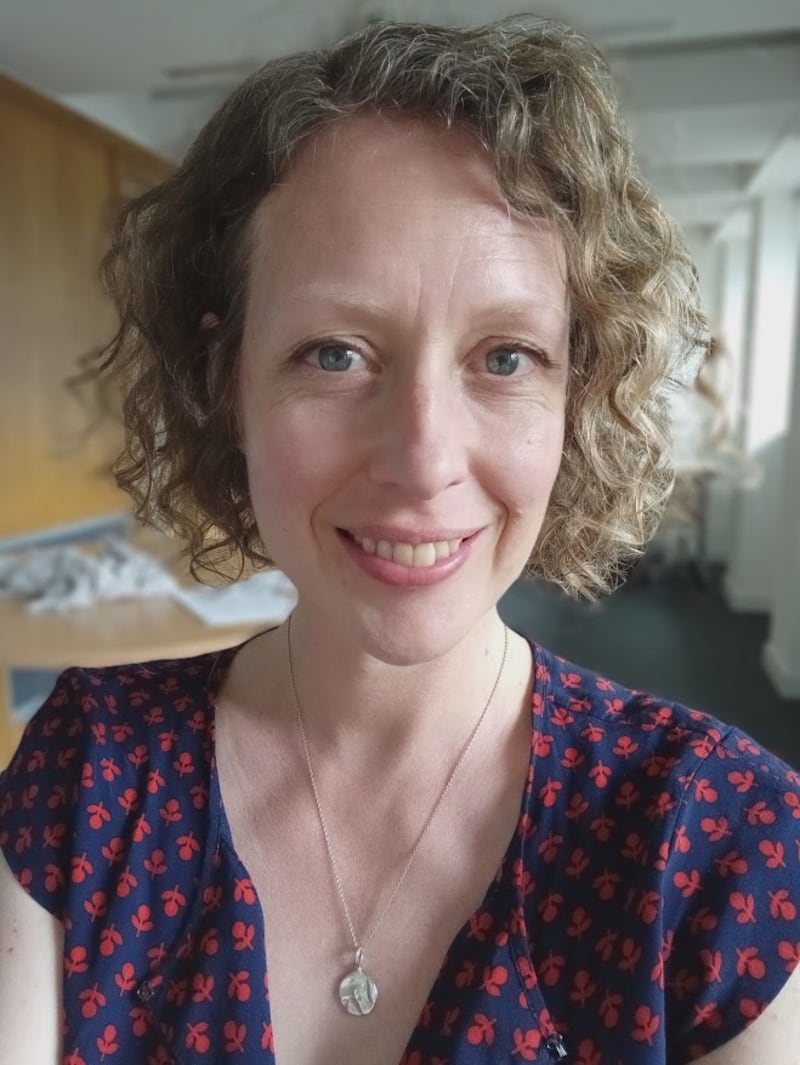 Meghan Hoyt, policy assistant at WRDA, said that climate change was not gender-neutral PICTURE: MEGHAN HOYT
She added that climate change “affects people who live in poverty in different ways”.
“Climate change is happening to everybody, but it’s happening to certain groups in society in different ways,” she said.
Ms Hoyt said that among those who will need the greatest consideration are rural women.
“Rural women are often left out of the equation – or rural places in general – and then rural women experience this in particular ways,” she said.
“When you think about things like transportation and cutting carbon, we have to consider the transportation as a vital lifeline for many rural people.
“Rural people are going to need to be better connected in order to move away from fossil fuels.”
She added that in society “the burden of care often falls on women”, but that for women in the countryside, carbon-cutting could therefore impact them more.
“It’s often women who are trying to transport their children to school, their mother to her dementia care in rural places,” she said.
“It’s often women who are making those choices, having to be in private vehicles and understandably so in the system we have at the moment.
“A just transition for those women looks like better public transportation so they can get between towns and villages in a reliable and sustainable way.”
More widely, Ms Hoyt added that women in urban areas will also be disproportionately impacted by climate change.
“Women are heading up the poorest households disproportionately – your single parent households that are in the worst, dampest accommodation that is most likely to be impacted by rising heating costs, flooding,” she said.
“We know as climate change is changing our society, it is going to be the people who are the most vulnerable in our society who are most affected – and those disproportionately tend to be women and the children that they are caring for.”