Homeowners in the Canary Islands are being locked out of their houses after squatters move in – a growing problem in one of Ireland’s most popular holiday-home destinations.
A documentary for Channel 4’s Unreported World found that owners were struggling to remove squatters from their properties, facing huge legal fees and bills for property damage, with one man forced to live in a shipping container instead of his own home.
The crisis comes as the housing market in the Canary Islands reaches breaking point, with rents pushed up by a booming tourism economy, low local wages and a shortage of accommodation.
Last year, 209 properties were bought by Irish people in the Canary Islands, according to Spanish Property Insight.
Speaking to Breaking News.ie, Channel 4 reporter Anja Popp said that many are unaware of the problems.
“I didn’t know quite how much the law favours squatters, even though it’s illegal,” she said. “They essentially have more rights than owners after a few days. And it’s really hard and an expensive, laborious task to get them out.”
Under Spanish law, the right to a home is strongly protected, and owners must obtain a court order to evict squatters if they have been there for more than 48 hours. Owners are also required to continue paying utility bills while squatters inhabit the property, or risk facing charges of coercion.
While the new Anti-Okupa Law, passed in March 2025, aims to strengthen homeowners’ rights and expedite evictions, progress on implementing the legislation is slow.
Eviction: a costly and onerous process
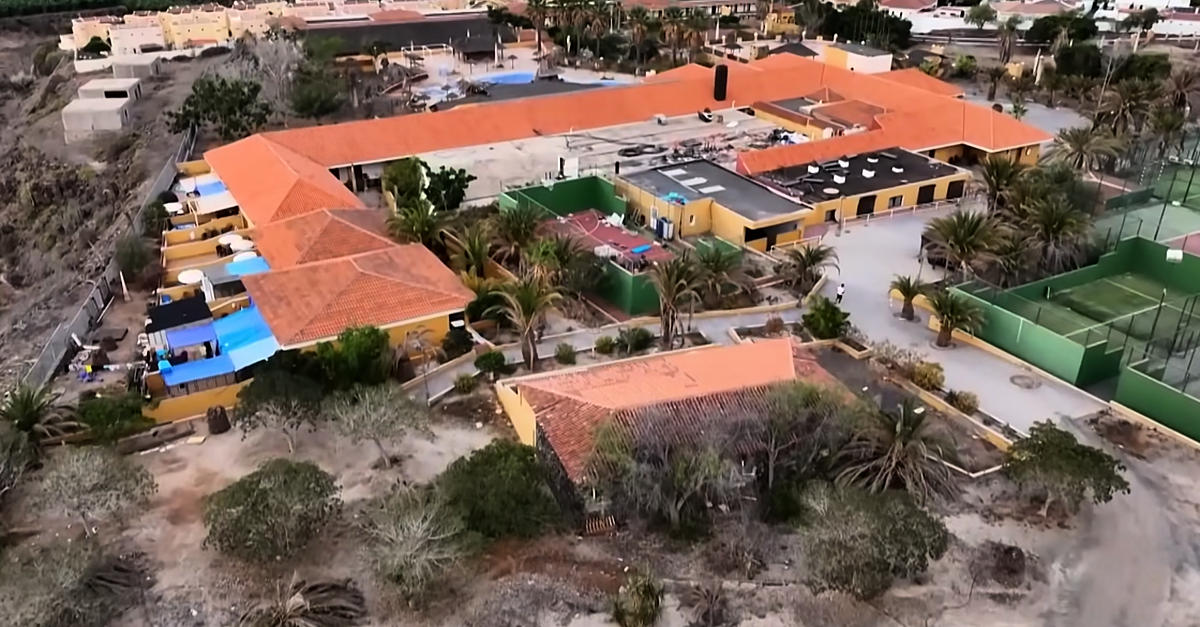
Margarita Domínguez owns a 92-bed hotel in Tenerife and has already paid more than €50,000 in legal fees to try to remove over 200 squatters who have taken over the building.
The hotel had been briefly unoccupied as she prepared to put it on the market when criminal gangs moved in and seized control.
This is one common route into squatting, Ms Popp explained. “[The criminal gangs] are doing the taking over of the building, but then they’re actually getting paid by tenants to live there. But obviously that none of that money is actually going to the owner of the property.”
Alongside the legal fees, Margharita is paying thousands a month in utilities – with her last bill at nearly €6,000 – and she expects to face hundreds of thousands of euro in repair costs. A fire last Saturday left parts of the hotel without water and electricity.
Margharita told Ms Popp that she had spoken with the gang, and they had asked for €250,000 and for her to find somewhere else for the people to live.
Following the court order, the squatters must be out of the hotel by December 10th, nearly a year after it was first inhabited.
Carlos, who is from neighbouring Gran Canaria, has been forced to live in a shipping container – sweltering in the summer, and freezing in the winter – after a squatter took over his house. In his case, the occupier is a former tenant who stopped paying rent.
Despite securing a court order over a year ago, Carlos is struggling to regain access as the person is in a wheelchair.
“He got the court order a year before, so he hasn’t had rent for two years. He won the case to get them out a year ago, but they’re still in the house,” Ms Popp said.
Squatting: symptom of a housing crisis
The label “squatter” covers a wide spectrum – from organised gangs renting out illegal rooms, to families who simply cannot afford market rents.
Ms Popp spoke to a woman who bought a property with squatters already inside at a reduced rate – the only way she could afford to get on the property market.
Many of the people Ms Popp interviewed were working jobs in tourism, with low wages leaving them unable to afford high rental fees. Others were foreign nationals who had moved from countries including Colombia.
And while some squatters can afford to pay for their own homes, others find that this is the only way to avoid living on the streets.
Ms Popp spoke to an anonymous single woman with three young children. “She paid money to live there and was told that the apartment was hers, only to find out that the person she paid didn’t own the property and she’s now effectively squatting,” Ms Popp said.
“She’s in a really desperate situation. She didn’t mean to squat, but she said, if I leave here then I’ll be living on the streets with my three young daughters.”
“Obviously squatting is horrible for the owners, but they’re not the only people that are victims of the housing crisis.”
Desokupas – the hardman evictors
Some property owners have turned to “desokupa” groups – teams of hardmen, ex-convicts and bouncers who use intimidation tactics to pressure squatters into leaving.
While they can’t force the squatters to leave, they can put pressure on them using intimidating tactics.
In one case, they blocked access to a garage area after repeated visits, forcing squatters to relocate their belongings and vehicles stored there.
Ms Popp explained their approach. “Putting pressure on [the squatters], making them feel uncomfortable, making them feel intimidated.
“They [the desokupas] work within the law, but just pushing the boundaries a bit and being a bit aggressive and loud and not particularly friendly. They want them to move out of their own volition.”
For vulnerable occupants, these visits can be terrifying. Ms Popp said squatters often call the police quickly to “put pressure” on the desokupas and ensure they “do everything by the book”, especially since many squatters feel that the police side with the desokupas.
What needs to change?
The new Anti-Okupa Law is designed to speed up evictions, but its rollout has been slow and enforcement remains patchy.

Ireland
Judge refuses to overturn orders for two squatters to vacate Dublin property
Meanwhile, the squatting crisis continues to grow, with an average of two properties occupied a day in the Canary Islands as of last year.
The average duration for court proceedings to evict a squatter is also one of the longest in Spain, at around 26 months between first-instance and appeal courts as of 2023.
Housing experts argue that without additional investment in affordable housing and clearer differentiation between criminal gangs and vulnerable occupants, the crisis will deepen.
And for owners who live abroad who may be worried about their property, Ms Popp has the following advice: “Make sure somebody’s at home. The real vulnerability lies when the property’s empty.”