France ended its compulsory military service for men 25 years ago. French President Emmanuel Macron said last week that because it has to avoid danger, France is going to bring back conscription now.
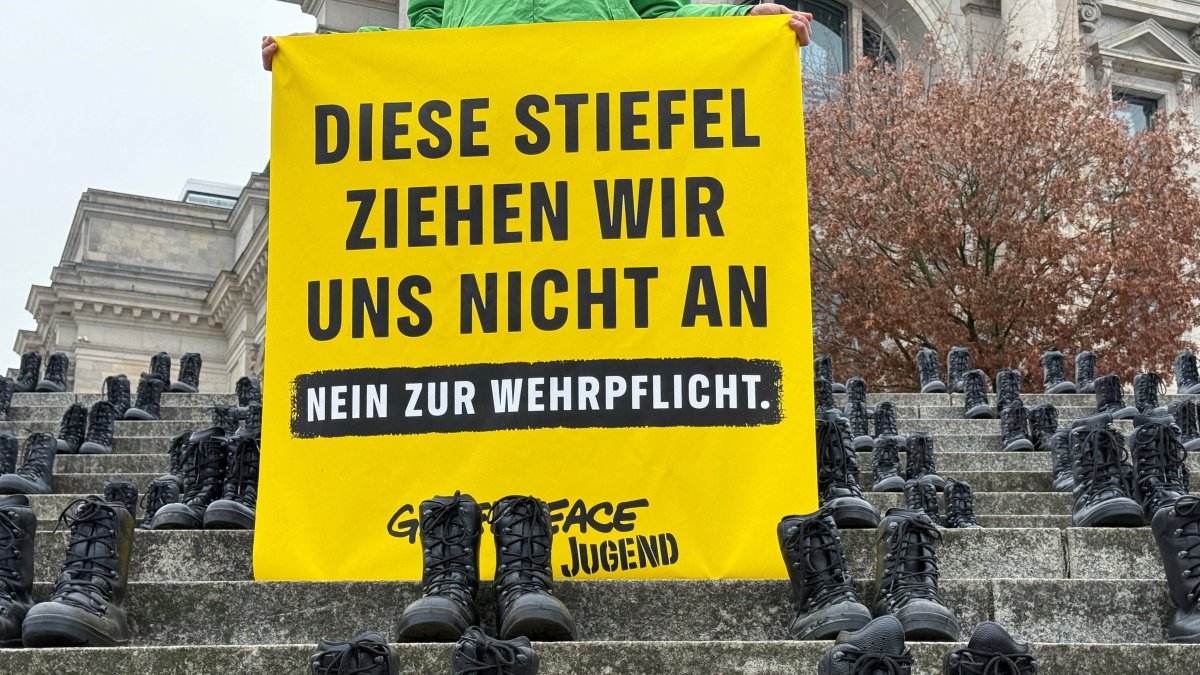
Germany, too, is going to bring back conscription in its military because, Deutsche Welle reported, it has to have enough power when the security concerns require it. Germans are considering the case of Sweden, where compulsory military service was suspended and then reintroduced.
What danger does France have to avoid, and why will Germany have security concerns that require military power? Whatever the president of the French Republic or Defense Minister Boris Pistorius of Germany has in their minds, they have a problem when it comes to reintroducing compulsory military service for men (or women, to this effect). It is impossible to implement because of the lack of training units.
Thanks to the collective security umbrella the U.S. provided after World War I as “Europe’s pacifier,” preventing militarization in all Western European nations in general, and in France and Germany in particular, America has maintained peace on the continent. But, consequently, European governments have been deprived of having their own national defense mechanisms. Instead of spending all that money that could have been wasted on building armies threatening each other, they created social welfare societies employing millions of guest workers or North African refugees.
Now the time has come for the American troops to sing “Lili Marlene” yet again, as they partially did in 1945. U.S. President Donald Trump has been listening to the arguments of those “realist school” international relations professors that the U.S. has been faced with stagnation and “flagging competitiveness” due to China’s and other Asian countries’ economic boom, and that the trans-Atlantic trade tensions compel the country to act in turn. Behind Trump’s spectacular declamations on his God-given “peace-making” mission lies an inward curve to save money the U.S. spends on Europe to impede their historical inclination to jump at each other’s throats. In short, in a Shakespearean idiom, Europeans’ salad days are over.
Trump, neither as Republican as former presidents Dwight D. Eisenhower, nor as Democrat as Harry S. Truman, two architects of the Pax Americana in post-World War II Europe, but a stingy grudge-holder of the U.S. taxpayers’ money spent to make Europeans behave themselves, always asked during his first term NATO countries to increase their national security budgets to meet their 2% commitment. He even hinted that it should ultimately go to 4%. European leaders made fun of him, calling his 2018 speech “Trump’s battle of the 2%” when they again enjoyed the flow of U.S. military dollars when Joe Biden defeated him (by crook, mostly); but Trump came back (by hook, fair and square). And so, now is the time for Lili Marlen: “Wer wird bei der Laterne stehen (Who will stand by the lantern)/Mit dir, Lili Marleen? (With you, Lili Marleen?)”
Not the GI Joes, Lili Macron or Lili Merz! But for the sake of all those years, dear Lili, Uncle Donald is not going out without a word of wisdom: “The Russians are coming; the Russians are coming.” He himself wouldn’t do it; instead, he’d dispatch JD Vance, his vice president with beady and scary eyes.

A young woman raises the French national flag during the Defense and Citizenship Day (JDC) training at Fort de Montrouge in Arcueil, Paris, France, Nov. 26, 2025. (AFP Photo)
Last February, in an 18-minute address at the Munich Security Conference (MSC), Vance left European leaders in stunned silence. He warned of a “threat from within,” and the state of democracy and free speech in Europe was in danger. He boldly asked what they would do if “faced with a situation like Ukraine.” He told the security elite and bureaucrats that without unification within themselves, Europeans could not successfully face Russian aggression.
The MSC attendees, among them many heads of state and governments, after the deep silence they fell into hearing JD’s blasts, probably asked each other: “What is Russian aggression like in Ukraine”? Well, here is the vice president of the good old U.S. of America, telling you in your face.
That speech was delivered on Feb. 14 as a warning salvo, details of which came when U.S. Secretary of State Marco Rubio and other U.S. officials last week scared Europeans with Russian missiles to promote their “peace plan” in Ukraine. Marco and Chief American negotiator Daniel Driscoll said Russia is significantly increasing missile production and building up stockpiles that could change the course of the war and the security situation in Europe. And the very next day after these addresses, Rubio reported happily to the media that Europeans would gear up to face growing fears of Russian President Vladimir Putin, who, bending over backwards, busting his backside, was yelling that there are no Russian plans to invade European countries. Professors John Mearsheimer and Jeffrey Sachs publish one analysis after another that Russia acted militarily after seeing a literal existential threat to its national security because NATO offered full membership and later security guarantees to Ukraine, but now there was no such threat felt by Putin.
But to no avail! After Trump sowed the seeds of tears of fear, the age-old militarism in Germany and France must have gotten worked up. There is no way to tell them that it is only a U.S. maneuver to take care of what George Friedman, an American political scientist and founder of the publishing company Stratfor, has called “the American decline,” the diminishing U.S. power geopolitically, militarily, financially and economically.
Trump touts that the American decline is over, and “the golden age has officially begun.” He thinks “that’s a good thing to talk about,” but on the other hand, he is about to put up sale signs on the American bases in Europe, which scares the living daylight out of Europeans. I think it is also a good thing to make the Europeans take care of themselves. Now the question is: Who is going to quell Europeans’ age-old hatred for each other?

The Daily Sabah Newsletter
Keep up to date with what’s happening in Turkey,
it’s region and the world.
SIGN ME UP
You can unsubscribe at any time. By signing up you are agreeing to our Terms of Use and Privacy Policy.
This site is protected by reCAPTCHA and the Google Privacy Policy and Terms of Service apply.