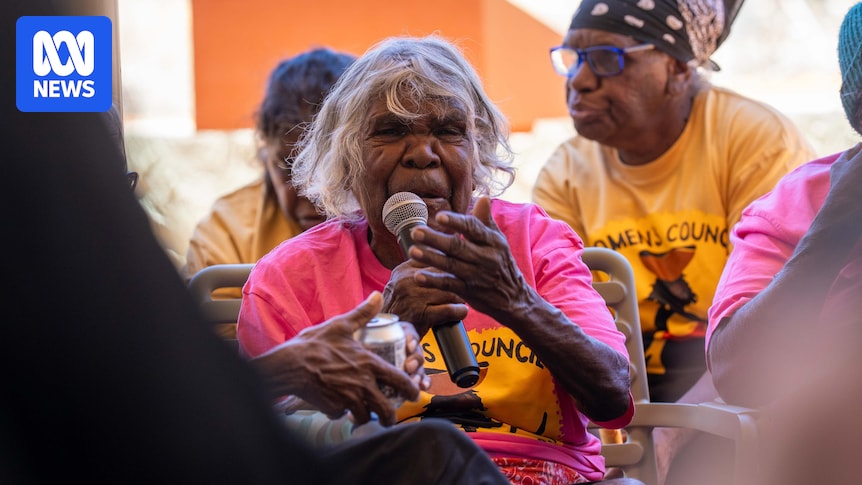
Josephine Mick wrapped her fingers around the wrist of her interpreter, gently demonstrating a traditional ngangkaṟi healing technique to draw out illness.
Speaking in fluent Pitjantjatjarra interpreted to English, she explained her hands were like a magnet.
“Ngangkaṟi has what we call literally an opening, open hands, and using that hand they place it on the person,” she said.
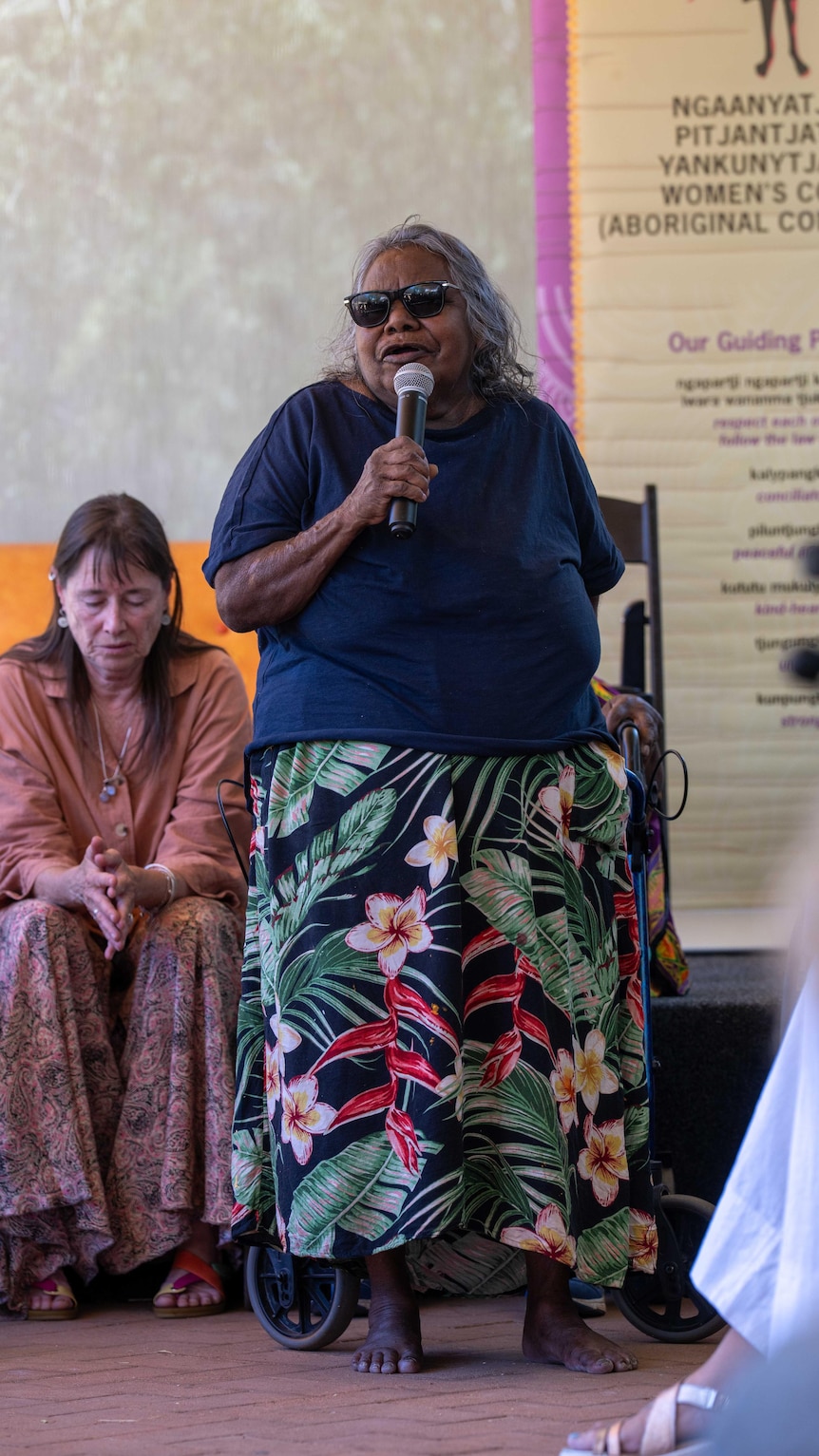
Josephine Mick played a key role in bringing ngangkaṟi together to share their knowledge. (Supplied: Rhett Hammerton)
“The poison or toxins, or whatever the bad thing is inside [the person] that’s causing them illness, is drawn out by that ngangkaṟi’s hand.”
Ngangkaṟiis a word for traditional Aboriginal healers in the Ngaanyatjarra, Pitjantjatjara and Yankunytjatjara (NPY) lands of the Central Australian desert.
Men, women, children and even babies can be ngangkaṟi, but it’s not known exactly how many there are.
Ms Mick said people in communities know who the ngangkaṟi were, because they watched who gave treatment and who had powers.
“A western doctor has training and they might do a lot of their training by reading textbooks and things like that, but a ngangkaṟi learns by actually doing it, it’s in their spirit,” she said.
“It’s working really closely with the spirit and spiritual wellbeing.”
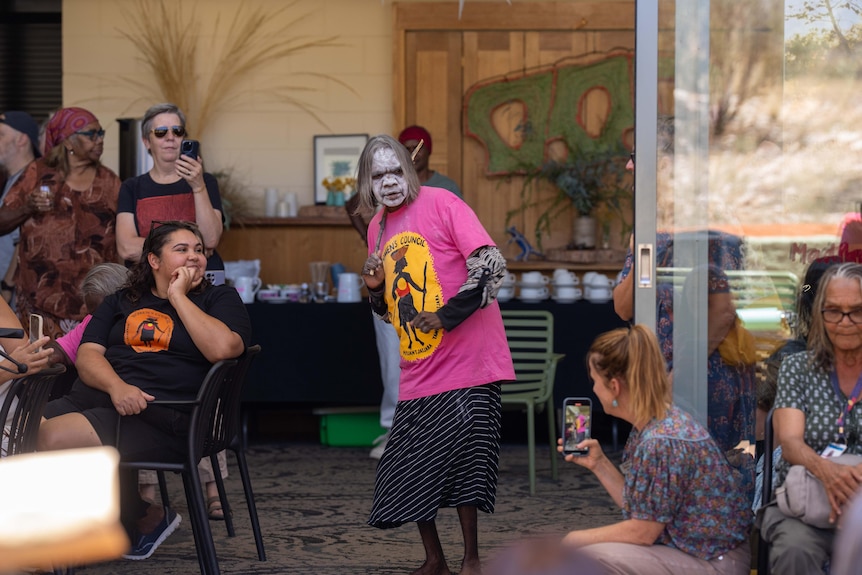
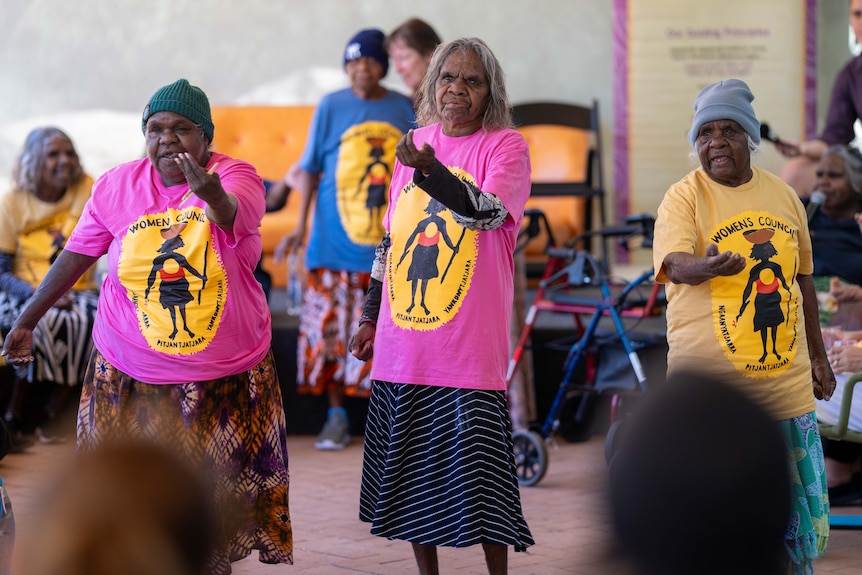
Some ngangkaṟi performed an inma, or dance, for the launch of the book’s second edition. (Supplied: Rhett Hammerton)
Primary source of information
The firsthand accounts of about 30 traditional healers, including Ms Mick, have been recorded in the second edition of Traditional Healers of Central Australia: Ngangkaṟi.
The NPY Women’s Council launched the book in November.
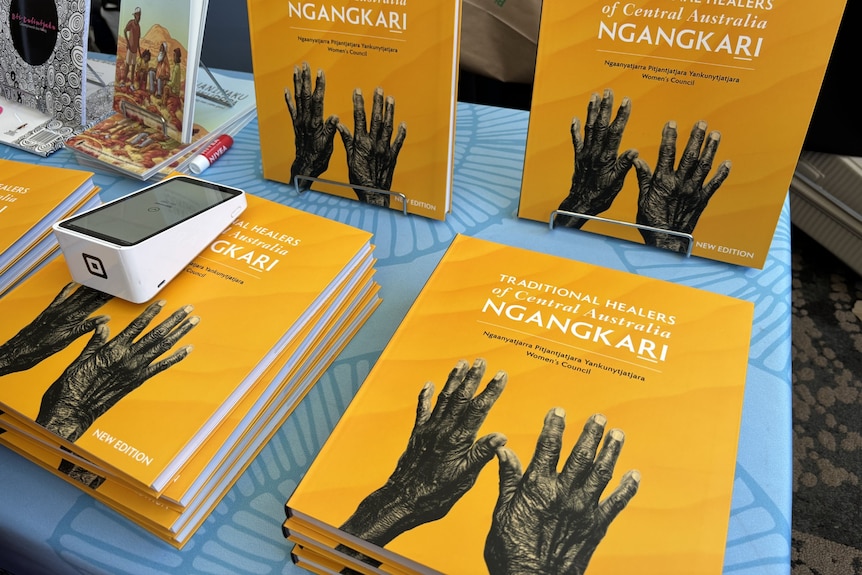
The second edition of Traditional Healers of Central Australia: Ngangkaṟi was launched in November. (ABC Alice Springs: Victoria Ellis)
The first edition of the book, published in 2013, sold more than 17,000 copies worldwide, according to NPY ngangkaṟi program manager Angela Lynch.
“[The ngangkaṟi] wanted to be treated as equals with the Western-trained doctors and nurses, and they really wanted people to know how much work they do and how much help they give,” she said.
“They decided the best way to do it was to educate the workers in the Western health system about what ngangkari’s do and that’s where the idea for the book came from.”
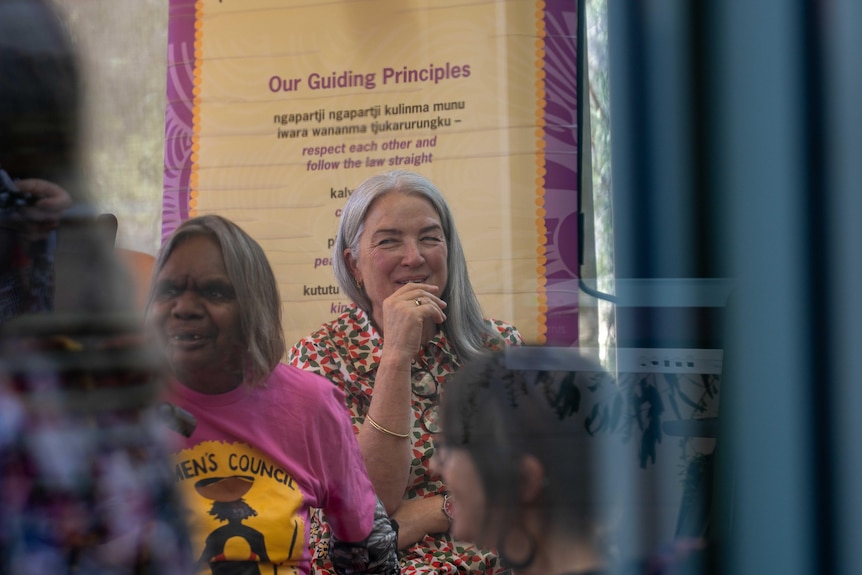
Angela Lynch says the ngangkaṟi wanted to write a book to show people their role in Aboriginal health. (Supplied: Rhett Hammerton)
The NPY Women’s Council recorded the stories of a number of ngangkaṟi and their answers were translated to English for the book.
“They said it and we translated it directly — we didn’t shape it in any other way,” Ms Lynch said.
“They made it very clear that they wanted to speak about ngangkaṟi work in their own way or in their own voices.
“They didn’t want someone talking about them, they wanted to talk about it themselves, so it’s a primary source or document.”
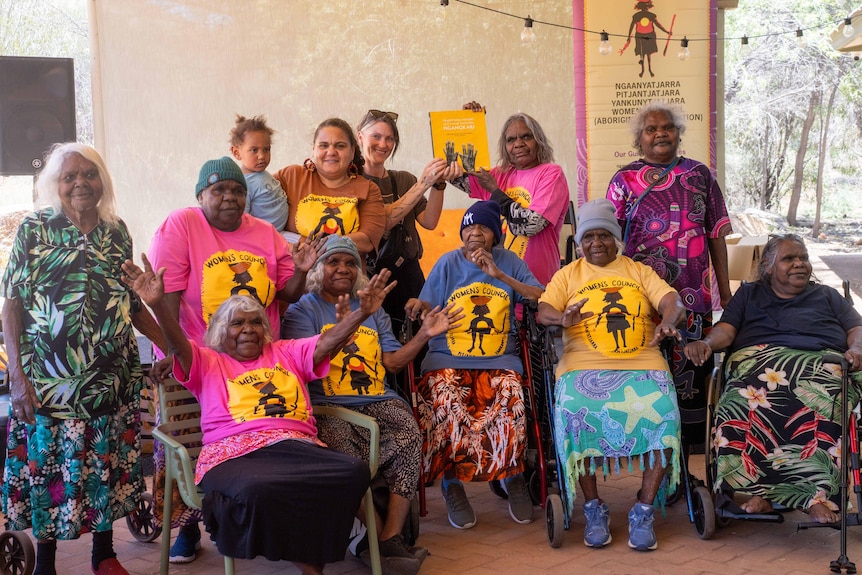
The second edition of Traditional Healers of Central Australia: Ngangkaṟi was launched in November. (Supplied: Rhett Hammerton)
Western medicine and ngangkaṟi working together
The book recorded traditional Aboriginal culture and history, but Ms Mick said the stories also showed people how ngangkaṟis worked.
“For people who are suffering from ill health, they can see that there is hope in being treated in this way,” she said.
“There’s a lot of doctors who know about their craft … (but) they want to know about what our skills are and how we do treatments as well.”
Ngangkaṟi want to work collaboratively with Western medicine, according to Josphine Mick. (Supplied: Rhett Hammerton)
The burden of disease for Aboriginal and Torres Strait Islander people is more than double that of non-Indigenous Australians, but Ms Mick said together Western medicine and traditional healing could improve Indigenous health outcomes.
Ms Lynch said the ngangkaṟis wanted “to see the Western health system and ngangkari working together in a collaborative way”.
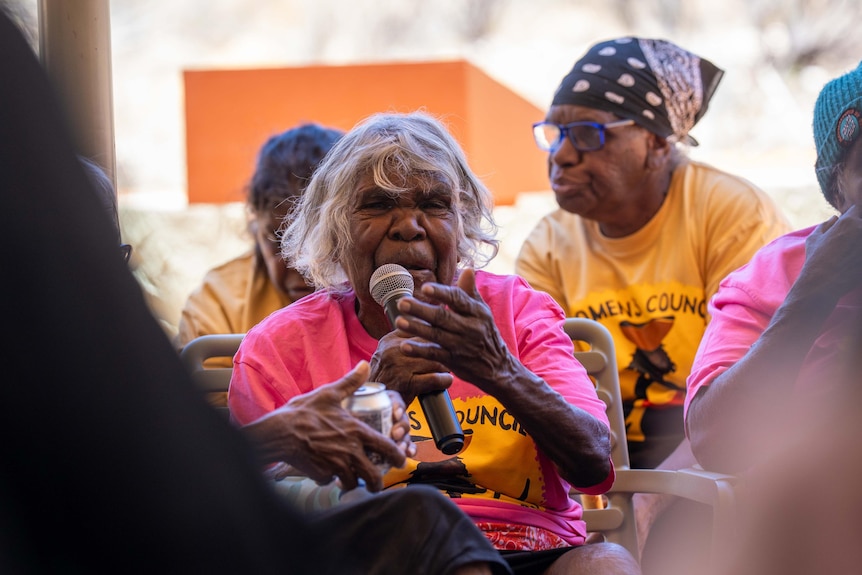
Ngangkaṟi Iluwanti Ken addressing guests at the launch. (Supplied: Rhett Hammerton)
Tradition staying alive
The ngangkaṟi program has been running for 27 years.
Ms Lynch said it was one of the few programs in Australia that supported traditional healing.
“It’s only lasted that long because the ngangkaris have run it their own way,” she said.
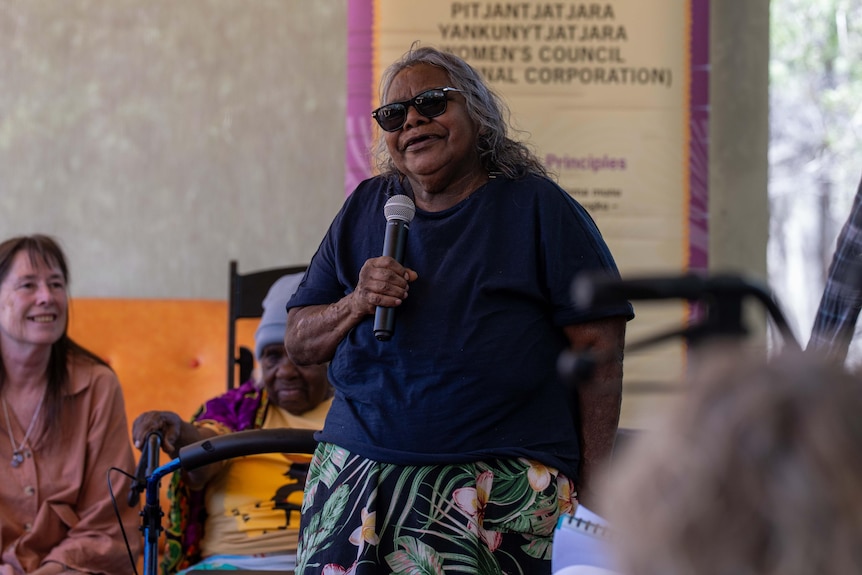
Josephine Mick played a key role in bringing ngangkaṟi together to share their knowledge. (Supplied: Rhett Hammerton)
Ms Mick said she was glad to see the ancient traditions continued in the next generation.
“It just makes me so happy to see the strength of the women’s council now and to see all the young people, our descendants, coming through and taking on the roles that we and others used to do in the past,” she said.