Without the work of powerful female art collectors, the Prado in Madrid would be half the museum it is. Titian’s magnificent equestrian portrait commemorating the Holy Roman emperor Charles V’s victory over protestant princes at Muhlberg in 1547, for example, was owned by a woman — Mary of Hungary, his sister.
The painting is one of dozens of masterpieces that belonged to a handful of female art collectors whose works make up most of the Prado Museum’s collection. The Madrid museum has embarked on a project, featuring thematic routes, titled The Female Perspective, to demonstrate how without these women’s works, its collection would be a shadow of itself.
Miguel Falomir, the Prado’s director, said: “The Prado is probably the European museum in which women have played the most significant part in terms of its creation. Their contribution was extremely important, either as collectors or patrons. Without them the overall quality of the collection would significantly decline.”

Titian’s portrait of Charles V
ALAMY
Mary, for example, a 16th-century queen of Hungary and later governor of the Habsburg Netherlands, as one of the principal sponsors of the European Renaissance. Noelia Garcia Perez, an art historian who runs the museum’s project, said: “She was responsible for the construction of the visual image of Charles V’s political identity and was a regent who defended the rule of the House of Habsburg.”
The Prado is the beneficiary of Mary’s legacy and those of other women, who often wielded political power, such as Isabella the Catholic, first queen of a dynastically unified Spain, and Isabella Clara Eugenia, ruler of the Netherlands in the early 17th century. Without their contributions, the museum would be missing works such as The Descent from the Cross by Rogier van der Weyden, Altarpiece of Dona Maria de Aragon by El Greco, the panels of Adam and Eve by Albrecht Dürer and Las Meninas by Diego Velázquez.
The Prado opened its third thematic route in the series on Monday, highlighting the works from Isabella Farnese, queen of Spain from 1714-1746. Visitors are invited to follow the route through 45 works, including a portrait of Farnese by Louis-Michel Van Loo from the Spanish embassy in London and one by Bartolomé Esteban Murillo, which is being exhibited for the first time after its recent identification at the Musée des Beaux-Arts de Pau in France.

Isabella Farnese painted by Louis-Michel Van Loo
MUSEO NACIONAL DEL PRADO

Rogier van der Weyden’s Descent from the Cross
ALAMY
“Her legacy is the origin of nearly five hundred works housed in the museum, which are exhibited in half of its galleries,” said Perez. “She is the female artistic patron who most significantly contributed to the formation of the collection of the Prado.”
• How to paint the royals: ‘Harry said William had too much hair’
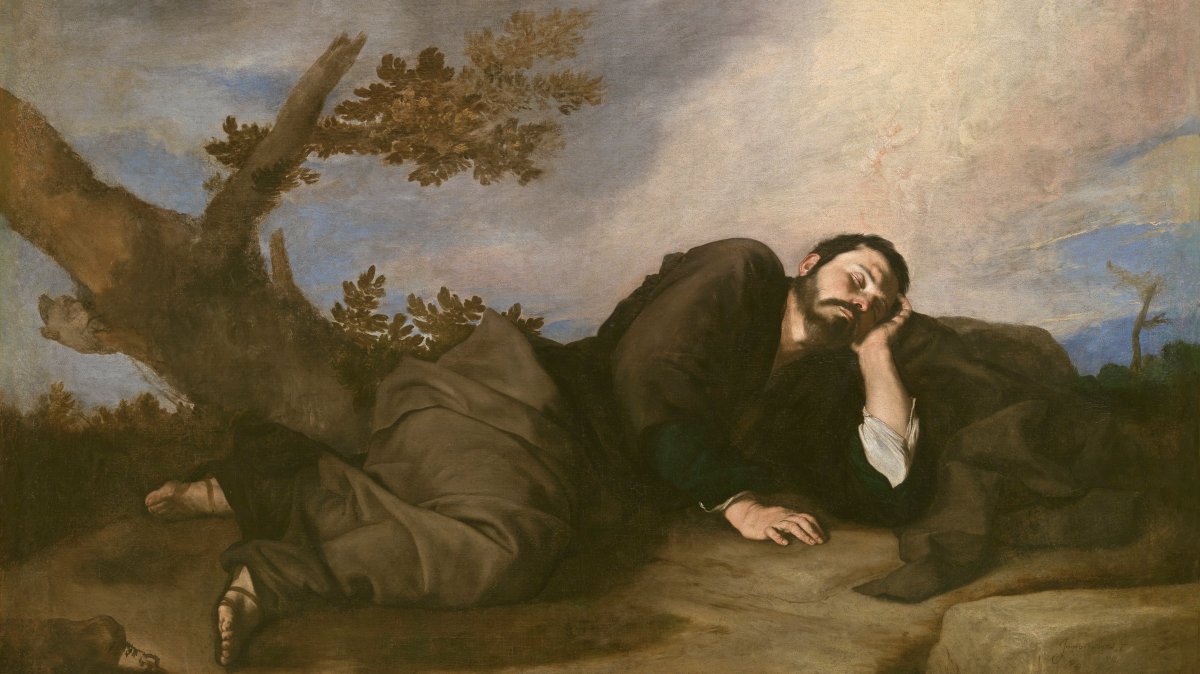
Her works include emblematic paintings such as Peter Paul Rubens’s Apostles series, Saint Sebastian by Guido Reni, The Virgin and Child with the Infant Saint John the Baptist by Correggio, A Sibyl by Velázquez and Jacob’s Dream by Jusepe de Ribera.

Saint Sebastian by Guido Reni
MUSEO NACIONAL DEL PRADO

Faun with a Kid
MUSEO NACIONAL DEL PRADO
Farnese was also responsible for the acquisition of the museum’s most important group of classical sculptures, including The San Ildefonso Group and Faun with a Kid.
Farnese collected works of art using her own resources through what was known as the queen’s pocket, which allowed her considerable autonomy in her artistic choices. She marked her works with the fleur-de-lys to differentiate them from the collection of her husband, Philip V. The symbol is still visible on some works and the museum has marked all the information plaques accompanying her works with it.
• Prado shines a light on Spain’s glorious polychrome sculptures
“She amassed nearly a thousand paintings,” said Perez. “Particularly evident within this extensive collection is the queen’s love of the work of Bartolomé Esteban Murillo, whose presence in the Royal Collection was entirely due to her decisive impetus. As a result, the paintings by Murillo acquired by her now constitute the largest and most significant group of works by any artist in the Prado.”