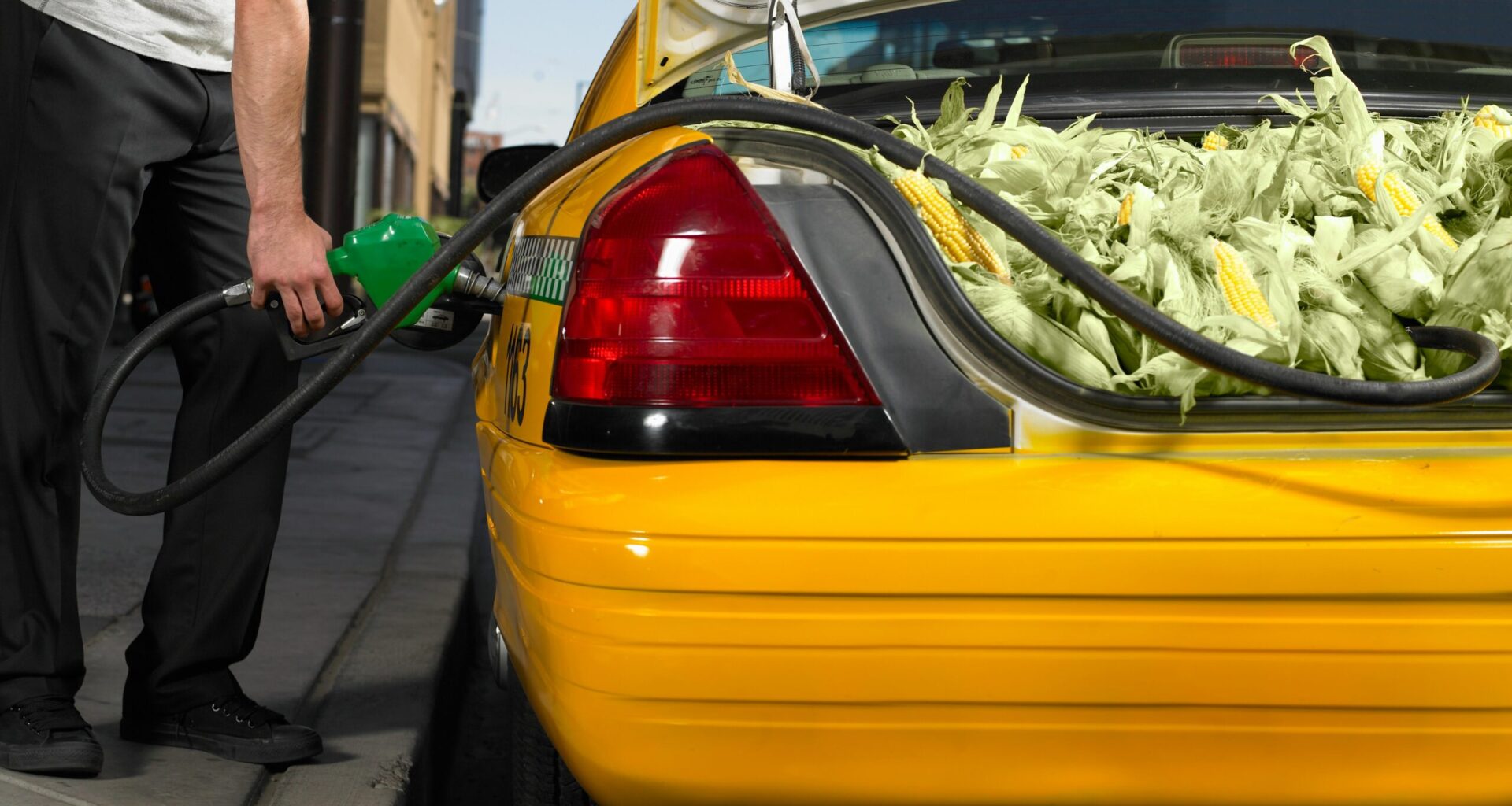
Ahead of a key decision from European lawmakers, environmental campaigners have criticised the proposed use of biofuels in the automotive sector beyond 2035’s European Union deadline for zero-emission cars, pointing out that the fuel source is not truly carbon neutral and is in short supply.
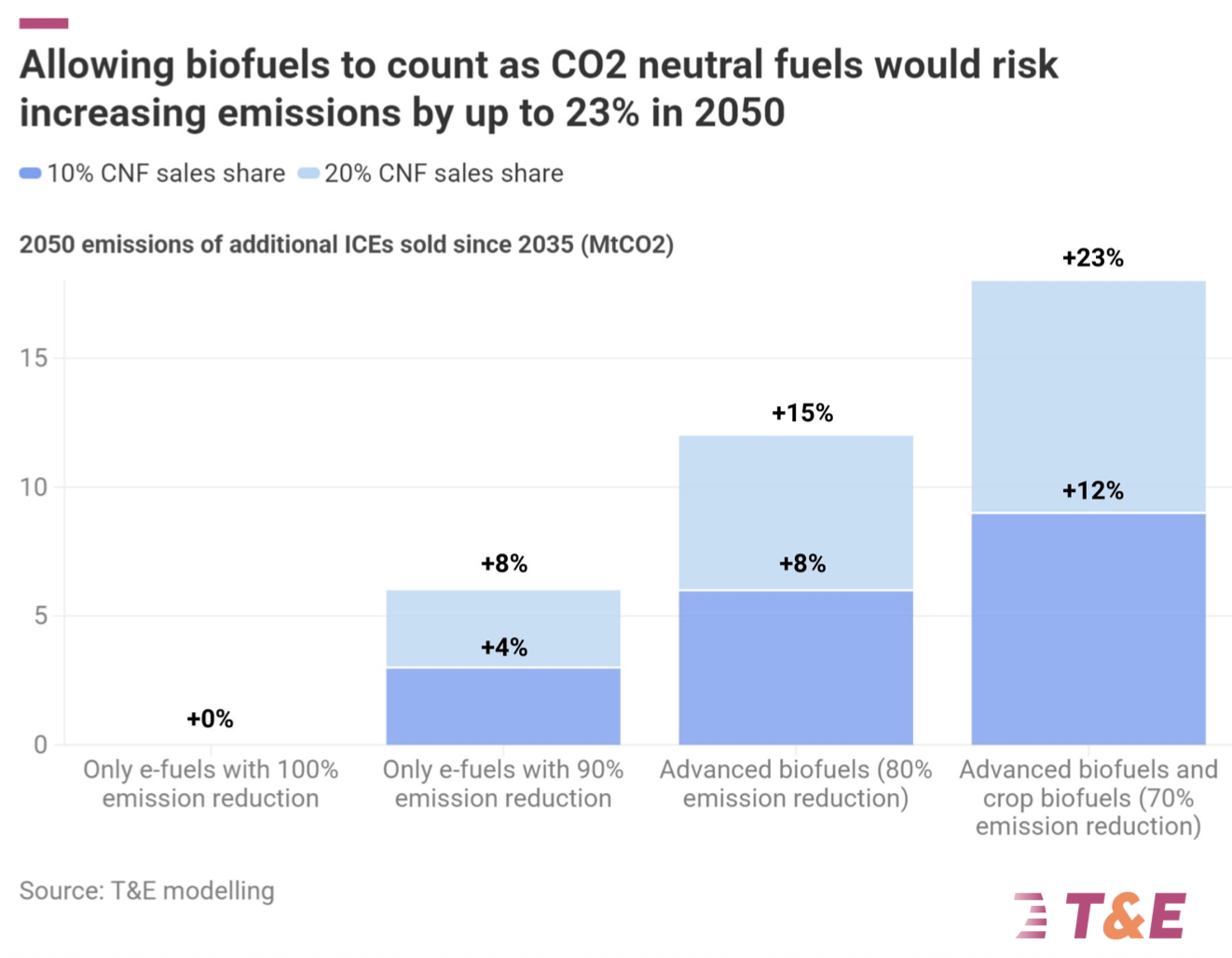
Car manufacturers, automotive suppliers, and fuel companies are currently lobbying the EU to allow new combustion engines to run on biofuels after the bloc’s 2035 cut-off point and be deemed “zero emissions.” But Transport & Environment (T&E) has said in its latest report that biofuels are not truly carbon neutral and could increase CO2 emissions by up to 23% in 2050 if the automotive lobby is successful.
 © T&E, European Federation for Transport and Environment AISBL
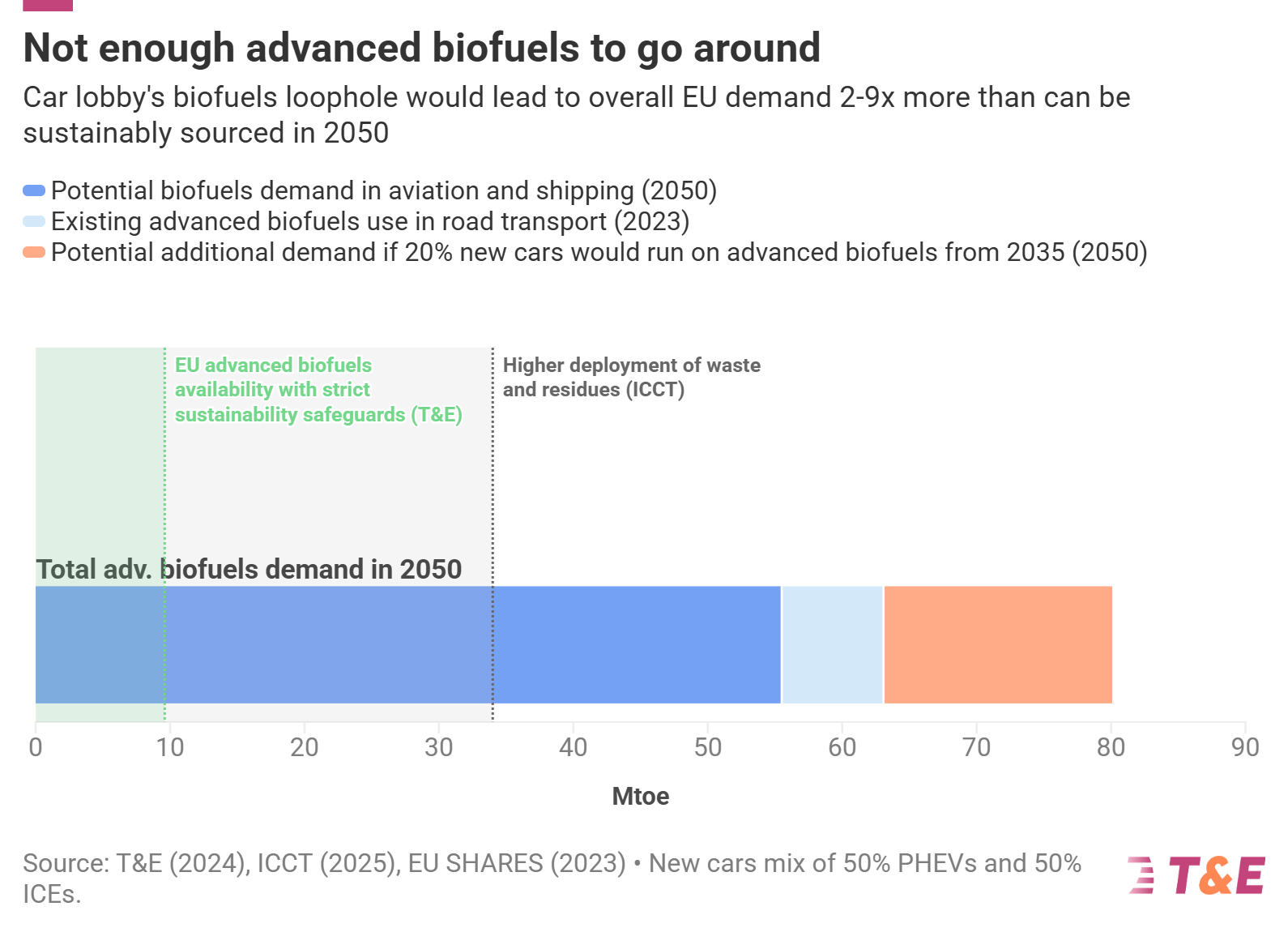
Worse, T&E says, “planes and ships alone will require roughly double the amount of advanced biofuels than can be sustainably sourced in Europe,” and that’s without adding the automotive sector’s needs into the equation. Running a car on animal fats instead of transitioning to purely electric vehicles, T&E claims, “would require the equivalent of 120 pigs a year” per vehicle. European cars already use 1.3 million tonnes of animal fats per year – equivalent to 200 million slaughtered pigs.
Any additional demand driven by changes to the 2035 deadline could lead to cars, planes and ships consuming between two and nine times more advanced biofuels than can be sustainably sourced in the future, T&E has calculated. As a result, they warn that if the EU agrees to the “loophole,” aviation’s decarbonisation will be put at risk. At most, the group says, biofuel-powered cars should be limited to just five percent of 5% of sales.
 © T&E, European Federation for Transport and Environment AISBL
Lucien Mathieu, cars director at T&E, has dubbed the push for biofuels “absurd,” pointing out that “Europeans can’t eat enough pork or fries to sustainably run even a fraction of Europe’s cars, let alone its ships and planes. Why are the car and oil lobbies flogging non-solutions when we have a ready technology in electric cars? This is nothing but a delay tactic that will leave Europe uncompetitive in the global EV market.”
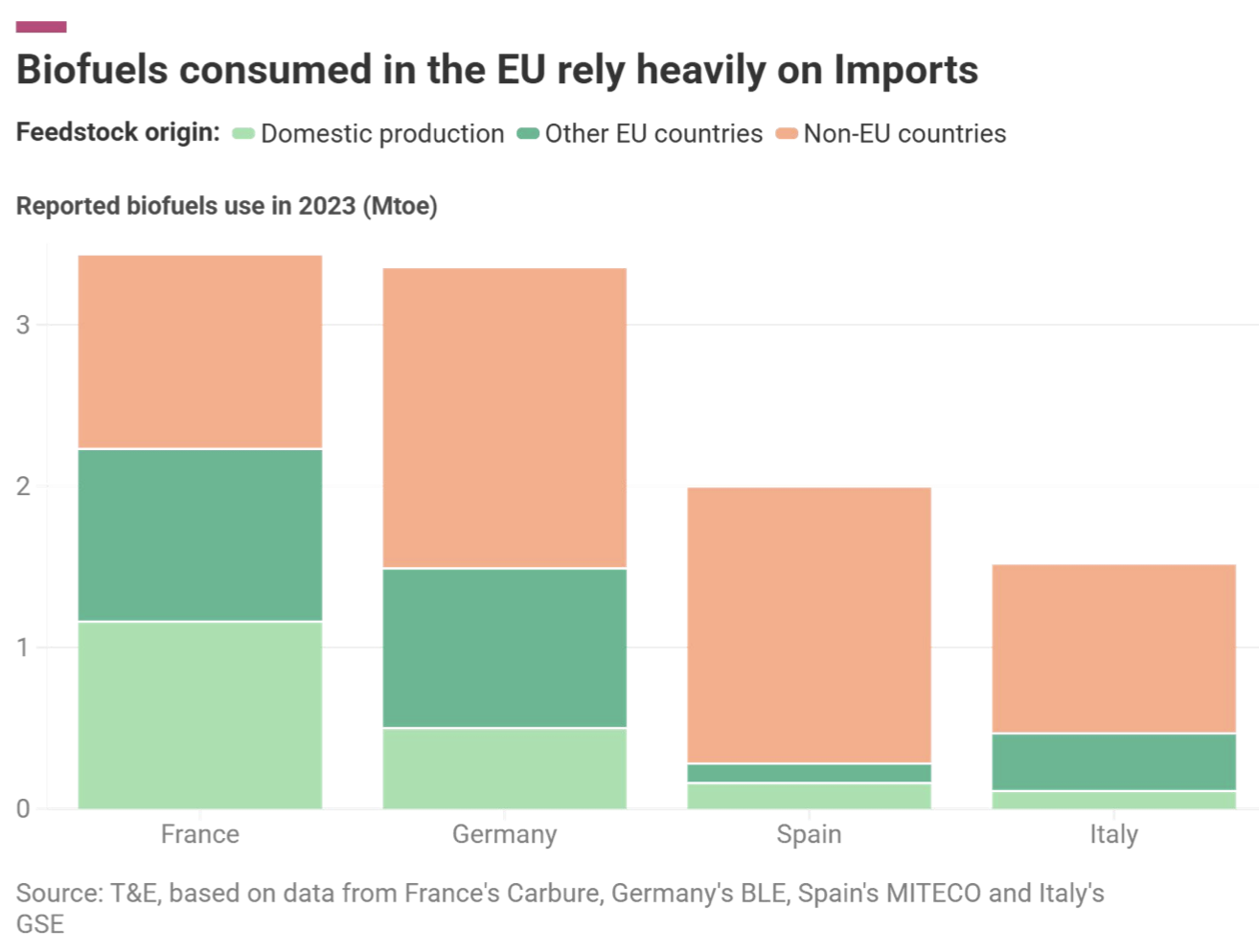
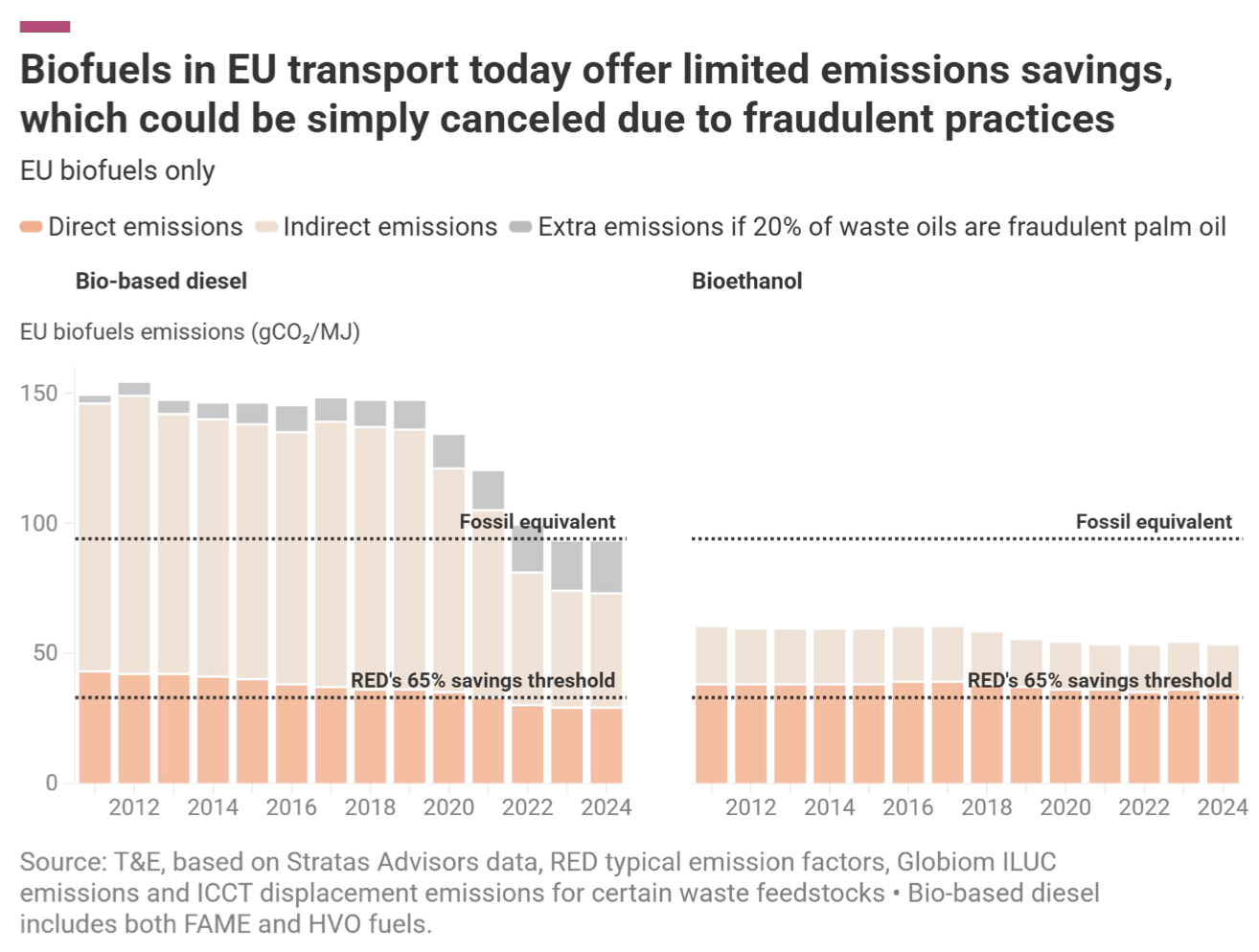
The EU legislated in 2018 to limit the use of crop-based fuels and prioritise used cooking oil, animals, and other waste-based sources, which, Reuters reports, now account for about half of bio-based diesel in the EU. But, as 60% of biofuels and 80% of cooking oil, are imported into the bloc, T&E warns that high demand is already encouraging fraud, with sources such as palm oil mislabelled as waste. The risk of such fraud would only increase with greater dependency, T&E argue.
 © T&E, European Federation for Transport and Environment AISBL
The controversy is not the first time biofuel use has hit the headlines in recent weeks. At Brazil’s recent COP30, a group of 100 scientists asked global leaders to recognise the risks associated with biofuel expansion, which they argue are worse than the fossil fuels they replace due to high-emissions crop cultivation, “equivalent to nearly 30 million new diesel cars on the road.”
 © T&E, European Federation for Transport and Environment AISBL
Biofuel production, they said, damages natural ecosystems, especially in biodiverse and carbon-rich regions due to the consumption of “scarce water resources” and the production of “agricultural runoff.” As the debate now continues on the European stage, the European Commission is set to reveal its package of automotive industry support on 10 December 2026.