
Tuesday 02 December 2025 10:00 am
| Updated:
Tuesday 02 December 2025 12:33 pm
Share
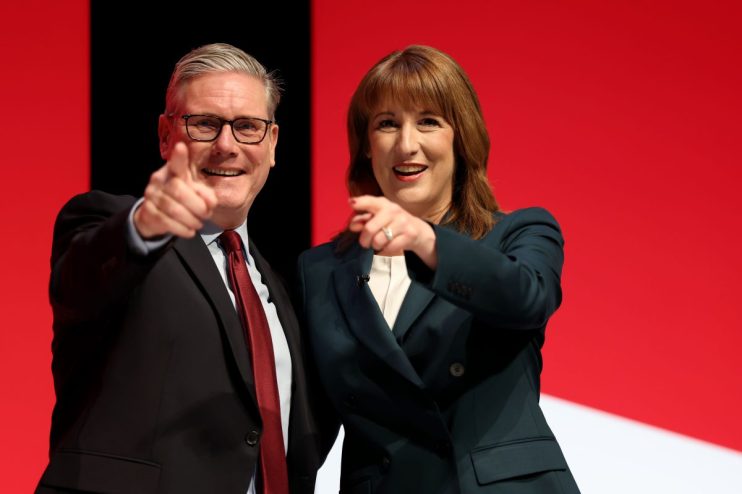 Labour policies have pushed up inflation, the OECD said.
The UK is set to suffer the second highest level of inflation in the G7 over the next year as a result of the Labour government’s decisions to pile extra costs on businesses, the Organisation for Economic Co-operation and Development (OECD) has said as it also warned recent tax hikes will hit growth.
In its latest economic outlook on different economies, the OECD said higher employment taxes for firms and a rise in the national living wage has “slowed labour cost disinflation”, making the UK an outlier among some of the world’s most advanced economies.
It predicted that inflation would stay above the Bank of England’s 2 per cent target inflation rate for the next two years.
Inflation is expected to cool to 2.5 per cent next year, having peaked at 3.8 per cent in 2025.
It is then set to come down to 2.1 per cent in 2027, which is slightly above estimates pencilled in by the Bank but broadly in line with other forecasters.
“Policy changes have temporarily pushed inflation higher in some countries, including the United Kingdom,” economists at the Paris-based organisation said.
“The recent rise in payroll taxes and in the minimum wage has slowed labour cost disinflation.”
Inflation woes hit as growth splutters
Only the US is set to suffer from higher inflation, with price growth to come in at 3 per cent next year before dropping to 2.3 per cent. Germany is also set to have higher inflation in 2027
OECD economists warned that the Chancellor’s £26 billion of tax rises will act as “a headwind to the economy” until 2029, and that previous tax increases and expenditure cuts have hit household finances and slowed spending. This years growth forecasts remain unchanged at 1.4 per cent. The UK’s growth forecasts were upgraded slightly for 2026 to 1.2 per cent, compared to a previous estimate of one per cent with growth in 2027 expected to be just 1.3 per cent.
The OECD researchers warned that outcomes largely depend on the Labour government following through with growth-focused policies in infrastructure, welfare and financial services.
“Ongoing budgetary prudence is required to deliver on the government’s growth mission while ensuring fiscal sustainability, with a balanced approach combining revenue-raising measures, spending cuts, and productivity-enhancing investments.
“Swift implementation of the ongoing overhaul of the national planning policy framework to unlock infrastructure projects and housing development remains essential, as well as continuing to promote labour market participation, in part by delivering health-related welfare reforms, including the abolition of the work capability assessment.
Read more
Cut interest rates by 25 basis points, Shadow MPC says
“Carefully advancing plans to simplify the regulation of financial services, guided by the government’s financial services growth and competitiveness strategy, could further boost aggregate growth potential given the weight of the financial sector.”
It also said that efforts to tighten the public purse and “uncertainty” on the future of the UK economy would keep growth at a sluggish pace in 2026 and 2027.
Reeves defends Budget
Chancellor Rachel Reeves defended her Budget plans to cut the cost of living for Brits, suggesting slightly better OECD forecasts showed her economic agenda was working.
“Last week, my Budget cut waiting lists, cut borrowing and debt, and cut the cost of living. Less than a week later, the OECD has upgraded our growth and cut its forecast for inflation next year.
“Alongside our plans to deliver growth, by investing in this country’s infrastructure, attracting major private investment, and pushing through bold planning reforms, we’ll deliver on our number one mission to put more money in people’s pockets.”
Shadow Chancellor Mel Stride said: “The OECD are clear: unemployment is set to rise, driven in part by Labour’s Jobs Tax, and inflation will stay above target for the rest of their forecast.
“Rachel Reeves promised growth but growth is expected to weaken next year, because of her choices. This is the cost of policies that punish work, businesses and investment.”
In its latest report, the OECD also sounded the alarm on public sector debt, suggesting that falling interest rates across major economies was an “opportune moment to act”.
It called on governments to take more considered approaches to public finances and ensure taxes don’t hamper growth, a week after Reeves took the tax burden to the highest level in post-war Britain.
“Stronger efforts to contain and reallocate spending, improve public sector efficiency and enhance revenues, set within credible medium-term country-specific adjustment paths, will be essential for debt burdens to remain manageable and to conserve the resources required to address longer term spending challenges.”
“Spending and tax choices should focus on the need to strengthen sustainable economic growth while preserving adequate support for those in need.”
Read more
Kemi Badenoch welcomes Javier Milei on Falkland Islands ‘competition’
Similarly tagged content:
Sections
Categories
People & Organisations