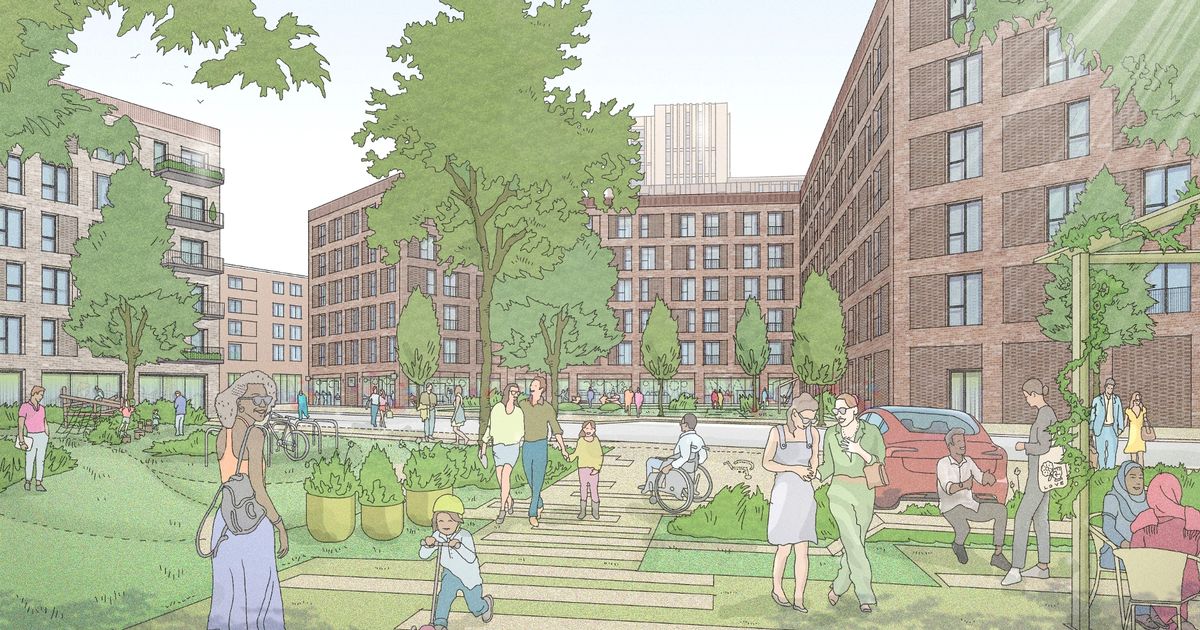
The development would inundate local doctors and be ‘appealing’ to yobs on motorbikes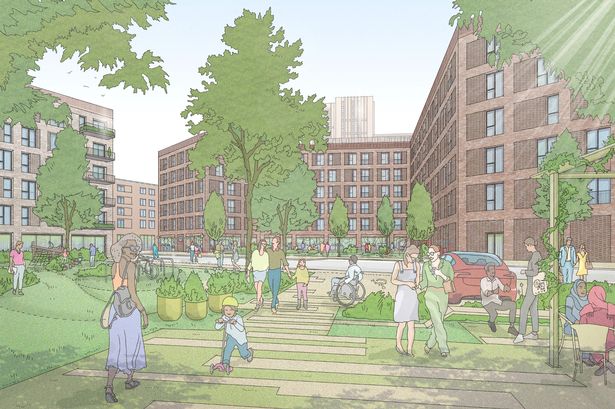 The redevelopment plans for Princess Street in Bedminster- view looking east from ‘Block A'(Image: Claridge Architects/Sam Ellis Design)
A developer proposing what would be the tallest building ever built in South Bristol has tweaked its plans – but there are still concerns from both police and the NHS over the project. Developers first unveiled their plans for a large-scale regeneration project on an industrial estate in Bedminster a year ago, but earlier this month submitted revised plans stating it was changing things after feedback from council planners and local residents.
But the development firm Galliard and Apsley House still face something of a battle to convince city councillors to give the go-ahead for the transformation of two industrial estate sites on Princess Street, on the other side of the railway line from Victoria Park in Bedminster.
The plans would see four blocks of flats built either side of New Queen Street, as part of the wider Whitehouse Street regeneration project, that has been proposed by the city council for the past few years.
One of the blocks would be 22 storeys, with another 12 storeys. The 22-storey block would be the tallest building in South Bristol, overtaking Northfield House in Bedminster, the last and tallest council tower block built in Bristol, in 1969, which is 19-storeys high.
Planning agents Savills submitted the revised plans to City Hall at the start of November, reminding council officers it’s a council plan to sweep away the Whitehouse Street industrial estates and replace them with thousands of new homes.
READ MORE: South Bristol neighbourhood with 2,000 homes pictured in new CGIsREAD MORE: Tallest building in South Bristol’s history proposed in front of Victoria Park
“As you will be aware, the development of this site is a key aspiration of the Council’s Whitehouse Street Regeneration Framework, and the proposals submitted in April 2025 evolved from an iterative and productive pre-application programme of engagement with the Council and stakeholders which formally began in November 2023,” Savills head of planning Craig O’Brien said.
“Following the validation of the planning application on 25 April of this year, a range of comments have been received from officers, consultees, local groups, and members of the public. Further, the project team have held a number of productive meetings and workshops with officers throughout the determination of the application,” he added.
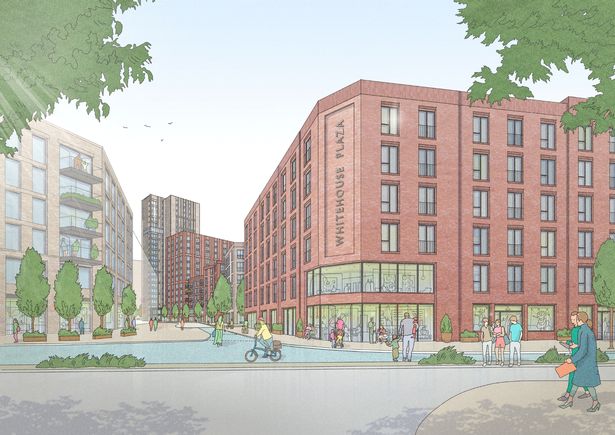 The redevelopment plans for Princess Street in Bedminster – illustration of the scheme looking across Princess Street(Image: Claridge Architects/Sam Ellis Design)
One of the blocks of flats is one storey less than before, and the number of ‘Build-to-rent’ flats proposed is four fewer too. In total, the plan is to build a purpose-built student accommodation block for 400 students, and a ‘build to rent’ residential accommodation of 434 flats.
Of those, the developers said they have confirmed that 20 per cent – or 87 flats – will be classed as ‘affordable’ in planning terms, and will be rented out at around 80 per cent of the rent of the others.
But there are still objections. A total of 457 objections have been registered by city council planners, although some may well be the same people objecting a second time to the new revised plans.
NHS concerns
Other objections include NHS bosses. In a new statement this month, the integrated care board which runs primary care in the Bristol area renewed its position that the extra renters and students moving into the development would place too much of a burden on already at capacity local doctors services.
“There is not sufficient existing primary healthcare capacity locally to address demand generated by the development,” the health chiefs told the city council. “Mitigation is therefore required in the form of a financial contribution of £663,885 towards the capital cost of delivering the additional primary care floorspace required to serve residents of the new development.
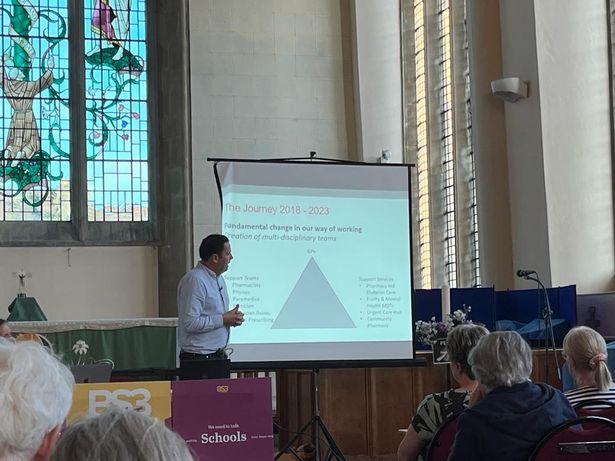 A public meeting organised by Action Greater Bedminster, to discuss primary care provision in BS3, included a presentation by James Ingham, Bridge View Medical’s operations director, and Dr Andrew Platt, a partner in the practice(Image: Bristol Live)
“Without this mitigation, the development would not comply with planning policies,” they added.
The renewed intervention of the NHS is the latest in a series of similar objections from health chiefs to the scale of Bristol’s 2020s tower block boom, which has not been accompanied by investment in local GP surgeries.
The NHS bosses making submissions to the council use complicated formula to work out how much extra demand on local doctors’ surgeries will create from each development – student accommodation is said to create less than regular residential development – and whether local GP surgeries have the capacity to cope with more people.
READ MORE: NHS asks for £2 million from planners for more doctors in Bristol’s housing boomREAD MORE: NHS needs £3.2m from council to cope with East Bristol regeneration
In Fishponds, around Temple Meads and in Bedminster and Ashton in particular, the NHS has asked for what amounts to more than £5 million over the past couple of years, but so far not received a penny from City Hall.
Bristol Live has reported extensively on the ongoing row between the city council and the NHS over who should pay for new or extended GP surgeries in areas where thousands of new homes have been built.
The city council has repeatedly refused to comply with NHS demands attached to many individual development sites, that the council hand over what amounts to millions in Community Infrastructure Levy money that developers give to the council to pay for infrastructure improvements.
The council has consistently rebuffed these appeals, despite councillors telling Bristol Live they are working with the NHS on this issue, and on a city-wide solution, rather than accede to NHS requests for specific sums from each development.
Police concerns
The development on Princess Street has also attracted an objection from Avon and Somerset police, whose crime prevention planning officer scours each major application to suggest changes that could mean less crime.
At Princess Street, the police are objecting too, warning that the development plans as they stand now could create an ‘appealing’ area for anti-social behaviour, particularly around the riding of ‘nuisance bikes’, and ruled that the plans were ‘not acceptable in its current format’.
“The application site is permeable with green spaces, cycle routes and it being openly accessible,” the police expert told council planners. “Excessive permeability can increase nuisance from the misuse of mopeds/motorcycles which has a significant impact on police resources as well as nuisance to residents.
 File picture of a police officer(Image: Derby Telegraph)
“This is a prominent issue within south Bristol and I am concerned that unless some form of bike ‘barrier’ is installed on the access point to Railway Lane then this area could suffer with nuisance as a result.
“Railway Line is a straight road which is not as well overlooked as the surrounding streets of Princess Street etc and it cannot be well lit due to there being a wildlife corridor. The combination of these factors make it particularly appealing for nuisance bikes,” she added.
Council planners are expected to come to a decision on the plans early in 2026.