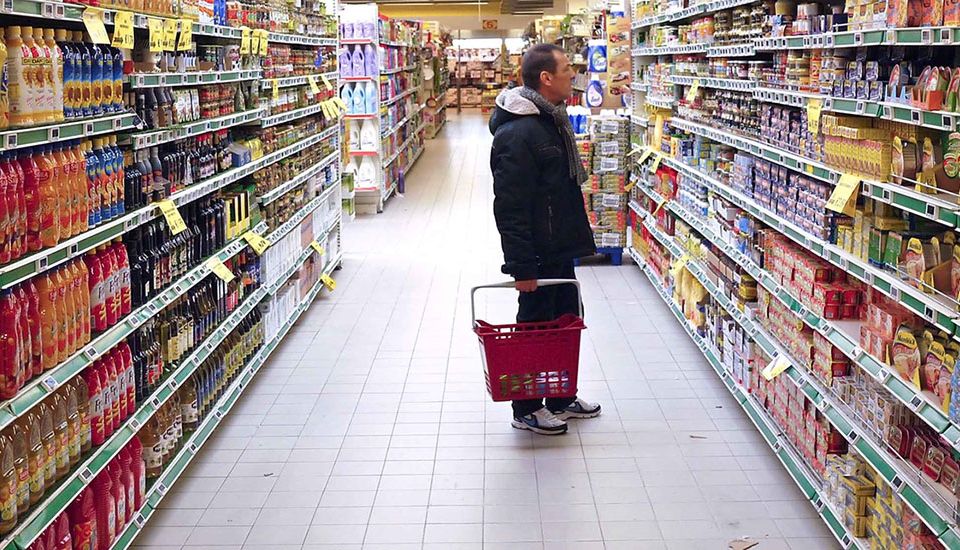
File photo.
The European Union-harmonized index of consumer prices in Greece soared to 2.9% in November, according to Eurostat estimates, from 1.6% in October, with price increases in food and services being the main causes for the resurgence of inflationary pressures.
This development comes even as the implementation of the much-discussed “Price Reduction” initiative has begun in over 2,000 supermarket codes and proves once again that inflation in Greece is persistent.
Although an increase in inflation was recorded across the eurozone in November, it was much milder compared to Greece, as the harmonized index of consumer prices stood at 2.2% from 2.1% in October.
According to Eurostat data, the so-called food inflation in Greece stood at 3.1% from 2.5% in October, services inflation at 4.7% from 2.8% in October, while the rate of increase in energy prices was marginally positive (0.3%).
The persistence of inflationary pressures also explains to a significant extent the drop in the consumer confidence index, which the Foundation for Economic and Industrial Research (IOBE) compiles, to -50.6 points in November from -47.6 points in October.