In 2025, NASA faced unprecedented uncertainty as it grappled with sweeping layoffs, looming budget cuts, and leadership switch-ups. Despite all of that, the agency somehow still managed to do some seriously astonishing science.
The insights we gained from NASA researchers, robots, telescopes, and spacecraft this year underscore the importance of protecting the agency’s core mission: to explore the unknown in air and space, innovate for the benefit of humanity, and inspire the world through discovery.
NASA will continue stretching the limits of our knowledge for years to come, but before we look ahead, it’s worth revisiting some of the agency’s most groundbreaking discoveries of the past year. Here are seven that truly stood out.
A potential biosignature on Mars 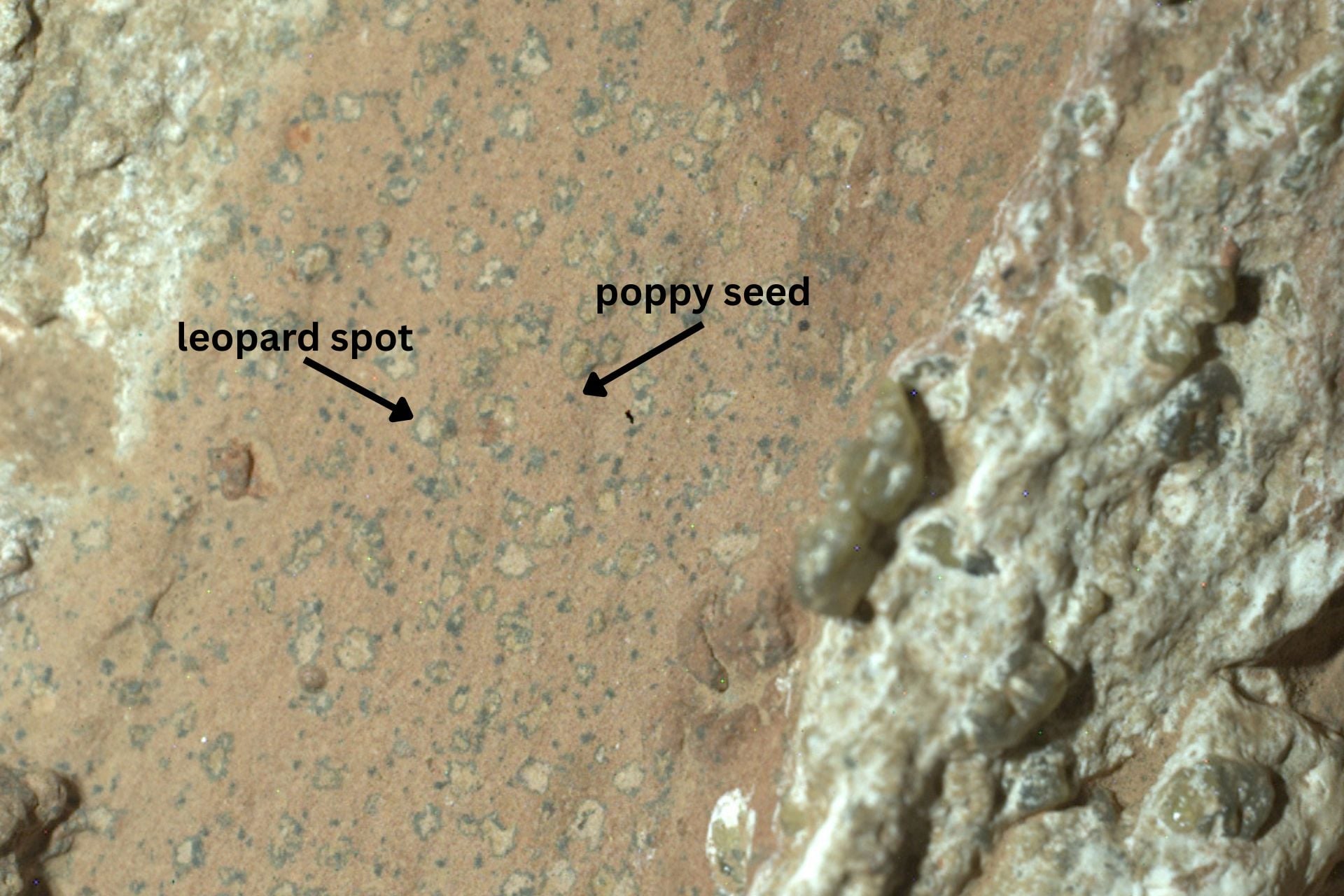 Perseverance captured this image of a rock called Cheyava Falls on July 18, 2024 © NASA/JPL-Caltech/MSSS, labels added by Gizmodo
While exploring Mars’s Jezero Crater in July 2024, NASA’s Perseverance rover stumbled upon an unusual rock. Its surface was peppered with spots resembling poppy seeds and leopard print. These distinctive features immediately caught the attention of scientists on Earth, as they suggested it may hold a potential biosignature.
Perseverance extracted a core and used its science instruments to investigate the surface chemistry and composition of the rock, now known as Chevaya Falls. A team of scientists led by Joel Hurowitz, an associate professor of planetary science at Stony Brook University, quickly got to work analyzing Perseverance’s data. In September of this year, the agency revealed their findings. Chevaya Falls may in fact be the clearest sign of past life ever found on Mars.
The rock not only contains ingredients for life (organic carbon, sulfur, oxidized iron (rust), and phosphorus) but also minerals that are often associated with microbial metabolism on Earth. These findings, published in the journal Nature, point to a possible biosignature, but to confirm this, scientists will need to retrieve the core and analyze it on Earth.
It’s unclear whether that will ever happen. The Mars Sample Return mission is currently in limbo as NASA reevaluates its architecture and schedule. Still, this discovery has reinvigorated the search for evidence of past life on the Red Planet.
Interstellar object 3I/ATLAS
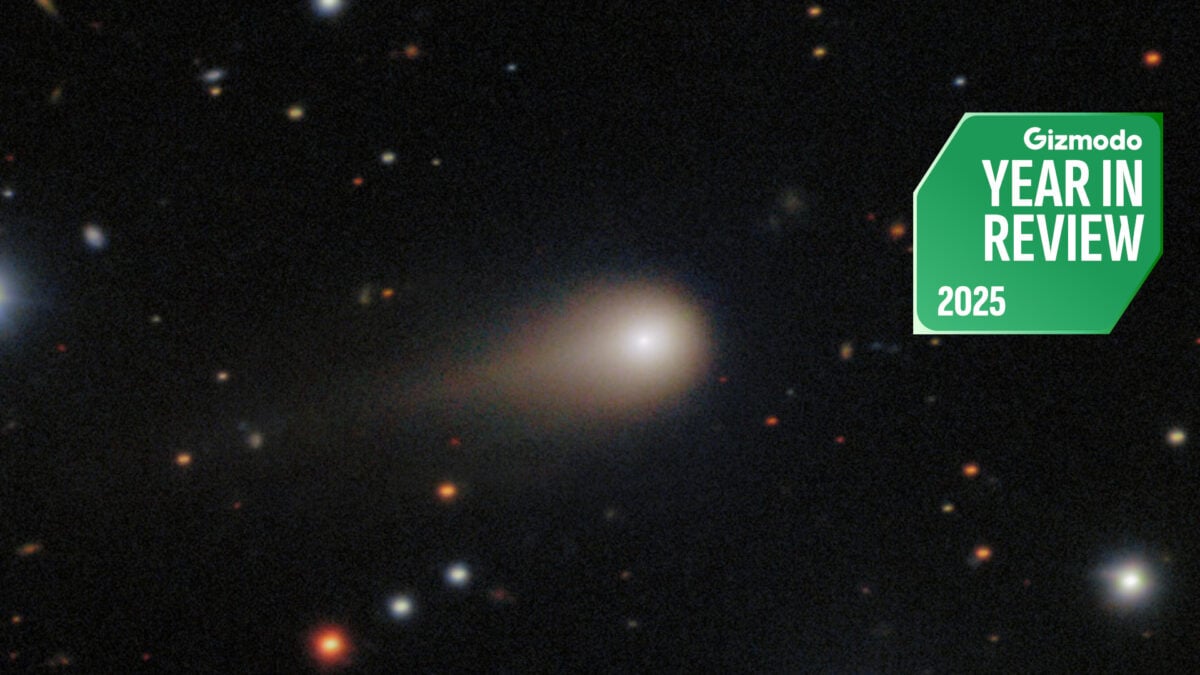
The vast majority of asteroids and comets astronomers detect are native to our solar system, but once in a great while, a celestial body from a far-off corner of the galaxy pays us a visit. Astronomers had only discovered two interstellar objects before the NASA-funded Asteroid Terrestrial-impact Last Alert System (ATLAS) spotted a third in June.
That object, named 3I/ATLAS, is a comet that hails from a distant star system. Astronomers around the world have been racing to gather as much data on it as possible before it vanishes, never to return. Interstellar objects offer exceptionally rare opportunities to study samples from other planetary systems, providing insight into the formation, evolution, and composition of distant worlds that spacecraft can’t reach.
Researchers have already uncovered fascinating details about 3I/ATLAS, such as its unusually high carbon dioxide content and incredible age. NASA has used several different spacecraft to observe the comet, gathering a wealth of data and imagery that the agency unveiled on November 19. Astronomers will be sifting through this wealth of information long after 3I/ATLAS exits our solar system.
Betelgeuse’s companion star 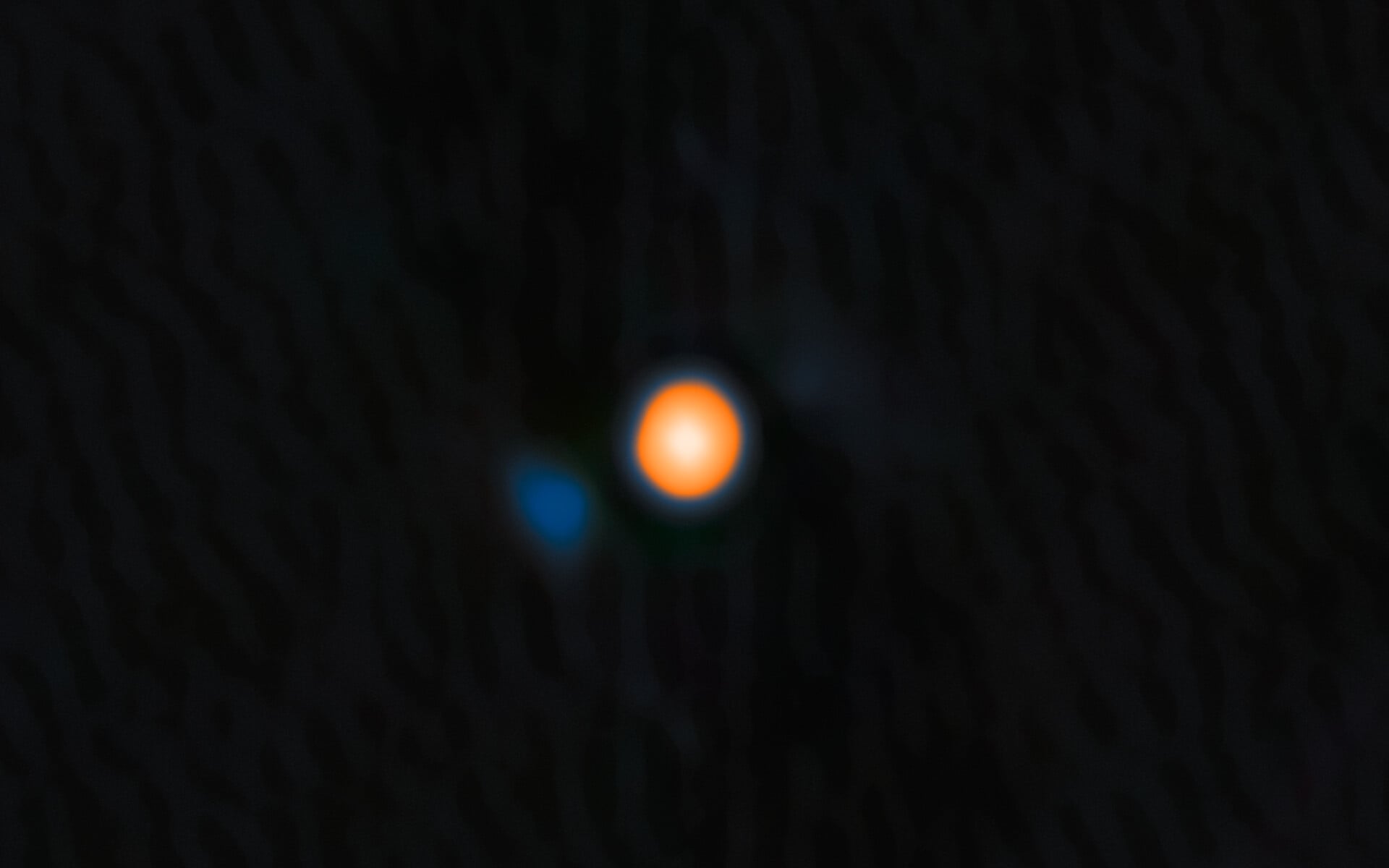 Astronomers at last confirmed the existence of a companion star orbiting Betelgeuse © International Gemini Observatory/NOIRLab/NSF/AURA/M. Zamani (NSF NOIRLab)
The bizarre glowing patterns of Betelgeuse, a red supergiant star in the constellation Orion, have puzzled astronomers for years. In 2024, astronomers hypothesized that Betelgeuse might have a tiny stellar companion—a BetelBuddy, if you will—that could explain this strange phenomenon.
Earlier this year, a team of scientists led by Steve B. Howell, a senior research scientist at NASA’s Ames Research Center, confirmed this to be true. Their findings, published in The Astrophysical Journal Letters in July, are based on observations from the Gemini North telescope in Hawaii.
Using a technique called speckle imaging—which eliminates distortions in space caused by Earth’s atmosphere—the researchers captured a high-definition image of the BetelBuddy, revealing its characteristics for the first time.
With the discovery of this small, dim companion star, astronomers finally understand why Betelgeuse’s brightness varies on a cycle of about 400 days, with a secondary period lasting roughly 6 years. While variable stars are relatively common, astronomers had struggled to explain Betelgeuse’s extended dimming period for centuries.
Uranus’s hidden moon
While we’re on the subject of spotting never-before-seen celestial objects, did you know that NASA’s James Webb Space Telescope discovered a new moon orbiting Uranus this year?
The moon, provisionally named S/2025 U1, is so small and faint that it went undetected by the agency’s Voyager 2 probe during its Uranus flyby nearly 40 years ago. Webb finally spotted S/2025 U1 in early February thanks to the telescope’s incredibly powerful Near-Infrared Camera (NIRCam).
After this initial detection, a team of astronomers led by Maryame El Moutamid, a lead scientist at the Southwest Research Institute’s (SwRI) Solar System Science and Exploration Division, conducted further imaging of S/2025 U1. This showed that the moon is nestled at the edge of Uranus’s inner rings, roughly 35,000 miles (56,000 kilometers) from its center in the planet’s equatorial plane.
S/2025 U1 is the 29th moon discovered orbiting Uranus. With an estimated diameter of just 6 miles (10 kilometers), this itty bitty, previously hidden moon suggests the gas giant may host many more, just waiting for an instrument powerful enough to spot them.
The heaviest black hole ever found 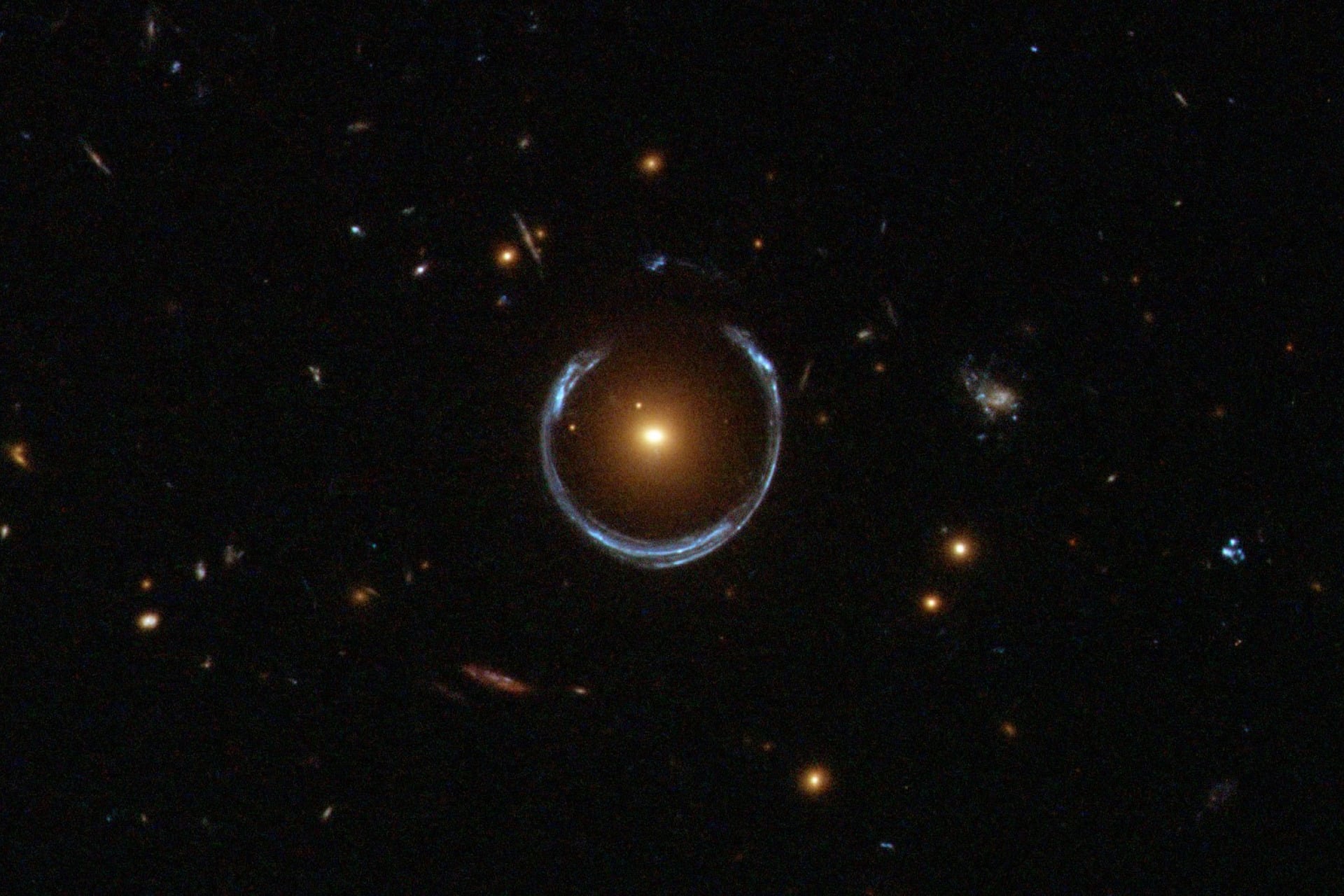 The newly discovered ultramassive black hole lies at the center of the orange galaxy © NASA/ESA
Using data from NASA’s Hubble telescope and the European Southern Observatory’s Very Large Telescope, astronomers discovered what is quite possibly the most massive black hole ever detected. The team’s findings, published in the journal Monthly Notices of the Royal Astronomical Society in August, describe an absolute behemoth with an estimated mass 36 billion times greater than that of our Sun.
The monster lies at the center of a supermassive galaxy called the Cosmic Horseshoe, located 5 billion light-years away from Earth. This galaxy’s gargantuan size visibly warps spacetime, bending the light from nearby galaxies into a horseshoe-shaped glare called an Einstein ring. This phenomenon played an important role in helping astronomers spot the new black hole.
Cosmological models predict that larger galaxies—like the Cosmic Horseshoe—are capable of hosting ultramassive black holes, but conventional methods of black hole detection aren’t able to spot them. The study’s authors—led by Carlos Melo, a PhD student at Brazil’s Universidade Federal do Rio Grande do Sul—overcame this hurdle by combining gravitational lensing with data from VLT and HST.
This two-pronged approach proved effective, allowing Melo and his colleagues to detect a dormant ultramassive black hole by observing the gravitational effect it has on its surroundings. The discovery pushes the boundaries of what scientists thought to be cosmologically possible.
Ingredients for life in Bennu asteroid samples
In 2023, NASA’s historic OSIRIS-REx mission returned to Earth with samples from the asteroid Bennu. Agency scientists have been busy analyzing these precious parcels of rock and dust ever since, and this year, they found a wealth of evidence to suggest this near-Earth asteroid contains ingredients for life.
Two studies published in the journals Nature and Nature Astronomy in January describe briny residue found in the samples. While this substance differs from the composition of Earth brines, it contains protein-building amino acids and the five nucleobases that form the building blocks of RNA and DNA. Even before this discovery, initial analyses of the Bennu samples indicated that the asteroid contains plenty of carbon and water.
As if that weren’t groundbreaking enough, a team of researchers led by Yoshihiro Furukawa—an associate professor at Tokoku University in Japan—has now found that the Bennu samples also contain sugars. Their findings, published December 2 in the journal Nature Geoscience, confirm that Bennu carries all the ingredients for life as we know it.
This strongly suggests that asteroids like Bennu were responsible for delivering the key ingredients for life to Earth. Interestingly, the only sugar missing from the samples was deoxyribose, a fundamental component of DNA. This supports the RNA world hypothesis for the origin of life, which posits that Earth’s earliest life forms consisted of RNA molecules that contained genetic information and could replicate.
The closest images of the Sun ever taken
NASA’s Parker Solar Probe made history last year when it flew closer to the Sun than any spacecraft had before, coming within just 3.8 million miles (6.12 million kilometers) of the solar surface. In July, the agency released the jaw-dropping images Parker took during this flyby.
The close-up photos and videos, taken by the probe’s Wide-Field Imager for Solar Probe (WISPR), reveal the Sun’s corona in unprecedented detail. They provide a high-resolution view of solar weather, capturing multiple coronal mass ejections and raging solar winds.
These observations will help NASA scientists refine their approach to space weather prediction, as CMEs and solar winds can trigger geomagnetic storms in Earth’s magnetosphere. Such storms can disrupt satellites, power grids, and other technologies we rely on. Understanding the forces that trigger geomagnetic storms is essential to protecting this critical infrastructure.