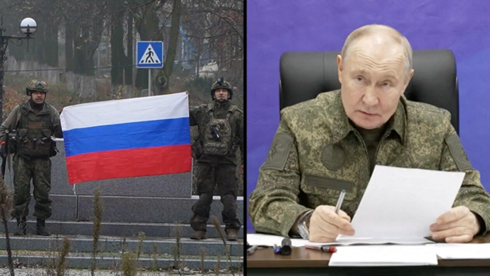
The omission of any reference to “progress” was seen as a sign of what many view as a failed Kremlin summit, which stretched late into the night and lasted five hours. Putin’s senior adviser Yuri Ushakov announced immediately afterward that no compromise was reached, and officials in Kyiv and Western capitals quickly asserted this was further proof that Putin has no intention of ending the war but aims to continue seizing Ukrainian territory.
6 View gallery
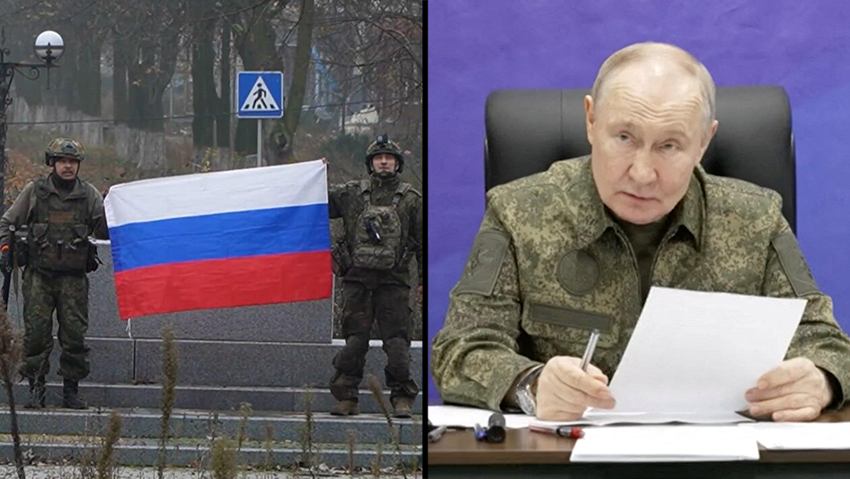
Putin and his fighters raise the Russian flag in the city of Pokrovsk in the Donbas region – a city where heavy fighting is currently taking place
(Photo: Russian Defense Ministry)
Documentation released by Russia from the destroyed Pokrovsk
(Video: Russian Defense Ministry)


Not long after the White House statement, Trump commented publicly on the meeting and did not sound especially optimistic. Asked about the Kremlin talks at an event in Washington, he called them “reasonably good,” and while he claimed the Russians “would like to make a deal”, he admitted he does not know whether the meeting will yield real results. “What comes out of that meeting I can’t tell you because it does take two to tango,” he said. A White House official later said Witkoff and Kushner would meet Thursday in Miami with Rustem Umerov, head of the Ukrainian negotiating team, to continue discussions.
The Kremlin meeting had been viewed as a decisive moment in Trump’s renewed push in recent weeks to resolve the war — a conflict he pledged during his campaign he could end within “24 hours,” though he has since conceded the challenge is far more complex. Multiple initiatives he advanced have failed. Putin repeatedly rejected a proposal for an immediate ceasefire as a basis for negotiations, and Trump recently appeared ready to drop his efforts entirely. He revived them only after drawing encouragement from his success in ending the Gaza war in October. As in the Israel–Hamas talks, his team drafted a “points plan” to end the Ukraine war.
The plan, originally 28 points, alarmed Kyiv and European governments when it was revealed to have been shaped partly in consultations with Putin’s advisers and to have adopted several Russian demands, including a full Ukrainian withdrawal from the Donbas region, the central battleground of the war. After further talks with Ukrainian and European representatives ahead of the Kremlin summit, the proposal was significantly revised, raising questions about how Moscow would receive the updated version. After the meeting, it became clear Putin rejected it. Kremlin spokesman Dmitry Peskov insisted it was inaccurate to say Putin “rejected” the plan but said several elements were unacceptable to Russia.
6 View gallery
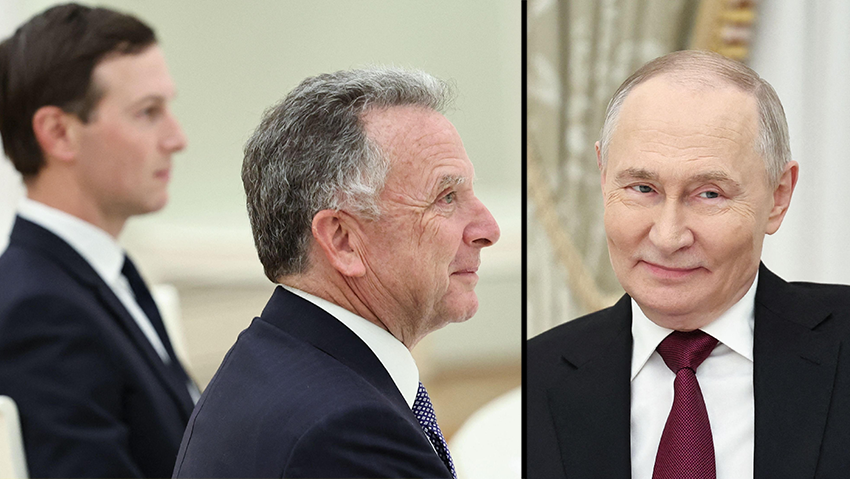
Putin and Trump envoys, at a summit in the Kremlin
(Photo: Alexander KAZAKOV / POOL / AFP)
6 View gallery
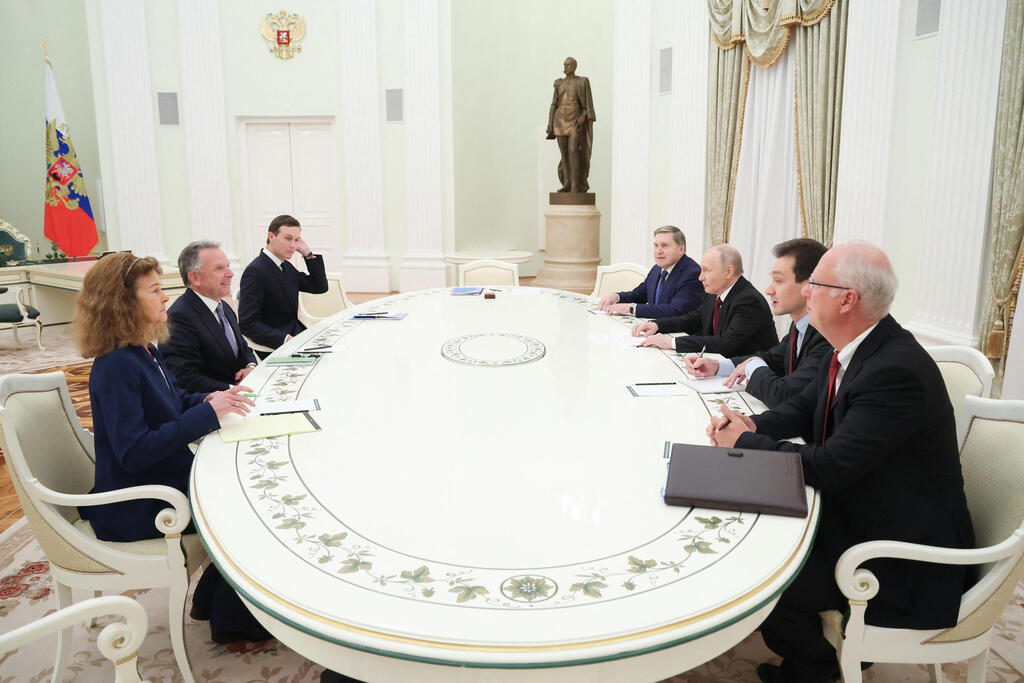
(Photo: Alexander KAZAKOV / POOL / AFP)
“A direct exchange of views took place yesterday for the first time. Some things were accepted, some things were marked as unacceptable. This is a normal working process of finding a compromise,” Peskov told reporters, declining to provide details and saying confidentiality was essential to any chance of success. Earlier, Ushakov had told the media that “some American proposals are acceptable to Russia, while others are not,” but again said no compromise was achieved and the sides would need to continue talks. He described the Putin–Witkoff–Kushner meeting as “constructive, very useful and informative.” “The work will continue,” he said.
In practice, however, the discussions appear to be stalled again. Western analysts see the summit’s failure as further evidence that Putin has no intention of ending the war, as Kyiv and its European allies maintain. Russia currently controls 19% of Ukraine’s territory and, in recent months, has held the advantage on the battlefield — advancing slowly and with heavy losses, but nonetheless steadily capturing more land from Ukrainian forces. Reuters reported that Russia’s rate of advance in 2025 is the fastest since 2022, the year it launched the full-scale invasion and triggered Europe’s largest war since World War II. Nearly four years into the conflict, at least 1.2 million people have been killed or wounded.
In repeated statements, including this week, Putin has insisted that any diplomatic settlement must fulfill the objectives he set when launching what he calls the “special military operation” — foremost a Ukrainian withdrawal from the entire Donbas region. Ukrainian President Volodymyr Zelensky has said he cannot accept this under any circumstance and that Ukrainians would not allow him to concede such territory.
6 View gallery
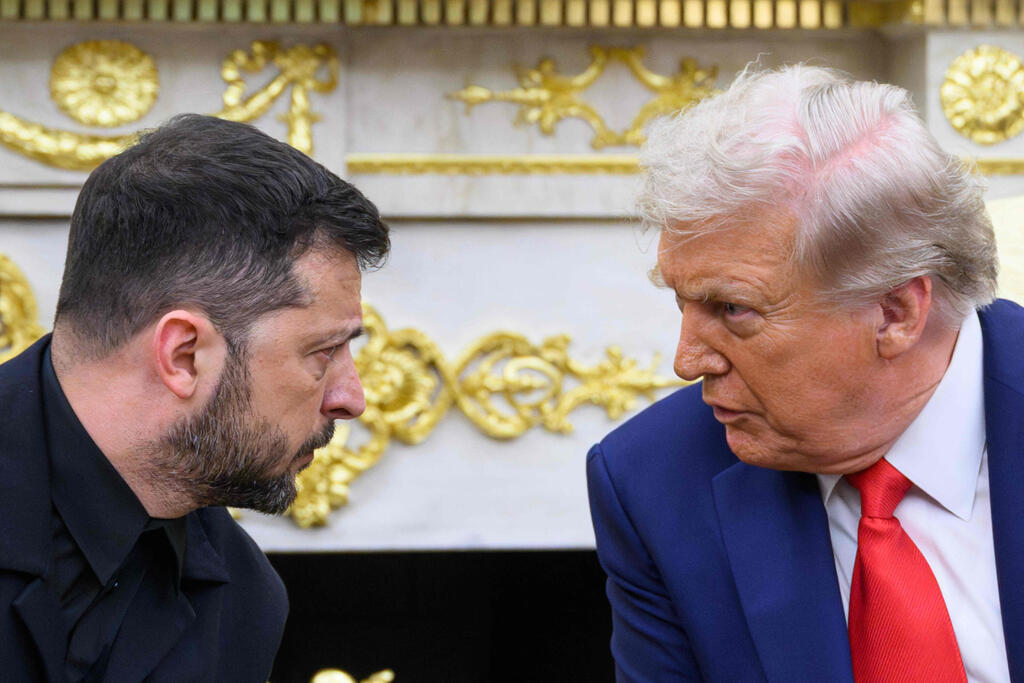
Trump and Zelensky; the president admitted that the task was much more difficult than he thought
(Photo: Mandel NGAN / AFP)
Steve Rosenberg, the BBC’s Russia editor, wrote that Putin appears determined to convince Western adversaries he cannot be stopped, but that he himself seems uncertain about any direction other than continued war. “I’ve said before that, in many ways, Vladimir Putin reminds me of a car with no brakes, no steering wheel and no reverse gear; a vehicle careering full speed down the motorway. Nearly four years after the full-scale invasion of Ukraine there is still no sign of the ‘Putinmobile’ turning off, turning back, or coming to a halt,” he wrote.
Putin, Rosenberg added, “certainly wants his opponents to think that nothing or no one can force him to change direction: neither European leaders, nor the Trump administration, nor President Zelensky. But cars need fuel (a constant supply). And, to fight a war, countries need money (a constant supply). For now, despite international sanctions, Russia’s government is still able to finance the “special military operation” – its war on Ukraine. But economic pressures are building: revenues from oil and gas have been falling, the budget deficit growing.” Rosenberg noted that Putin himself has acknowledged worrying trends in the Russian economy, citing his admission this week that in some sectors “output not only failed to increase this year but actually decreased.” The key question, Rosenberg wrote, is whether mounting economic strain will ultimately alter Putin’s calculations about continuing the war: “The big unknown.”
Predictably, Ukraine and European governments criticized Russia after the failed summit. Ukrainian Foreign Minister Andrii Sybiha said Putin must “stop wasting the world’s time,” while British Prime Minister Keir Starmer dismissed Putin’s threat — issued shortly before the Kremlin meeting — accusing European leaders of warmongering and declaring, “If Europe wants to go to war and starts one, we are ready right now.” Starmer called the statement “yet more Kremlin claptrap from a president who isn’t serious about peace.”
Elsewhere in Europe, a public rift erupted Wednesday between EU leaders in Brussels and Belgium over whether to use frozen Russian assets to finance aid for Ukraine. The issue has troubled EU governments for months. Europe is holding €210 billion in Russian assets frozen in 2022 as part of sanctions over the invasion, and profits from those assets are already being used to support Kyiv. The dispute centers on using the assets themselves. Most — €185 billion — are held in Belgium, which fears legal action Russia says it will take, calling the move theft. Moscow has already threatened “50 years of lawsuits” if the plan proceeds.
6 View gallery
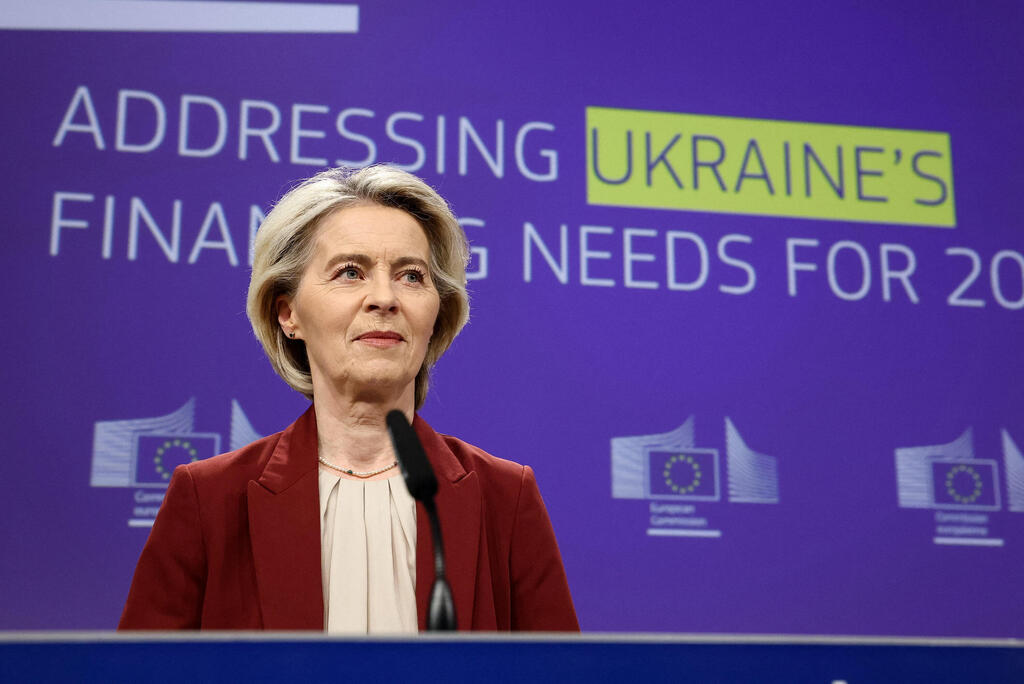
European Commission President Ursula von der Leyen
(Photo: REUTERS/Yves Herman)
6 View gallery
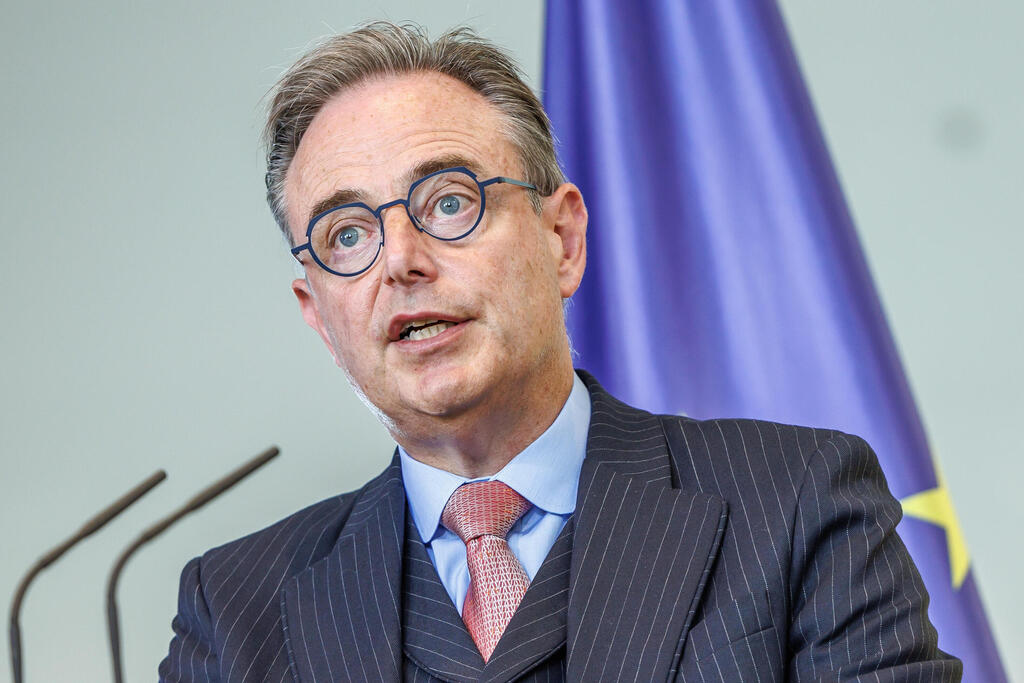
Belgian Prime Minister Bart De Wever
(Photo: Andreas Gora – Pool/Getty Images)
Belgium has demanded strong guarantees from other EU states to share the legal and financial risk. On Wednesday it accused European Commission President Ursula von der Leyen of ignoring its concerns. Von der Leyen, who has pushed to use the funds to help Ukraine, unveiled a plan to employ them as collateral for €90 billion in large loans to Kyiv over the next two years. “Since pressure is the only language the Kremlin responds to, we can also dial it up,” she said. “We have to increase the costs of war for Putin’s aggression and today’s proposal gives us the means to do this.”
Von der Leyen said she took Belgium’s concerns into account, but Brussels quickly rejected the plan. Belgian Prime Minister Bart De Wever called it “fundamentally wrong.” Foreign Minister Maxime Prévot said the EU had “underestimated” Belgium’s concerns and insisted aid to Ukraine should instead come from regular market loans. “If Russia takes us to court, it will have every chance of winning, and we, Belgium, will not be able to repay those €200 billion, because that represents the equivalent of an entire year of the federal budget. It would mean bankruptcy for Belgium,” he said.