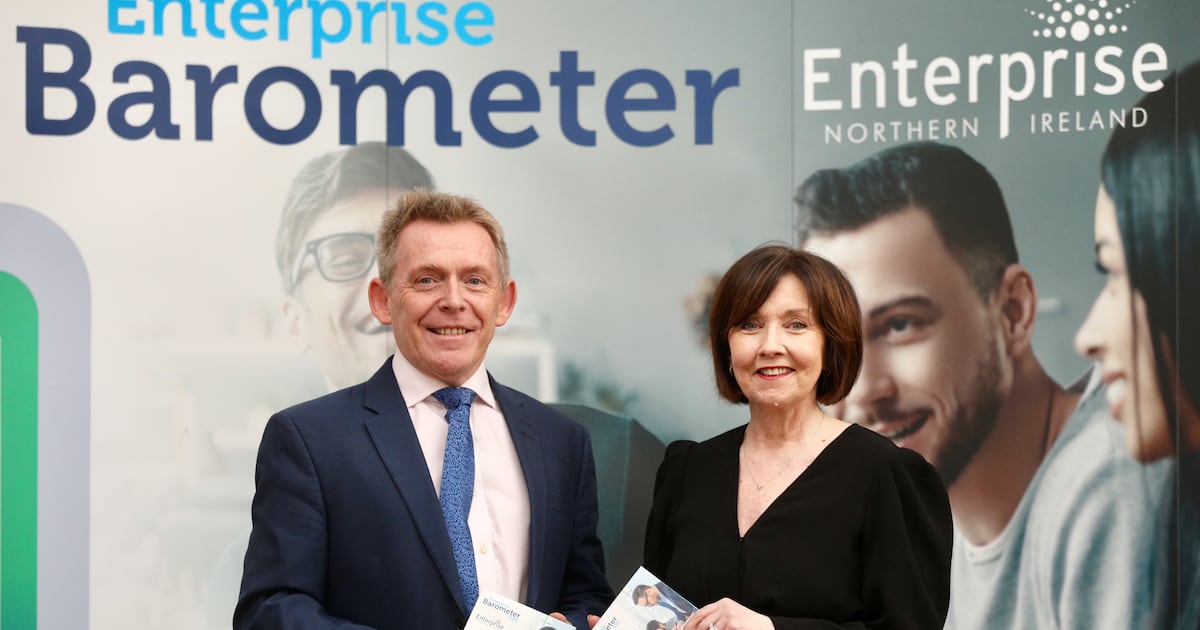
One-in-five entrepreneurs in Northern Ireland saw their business contract this year, a new survey from Enterprise NI suggests.
The annual Enterprise Barometer survey found that while ambition remains among northern businesses, real pressures are forcing many entrepreneurs to “hit pause” on growth in 2025.
Now in its seventh year, Enterprise NI said its barometer represents the most comprehensive dataset of its kind in the north.
While many firms enjoyed improved turnover in 2025, a significant minority are slipping backwards, with one-in-three experiencing weak cashflow, and persistent challenges around funding, skills and technology adoption.
Costs increased for 78% of businesses in the last 12 months, according to the survey.
Utilities (87%), raw materials (85%), and insurance (85%) were cited as the top rising costs.
Almost three-quarters (72%) of businesses reported wage costs increase, with one-third seeing increases over 10%.
Despite the pressures, 56% of businesses were optimistic about growth in the coming year, a marked improvement on last year (43%).
“This year’s barometer provides one of the clearest indications yet that the pressures facing our small and micro businesses are becoming deeply embedded,” said the economist Maureen O’Reilly.
“The resilience and ambition shown by many firms is remarkable, but we cannot ignore the fact that one in five are now contracting and a significant number are experiencing prolonged financial strain.”
Enterprise NI’s chief executive, Michael McQuillan, added: “Businesses want simple, visible, joined-up support. They want clarity, consistency and a system that moves as fast as they need it to.
“A ‘one front door’ model for enterprise support, hybrid, digital-first but backed by real advisers, is not optional; it is essential.
“It would be reckless not to listen to them. Without a coordinated, fit-for-the-future support system in place – one that brings councils, Invest NI, Enterprise NI, local enterprise gencies and the Department for the Economy around the same table – Northern Ireland risks opening up a productivity and digital divide that becomes impossible to close.”