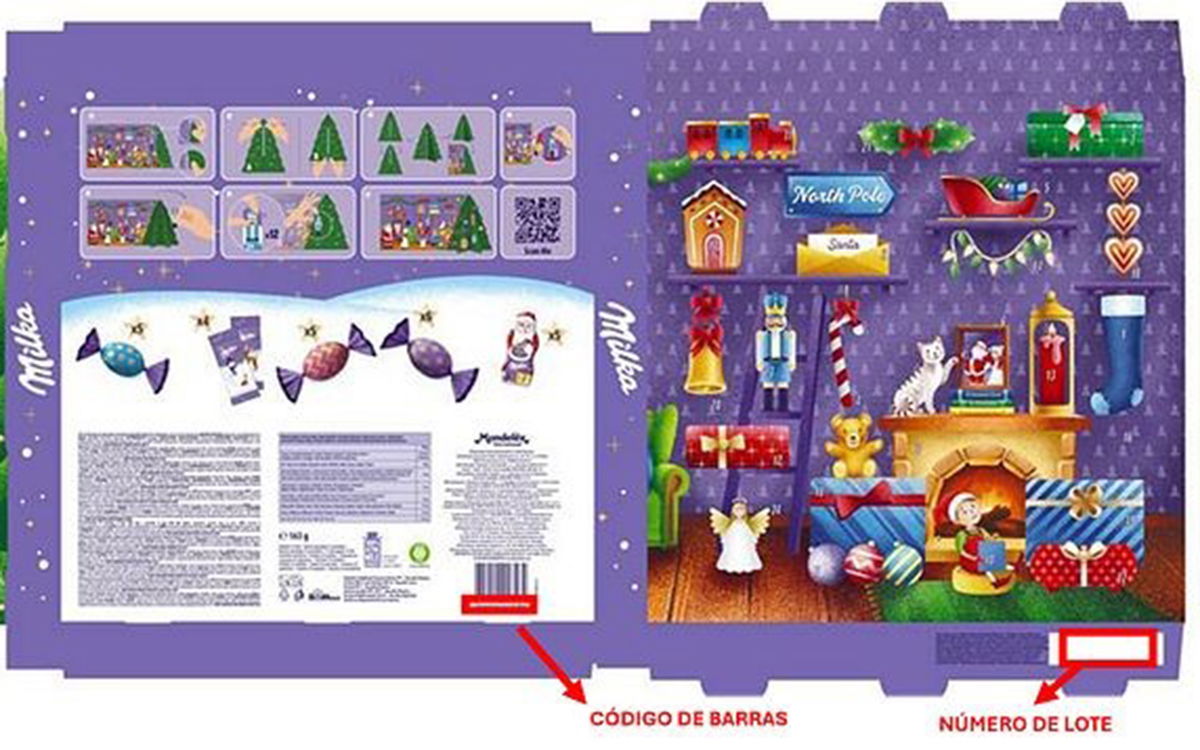
Consumers should check lot number CWS1252831 . Credit: AESAN
Spain’s festive season has barely begun and a popular Christmas tradition has already triggered a fresh food-safety alert. As families begin counting down to Christmas Eve with daily chocolates from advent calendars, the Spanish Agency for Food Safety and Nutrition (Aesan) has issued an urgent warning on Thursday December 4 concerning a product aimed primarily at children and families.
Undeclared allergens raise concern in Spain
According to Aesan, an advent calendar currently on sale contains several allergenic ingredients that are not listed in Spanish, posing a significant risk for anyone with food allergies or intolerances. The lack of mandatory information breaches current food-labelling regulations and could leave vulnerable consumers unaware of the presence of substances that may affect their health.
Most Read on Euro Weekly News
The undeclared allergens include milk, soya, hazelnuts, other nuts, egg, wheat and gluten. Without this information printed in the official language, consumers are unable to verify whether the product is safe for them or their children.
Product details and affected allergens
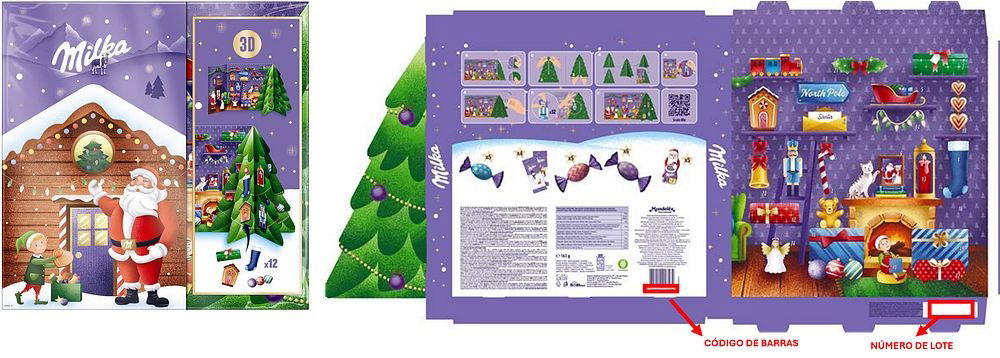
The alert specifically concerns the Milka Pop-Up 3D advent calendar, the version that includes a small three-dimensional Christmas tree. The item is marketed by Mondelēz International.
Consumers should check lot number CWS1252831 and the best-before date 31 March 2026.
Aesan warns that the absence of Spanish on the ingredient list could lead a parent or guardian to offer the chocolate to a child with allergies, unaware that it contains allergenic ingredients or traces capable of triggering an adverse reaction. Transparent labelling is essential for food safety, and in this case the language issue has become a potential health risk, prompting action from the authorities.
Distribution areas and withdrawal protocols
The product has been distributed across several Spanish regions, including Andalusia, Aragón, Catalonia, the Valencian Community, Galicia, Murcia and the Basque Country. Aesan notes that commercial redistribution could mean the calendar has reached other areas not initially listed, so nationwide caution is advised.
The alert has been circulated through the Coordinated Rapid Information Exchange System (Sciri), enabling regional health authorities to ensure the affected units are promptly removed from sale. Product withdrawal is the standard procedure in cases of labelling inaccuracies that could pose a health risk.
Consumption advice and the company’s response
Authorities have issued straightforward guidance:
Anyone with allergies or intolerances to the listed ingredients must not consume the product if they already have it at home. For everyone else, the calendar is considered safe, as the issue lies solely with incorrect labelling, not with product quality or toxicity.
Mondelēz International has released an official statement clarifying the situation, stressing that the incident is limited to the absence of Spanish-language information on the packaging. The company confirms that both the recipe and quality of the chocolate remain unchanged and has made the full list of ingredients and allergens available in Spanish. The problem affects only the specific lot mentioned, and all other Milka products sold in Spain comply with current labelling regulations and are safe to consume.