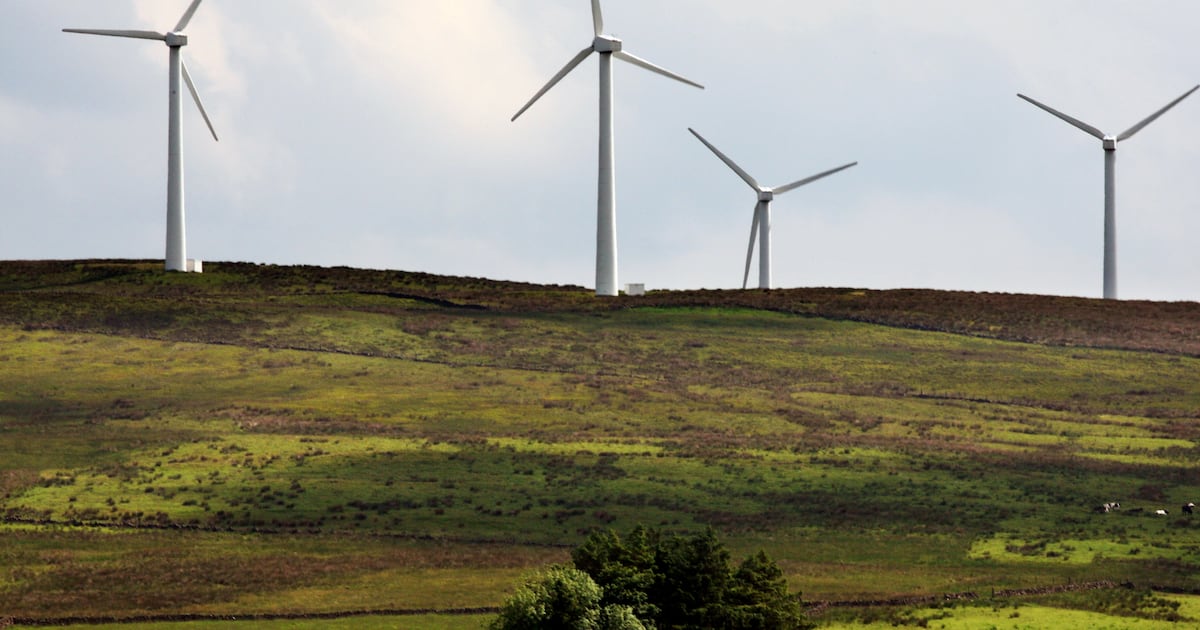
Power generated from renewable sources in Northern Ireland fell again in the last year and sits at barely half of the government’s target of 80% by 2030, new a report shows.
And RenewableNI has reiterated its warning that delays in policy and infrastructure reform are contributing to the ongoing decline.
In the 12 months to September 2025, some 44.2% of total metered electricity consumption was generated from renewable sources located in Northern Ireland, a Department for the Economy report says.
This represents a 0.3% decrease on the previous year, and is a continued downward trend from the 51% peak achieved in 2022.
 RenewableNI director Mark Richardson

Some 7,279 gigawatt hours (GWh) of total electricity was consumed over the year, with 3,219 GWh generated from renewable sources, primarily wind (82.2%), followed by biogas (6.5%) and biomass (5%).
RenewableNI director Mark Richardson said: “Figures will always shift slightly with changes in weather, but overall the trend should be rising as we approach the Climate Act obligation of 80% renewable electricity by 2030.
“Instead, because we have no market support scheme in place, very few new projects are progressing and generation is sliding backwards.
“To put this in perspective, in 2016 when the last renewable electricity support scheme was operational, 400MW of new generation was connected. Since 2020, we have added just over 100MW of new generation in total.”
He added: “I have been in post for less than a month and already it is clear that there is growing concern in the wider renewable sector in the delivery of policy and infrastructure reforms needed to secure the economic and social benefits of clean power.
“The renewable electricity sector is ready. Enough projects in pre- and planning to meet future demand. We can prepare for decarbonising heat and transport. But we cannot do it while market security and planning timelines need to be addressed to stop stagnating as RoI and GB power ahead.
“There are 500 days left in this Assembly mandate. People need to see delivery, real legislated policy that improves their lives before they are asked to vote again. The legislative timetable is tight, but all parties signed up to the target of 80% by 2030.
“The same cross party support can ensure the support scheme goes through at pace unlocking investment in Northern Ireland as well as a secure energy supply.
“Northern Ireland has led progress in renewables before, I’m confident it can happen again but the time to act is now.”