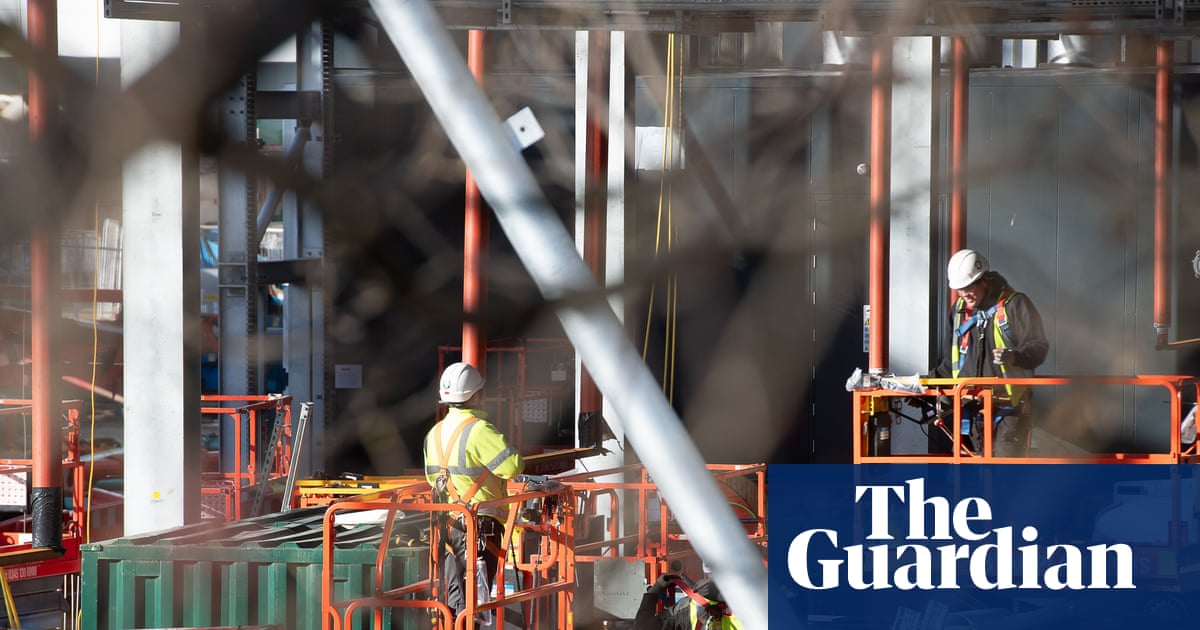
The UK construction sector last month suffered its sharpest slowdown in activity since the first Covid lockdown as building projects were scaled back and jobs cut amid budget uncertainty, according to a closely watched survey.
In a blow to Labour’s aims to boost infrastructure projects and build 1.5m homes by 2030, the poll of UK construction firms showed output in November shrinking at the fastest pace since May 2020, when all building stalled as the pandemic shut down sites.
The monthly purchasing managers’ index (PMI) for construction, considered one of the best indicators of growth in the sector, fell to 39.4 in November, down from 44.1 in October and below the 44.6 forecast by economists. Any reading above 50 represents growth and anything below a contraction.
The only other time the PMI survey, which is compiled by the data firm S&P Global, has suggested such a sharp contraction in new construction work was during the financial crisis in 2009, when the housing market crashed.
Builders have been scaling back on residential projects over the past year amid a subdued housing market and rising construction costs. Infrastructure and commercial development work also contracted sharply in November, as clients deferred investment decisions due to uncertainty about the autumn budget and “pervasive worries” about the UK economic outlook.
Separate Bank of England research has suggested businesses in the UK cut jobs at the fastest rate in four years in November. The survey of chief financial officers showed companies reduced employment by an annual rate of 1.8%, the sharpest contraction since July 2021.
The survey, called the decision maker panel, is closely monitored by Bank officials and has been cited by members of its interest rate-setting committee. Optimism for the year ahead remained subdued, with financial officers expecting employment to fall by 0.7%, the lowest level since October 2020.
However, Robert Wood, the chief UK economist at Pantheon Macroeconomics, suggested both surveys had been skewed by “chaotic” speculation before the autumn budget. “We find it hard to believe that conditions in the sector are genuinely as bad as during a full lockdown,” he said.
Wood said the construction output figures from the Office for National Statistics had been faring better than the PMI survey so far this year, while job postings across all sectors of the economy rose in November. “There’s no doubt that construction firms are extremely disappointed in the government’s progress, but we think the PMI remains too pessimistic.”
skip past newsletter promotion
Sign up to Business Today
Get set for the working day – we’ll point you to all the business news and analysis you need every morning
Privacy Notice: Newsletters may contain information about charities, online ads, and content funded by outside parties. If you do not have an account, we will create a guest account for you on theguardian.com to send you this newsletter. You can complete full registration at any time. For more information about how we use your data see our Privacy Policy. We use Google reCaptcha to protect our website and the Google Privacy Policy and Terms of Service apply.
after newsletter promotion
Matthew Swannell, the chief economic adviser to the forecasting group EY Item Club, agreed, saying the PMI had been “much more pessimistic than official estimates”. He added: “November’s extremely weak PMI should be approached with a healthy degree of scepticism.”