Bust-up over Manchester Town Hall refurb delays and costs
05:45, 05 Dec 2025Updated 06:40, 05 Dec 2025
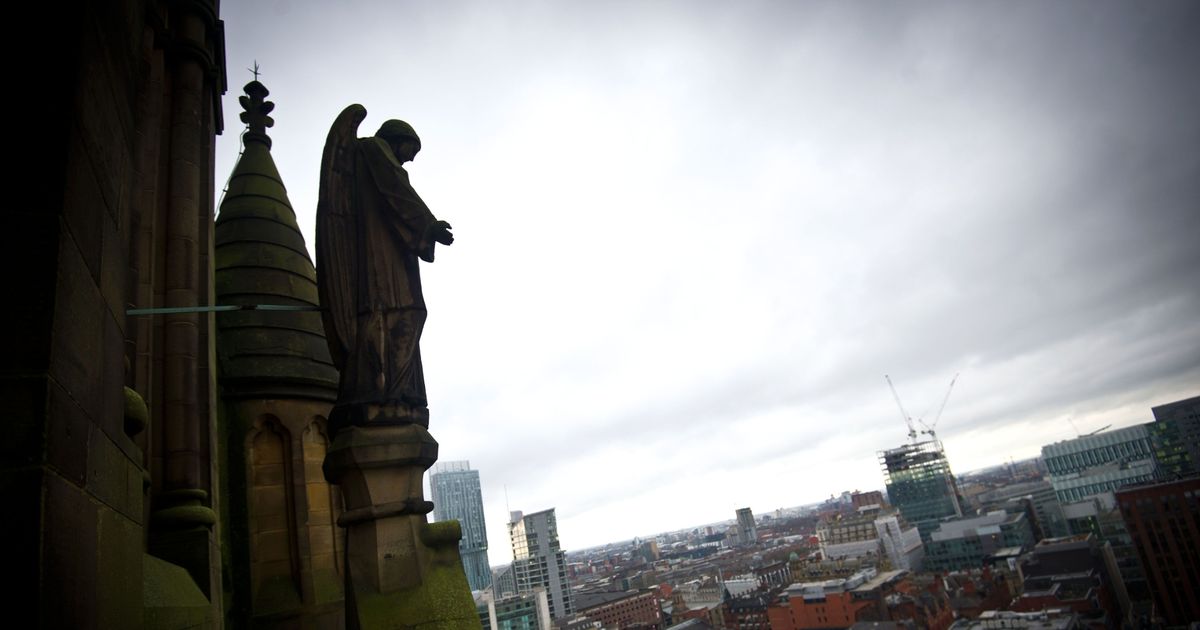
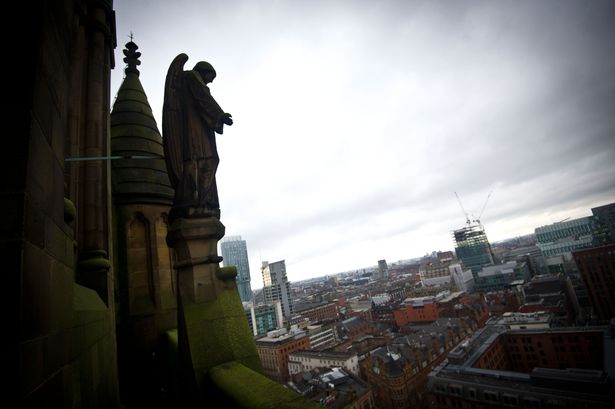 It’s loomed over Manchester for 148 years – and council bosses insist the £525m will mean the Town Hall can stay at the centre of the city for another century(Image: Mirrorpix)
Spiralling costs and more delays to refurbishing Manchester Town Hall are ‘a disaster of project management’, according to one councillor as he grilled project bosses. An extra £95m is needed to finish restoring the grade-I listed town hall, with work expected to take at least six more months to finish, council chiefs confirmed last week (November 28).
It will now cost £525m to restore the neo-Gothic gem, which will reopen several weeks after work finishes in ‘spring 2027’. Project managers formally asked for the new money on Thursday afternoon (December 4), which will likely be granted next week. The request prompted one councillor to brand the refurb ‘a disaster’.
“The reality is £305m has gone to £500m. There’s no doubt that’s a disaster of project management. That’s just a fact,” Coun Richard Kilpatrick said.
“I do not think we can say this is a well managed project. There’s value in it, of course. But we must do better. There must be something we can do to make sure there’s not this issue in the future projects.”
The £95m is the second time in 15 months councillors have been asked for more cash, with £76m extra granted last autumn, another aspect which came under fire from Coun Kilpatrick.
 Garry Bridges is the councillor overseeing work(Image: Jason Roberts /Manchester Evening News)
The Lib Dem added: “I do not know if it’s cultural that we can set a budget and increase it once, increase it twice, and to hell with it increase it three times. It puts us in a difficult position because we have to accept it.
“It’s public money, it’s borrowing that we have to justify. What can we do to change that process? We cannot be in a position to ask for an increase after increase after increase.”
Coun Garry Bridges, Labour deputy leader overseeing the work, replied the authority had ‘not hidden’ any reasons why the bill had ballooned. He said: “It’s not easy. We do not want to ask for extra money, but it’s the right thing to do. There are big macro factors like the pandemic and war in Europe for the first time in living memory.”
Coun Sam Wheeler also pointed out the town hall is ‘59 per cent’ over-budget at a time when public sector projects are ‘57 per cent overspent’ on average.
Other councillors were at pains to stress the town hall was partially shut-down and ‘not safe’ when it closed in 2018, forcing the authority to take a decision between an expensive revamp, initially expected to cost £305m, or spend ‘tens of millions’ mothballing the listed structure and moving council operations elsewhere.
Compounding matters is the fact Manchester Town Hall is the first nationally-important historic refurb of its size in decades, so the council had very little data to rely on before kick-starting work when they had to.
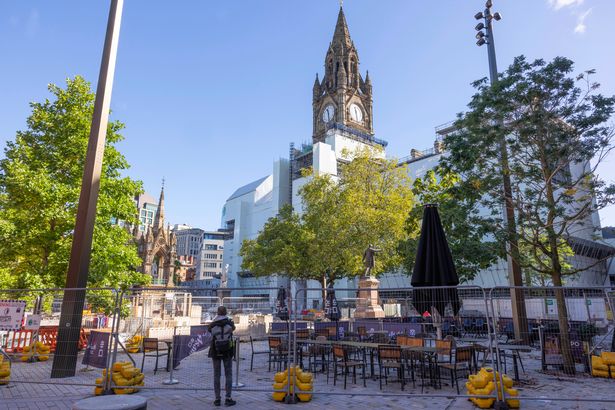 The end is in sight for the Town Hall, with Albert Square now largely back open(Image: Jason Roberts /Manchester Evening News)
Project director Paul Candelent said: “This project has no benchmarks. When you put your program together normally you use benchmark data. This particular project has very little benchmark data. You cannot find industry published standards on the cost of restoring stonework, for example.”
Mr Candelent recognised there are pros and cons of the set-up of the restoration, describing the management ‘unlike many other forms of contract’, which means management contractor Bovis ‘sit on the same side of the table’ as Manchester council.
He added: “The management contractor carries no risk. Every time there’s a delay, unless it’s negligence on their part, it’s a cost borne by their employer.
“It’s a procurement route that gives you a great deal of flexibility as you schedule work packages that can go forward and back. You can sequence the work compared to a lump sum package. But as well as those benefits, it has challenges around risk [adding to the final bill].”
The extra £95m is expected to be approved by the council’s executive on Wednesday, December 10, at 2pm.