The Athletic has launched a Cricket WhatsApp Channel. Click here to join.
Three years of planning. Three years or more of trying to make sure their fastest bowlers were fit and firing at the right time. And three years of indulging the likes of Zak Crawley in the belief that his game was perfectly suited for the series that will define ‘Bazball’.
Then, across four days of cricket, England spectacularly fluffed their lines.
The Ashes were not over at the end of the second day of the second Test. Not with Australia, 1-0 up after their two-day win in Perth, only 44 runs ahead with four wickets in hand and facing batting last on a pitch with cracks that are already having an influence and can only widen further.
But if the biggest prize in cricket is slipping away yet again for England — and, let’s be honest, history tells you it is — then they can only blame themselves after a day of brainless bowling, five dropped catches and, most surprising of all, uninspiring captaincy.
Yes, Australia have been the better team so far in a series played in fast-forward, mainly because of world-class bowling from Mitchell Starc, an inspired display of hitting from Travis Head in Perth and a rare outbreak of sensible, if still rapid, batting at the Gabba.
But, let’s face it, Stuart Broad was spot on when he said before this series that this was the weakest Australian team since England’s win Down Under in 2010-11. That does not mean they are a poor side. Just that they are an ageing one and not as good as their predecessors.
And England really are, in theory at least, the best they have sent to Australia since the heady days of Andrew Strauss and Andy Flower, for all their self-destructive tendencies.
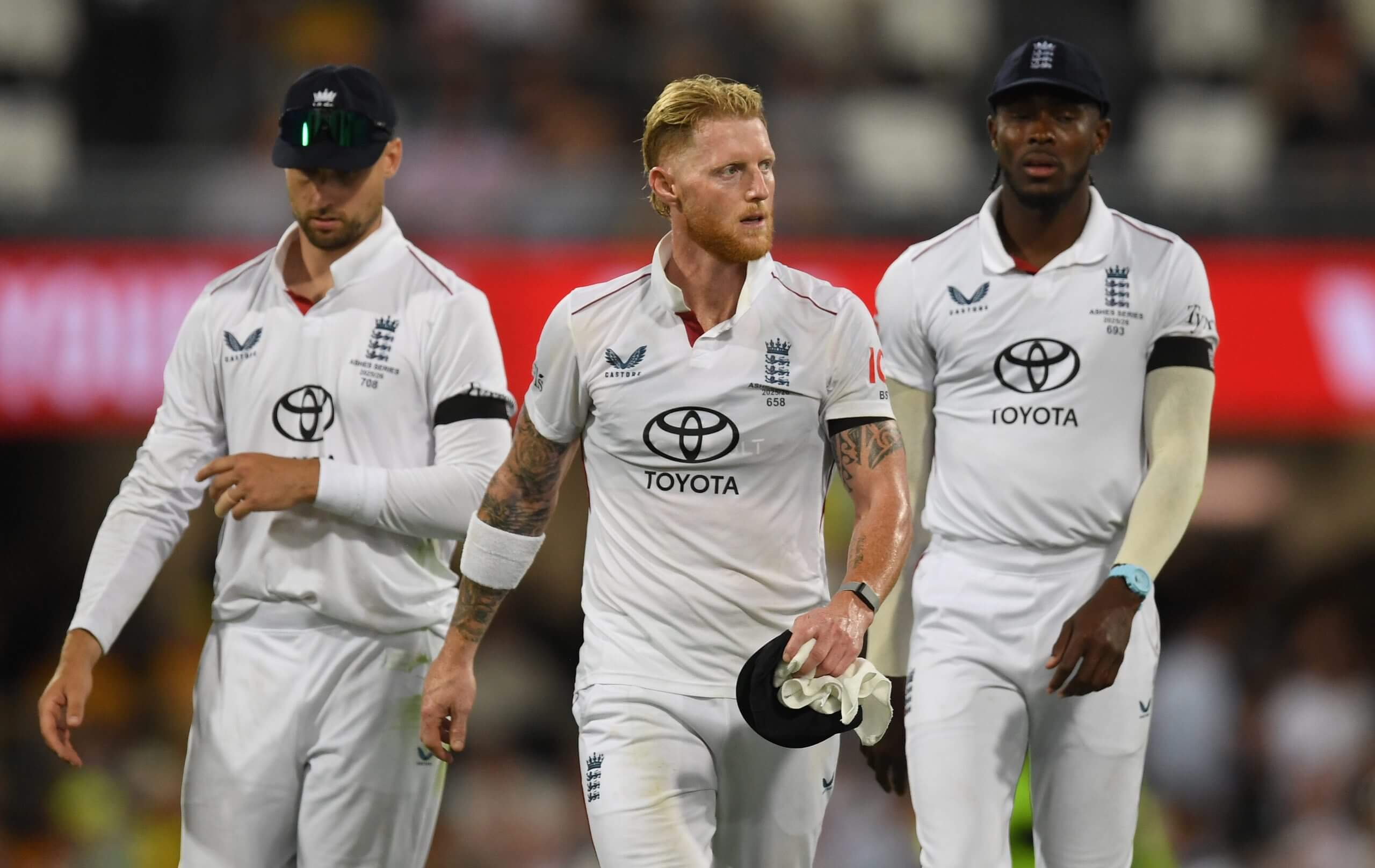
Will Jacks and Jofra Archer follow a frustrated Ben Stokes off the field at the Gabba (Philip Brown/Getty Images)
Remember, Ben Stokes and head coach Brendon McCullum were put together by Rob Key in 2022 after England had won just one of their previous 17 turgid Tests — and still fresh from a 4-0 hammering in Australia — and immediately transformed their style and fortunes, only losing two series of the 13 they have played in the period since.
But they are in danger of squandering the best opportunity they will ever have to win the Ashes in Australia by again shrinking rather than flourishing when faced with the old enemy in their own conditions.
And that, for them and their long-suffering supporters, would be a criminal waste.
It was only that last-wicket stand, extended to 70 before Marnus Labuschagne showed how it should be done with an outstanding catch to dismiss Jofra Archer, that took England to what seemed like an above-par score of 334.
But then an England attack that had looked one of the best and collectively fastest ever sent to Australia in the first innings in Perth, admittedly now without Mark Wood, made life so much easier for the home batters, who were allowed to romp along at more than five an over.
Only Archer could escape criticism. England’s careful management and backing of the 30-year-old, always with this series in mind, has been exemplary and he has returned that faith by bowling just as fast and dangerously as when he burst onto the scene in 2019.
But just as Starc stood head and shoulders above the rest of an Australian attack missing Pat Cummins, Josh Hazlewood and, controversially, Nathan Lyon, so Archer was a class above the pace unit, shorn of Wood, England have long wanted to field in this series.
Brydon Carse may have taken three wickets but he epitomised an attack that repeatedly bowled far too short and then over-pitched in compensation, and looked nothing like the bowler who impressed in Pakistan and New Zealand last winter to be earmarked for Australia.
Carse did dismiss Cameron Green and Steve Smith in the same over, the latter thanks to the one piece of outstanding English catching from Will Jacks, but by the close he had conceded 100 runs in an innings quicker (off 85 balls) than any English Test bowler other than Jack Leach (73).
“I just saw (Glenn) McGrath, (Brett) Lee and (Jason) Gillespie,” said Broad, an impressively forthright pundit so soon after coming out of the England dressing room, on Australia’s Channel Seven. “I said to them: ‘England have bowled more bad balls today than you did in your entire careers.’”
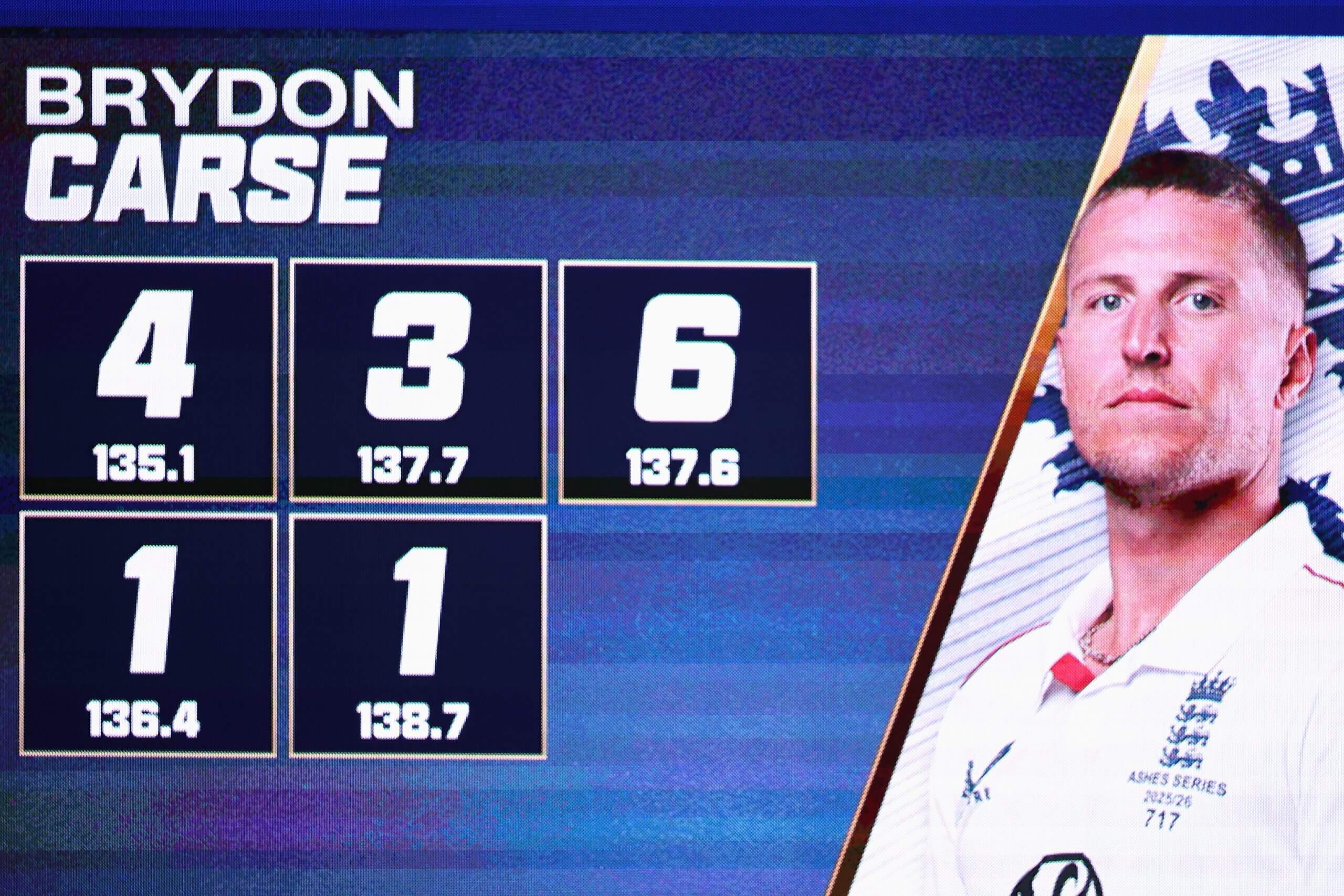
The big screen at the Gabba charts Australia’s brutal treatment of the first five balls of a Brydon Carse over (Cameron Spencer/Getty Images)
Stokes did not help.
A captain who has been among England’s best since taking over from Joe Root, both tactically and with empathetic man-management, looked devoid of ideas other than the short-ball ploy and exposed his bowlers with his one-dimensional fields. After Perth, Stokes said he was shell-shocked. By the close of day two, he appeared totally frazzled.
Those bowlers were also let down by England’s fielders, with Jamie Smith setting a sorry tone by dropping Travis Head off Archer — the opener had three off 24 balls at the time, with the reprieve coaxing him out of his shell before he was dismissed for 33 off 43 — and generally seeming lacking in energy and self-belief, the key tenets of ‘Bazball’.
Smith, such a talent, is playing his first pink-ball match. He had lasted two balls in England’s innings. The 25-year-old is having a desperate series.
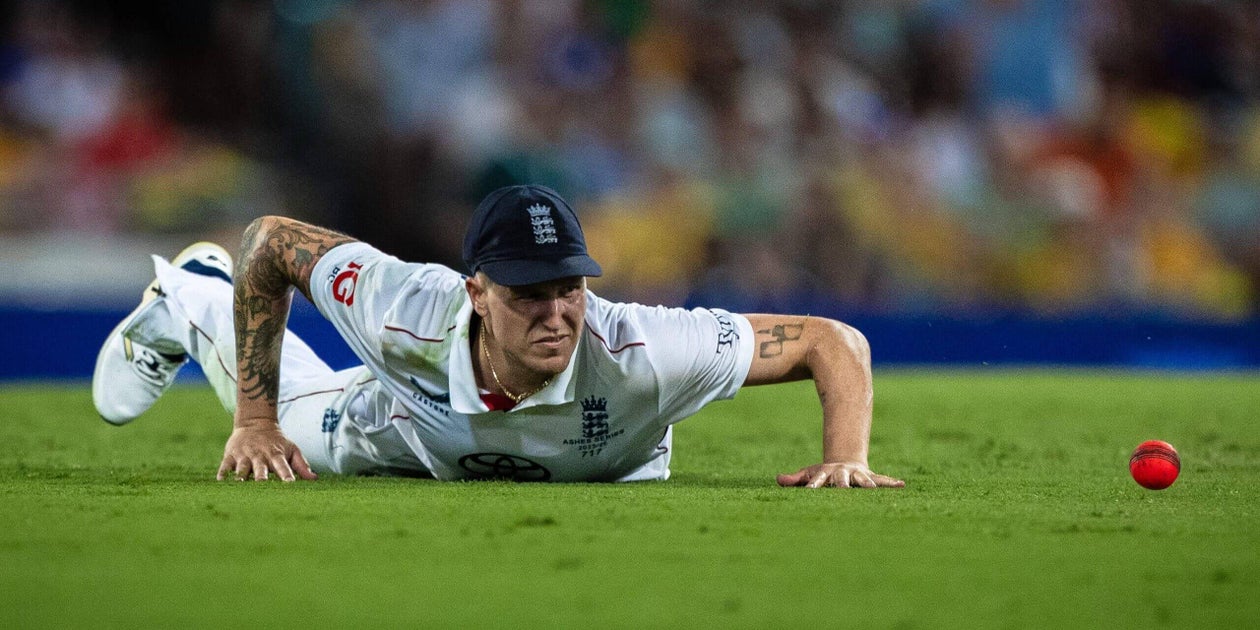
That drop came early, but England’s other four were late on as the heat and humidity of the Gabba cauldron started to take their toll. Ben Duckett twice missed chances he should have taken. Carse spilled a sitter and Root missed the twice-reprieved Alex Carey diving to his right at slip when Smith, in truth, should have swallowed up the chance.
The wicketkeeper had endured the sarcastic cheers of the local crowd whenever he gathered the ball from a team-mate after his early drop. His reactions as Carey’s nick flew to his left betrayed uncharacteristic timidity.
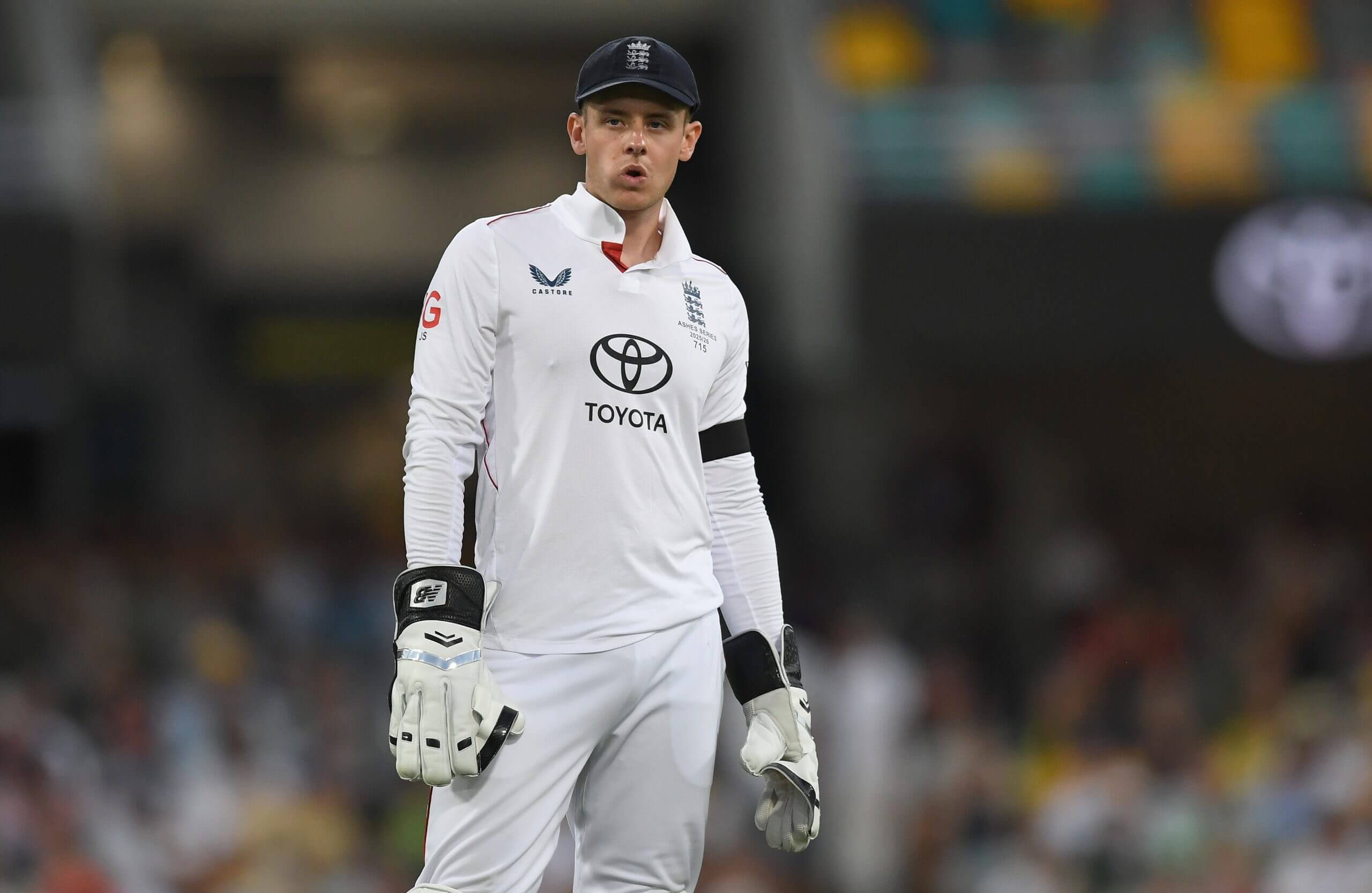
A rueful Jamie Smith looks on as England labour (Philip Brown/Getty Images)
Was it all down to a lack of pink-ball experience compared to Australia?
“It is difficult to pick up compared to the white one,” Root, who had ended England’s innings unbeaten on a majestic 138, said to TNT afterwards. “You still back yourself (to catch them) and we practised really hard. Unfortunately, we just had one of those days when they didn’t quite stick to hand.”
But it all left the former England wicketkeeper Matt Prior, a no-nonsense and impressive addition to TNT’s much beleaguered coverage, going off all a bit Fred Trueman as he pined for the heady days of bowling ‘dry’ — effectively stingily — and batting properly. In other words, the kind of tactics that earned England’s last series win and Test victory in Australia 15 years ago.
Let’s not forget that Australia have been better than England.
Jake Weatherald smiled his way to his first half-century in his second Test, apparently shouting “ball, ball, ball, ball” to himself before each, well, ball. Smith and Labuschagne reminded us they are the two most successful batters in the short history of Australian pink-ball dominance.
But England’s precarious position was far more down to themselves than the home side and it was both concerning for them and surely significant that they looked exhausted and out on their feet after what is only the fourth day of the Ashes.
Under-prepared for the series that will make or break them? It certainly looks that way, as former England captain Michael Vaughan was adamant about ahead of the tour and was quick to repeat after day two.
“We sound like broken records,” Vaughan told BBC’s Test Match Special. “But England decided to go with no preparation. I would have done things differently. What I saw today was a team completely jaded.
“You can have five days bowling in the nets and you can bowl beautifully. But in the nets, there are no consequences and no figures. But in the game, you have a consequence.”
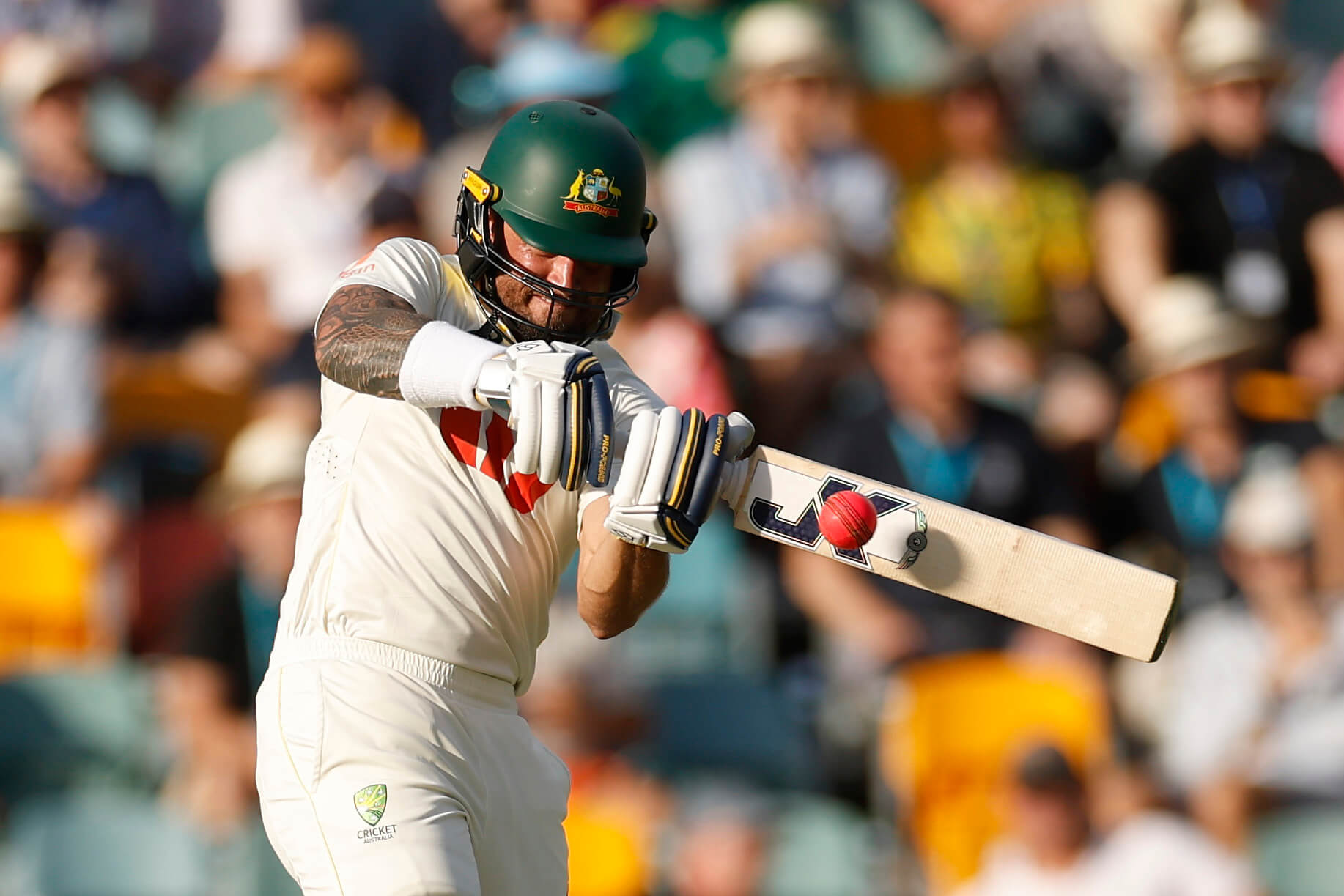
Jake Weatherald, in his second Test, capitalised on England’s sloppiness (Darrian Traynor/Getty Images)
Broad was equally stringent on Channel Seven.
“There is a big difference between bowling in nets and in matches,” he said. “We know Perth was only a two-day game. The workloads of these bowlers weren’t particularly high and all they were able to do leading into this match is bowl in nets or at a mitt. It’s such a different scenario when each ball matters.
“They just look like they are short of match awareness, match fitness and sharpness.”
There can be a degree of sympathy for England on this. Modern schedules make proper preparation close to impossible and it is no coincidence that this is the age of home dominance across most Test cricket.
It would have been impossible for England to have three hard-fought warm-up games against Australian opposition ahead of the series, as Strauss and Flower did in 2010-11, not least because there was a full programme of domestic grade cricket taking place in the build-up.
Yes, England could have sent a full side to Canberra between Tests instead of the Lions for a two-day pink ball match against a Prime Minister’s XI, but the conditions and climate are totally different there to Brisbane and the quality of the opposition was poor. Would it really have prepared them for this?
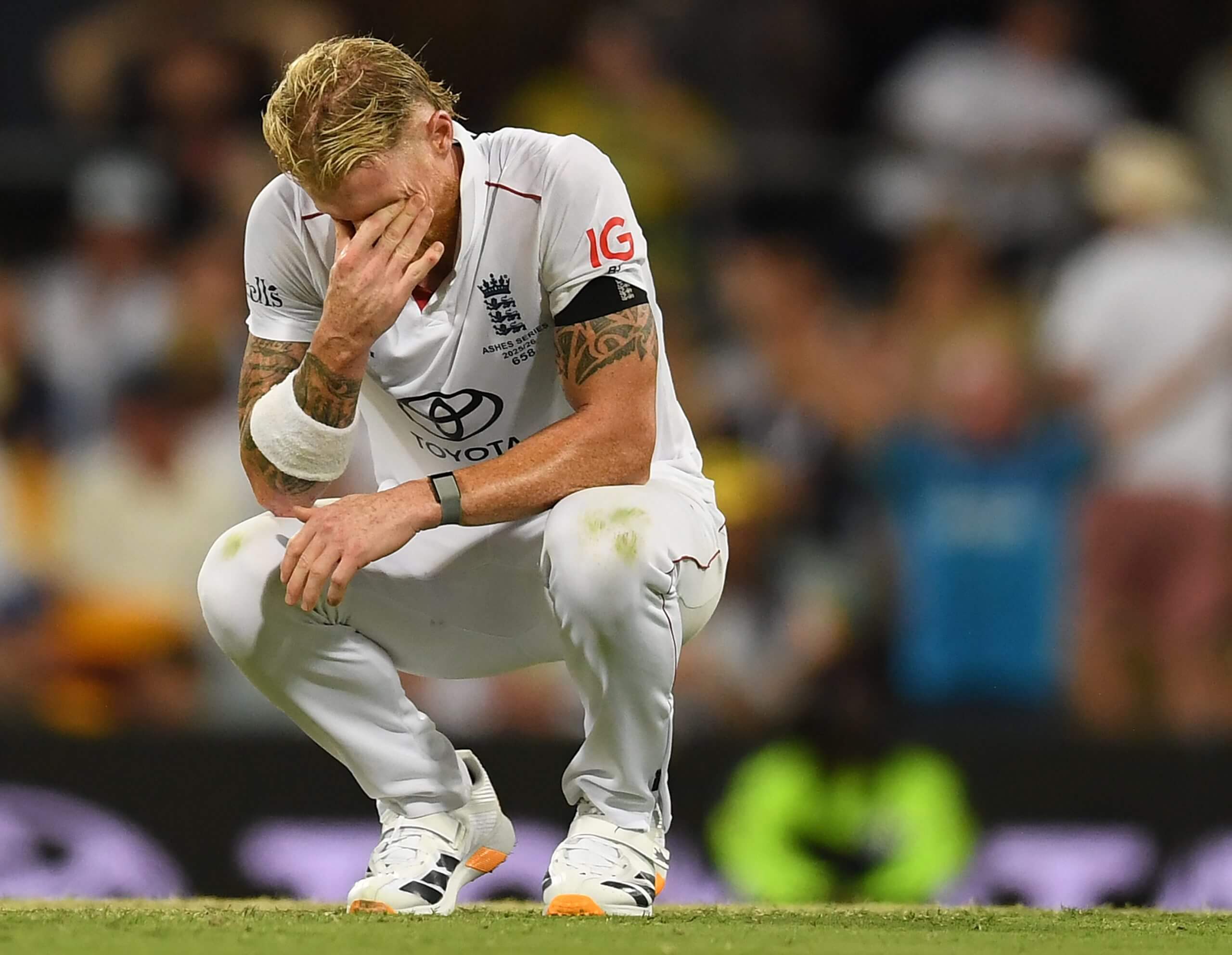
Ben Stokes shows the strain (Philip Brown/Getty Images)
Where Vaughan was correct was in pointing out, ahead of the tour, that conditions in Lilac Hill, where England played their own Lions before the first Test, were completely different to the Optus Stadium up the road in Perth. Consequently, that game was of limited use, as were the white-ball matches in New Zealand ahead of this series.
Despite everything, all should not really be lost for England. Not with the position of this Test and the relative strengths of the sides.
But already this tour is starting to resemble the car crash of the last three to Australia and it would be no surprise if it all started to unravel from here and followed a similarly one-sided, miserable pattern.
England could avoid that by getting themselves back into this Test and the series on day three — and there is no logical reason why they cannot — but the sad truth for them is that the largely self-inflicted damage has probably already been done.
The inquests and recriminations are only just beginning.