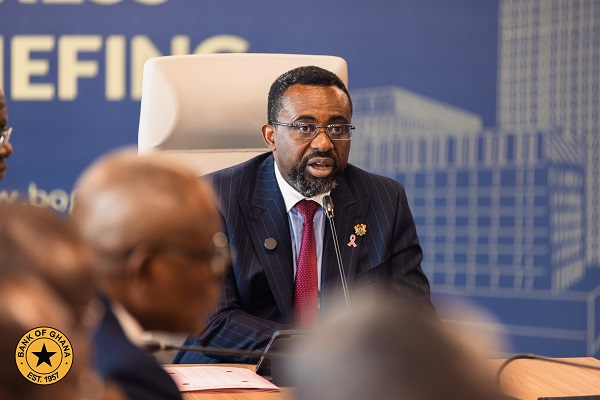
From crypto to gold and beyond, Ghana’s central bank is playing a vital role in the country’s journey to macroeconomic stabilisation
It’s been three-and-a-half years since a combination of homegrown vulnerabilities and external shocks created a severe macroeconomic and debt crisis in Ghana. Underpinned by an IMF-supported program, the country’s economic recovery is steadily gaining momentum, marked by a significant decline in inflation, an increase in international reserves, and a more resilient financial system.
During the 2025 IMF-World Bank Annual Meetings, Johnson P. Asiama, Governor of the Bank of Ghana since February 2025, discussed key reforms with Abebe Aemro Selassie, Director of the IMF’s African Department. The following is an abridged and edited transcript of their conversation.
Abebe Aemro Selassie: You became central bank governor following a turbulent period for Ghana’s economy. How are you confronting the main challenges so far?
Johnson P. Asiama: When I came into office there was talk about whether we should cancel the IMF program altogether. But I’m happy to say that we are turning the corner. Ghana is back. Inflation has dropped from nearly 24 percent in January to 9.4 percent today, economic growth has exceeded program targets, and Ghana is set to complete its IMF program next year. Rating agencies have also responded positively, reflecting our progress.
Selassie: What steps did you take to bring inflation toward your target?
Asiama: The monetary policy framework and central bank credibility both required improvement. We addressed excess liquidity through sterilization and by working closely with the fiscal authorities. Complementary efforts across all fronts have helped to lower inflation, but we also give a lot of credit to our tight monetary policy stance. While we are now easing, strong liquidity management and sterilization remain priorities.
Selassie: How has private sector credit been affected by this relatively tight monetary environment?
Asiama: Private sector credit is the lowest among our peers, and its growth has even slowed down. Given the high level of non-performing loans, we are pushing banks to enhance their risk management frameworks. It’s essential that we diversify credit allocation given that it’s heavily concentrated around the capital and businesses owned by women and young people lack access.
Selassie: How does GoldBod help you build international reserves?
Asiama: The GoldBod initiative began in March to centralize gold purchasing, selling, and exporting, addressing leakages where foreign exchange wasn’t returning to Ghana. Since then, it has generated about $8 billion, boosting reserves through a revolving system: exports bring foreign exchange to the central bank, which provides cedi equivalents for further purchases. Reserves have grown to about four-and-a-half months of import cover, compared with just two weeks during the crisis.
Selassie: How would you describe your framework for managing foreign exchange?
Asiama: We follow a managed float to smooth volatility, not to dominate the foreign exchange market. Recent intervention was due to large payments to independent power producers, bondholders, and declining remittances due to currency appreciation. Conditions have improved—mining inflows now go through banks, and unused foreign exchange offers flow into reserves. We are increasing local processing of commodities to address our reliance on raw materials such as gold, oil, and cocoa.
Selassie: What steps are you taking to address the increased use of crypto, which is diverting foreign exchange flows away from the economy?
Asiama: Crypto is like the air we breathe. It’s all around us. We observe some people in the Ghanaian diaspora shifted to channels outside banks, such as stablecoins and other virtual assets. This confirmed the need for regulation. Over the past four months, we’ve worked with the IMF to draft a bill for virtual asset regulation. Passing the law is just the first step—monitoring flows will be critical. We’re also building our expertise and establishing a dedicated department for oversight.
Selassie: Public debt restructuring has affected the balance sheets of the financial sector and the central bank. How do you see the situation now?
Asiama: The impact on banks from sovereign exposure has been significant and should never happen again. But corporate bond activity is picking up, and we’re trying to list more banks on the stock exchange to attract long-term capital and strengthen equities. On the central bank side, domestic debt restructuring hit our balance sheet hard, and rebuilding is a medium-term priority. To safeguard independence, we’ve introduced legislative reforms to eliminate central bank financing of the government and clearly define emergencies.
Selassie: Finally, what is your vision for the rest of your mandate?
Asiama: My mandate is clear: achieve price and financial stability, and I believe we’re on course. But two priorities stand out. First, tackling dollarization. I’ve seen this challenge for decades, and making the cedi the sole legal tender is critical for effective monetary policy. My second priority is to build an agile central bank ready for emerging risks. When I began my career 30 years ago, fintech and crypto didn’t exist. Today, they pose real challenges. We’re updating legislation, creating capacity, and strengthening our balance sheet to adapt to whatever comes next. My vision is a central bank with the manpower, agility, and resilience to manage future risks—crypto today, something else tomorrow.