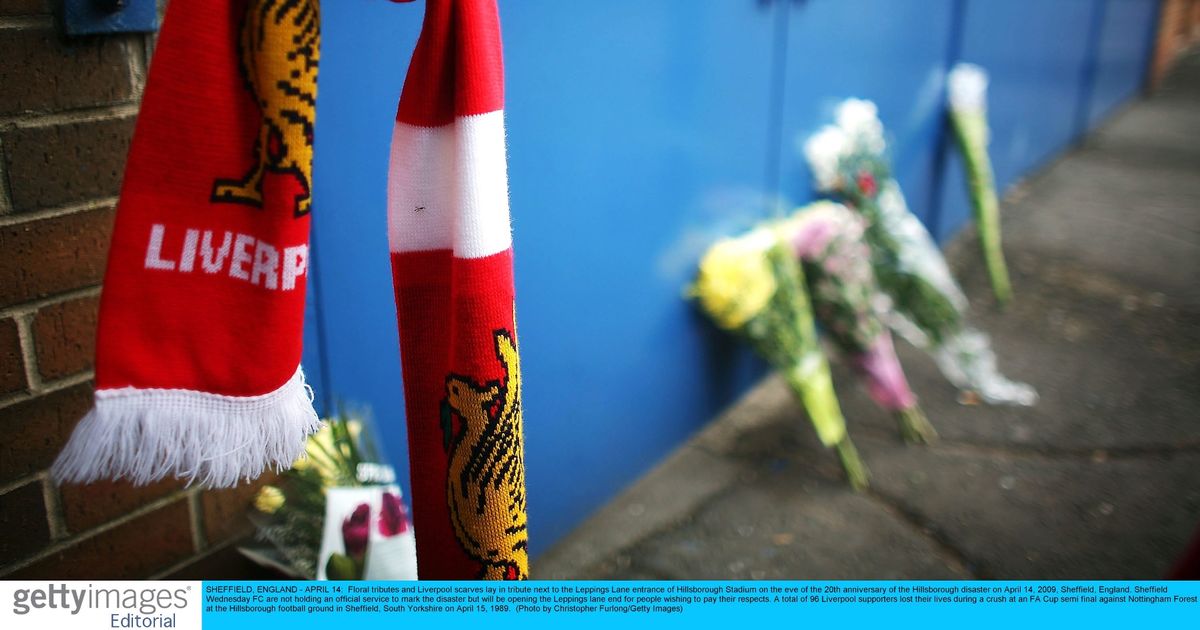
New IOPC report reveals how new evidence was brought together to prove slur about LFC fans burning a horse with a cigarette was based on lies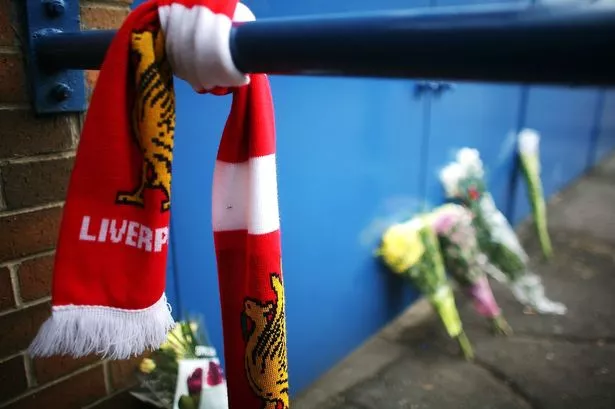 Tributes to the 97 Liverpool fans who died outside Hillsborough Stadium(Image: Getty Images)
There were many shameful lies and slurs used by South Yorkshire Police in their desperate attempts to shift the blame for their failures on the day of the Hillsborough disaster onto the very fans whose deaths they caused and their grief-stricken family and friends.
It took a long time and tireless years of campaigning for these lies to be officially expunged through the new inquests that concluded in 2016 that the fans who died in the disaster – a figure now standing at 97 – were unlawfully killed after enormous police failures on the day.
Those same inquests destroyed the lies put out by South Yorkshire Police – and horrifically amplified in the press – that Liverpool fans’ behaviour had caused the crush, that fans arrived late and without tickets, forced an exit gate and most luridly, that supporters had ‘urinated on police’ and ‘stole from the dead.’ All lies that have been overwhelmingly disproven.
This week a major report from the Independent Office for Police Conduct found, once again, that the claims made against Liverpool fans were without evidence and concluded that South Yorkshire Police had tried to blame supporters after the force’s own “fundamental failures” that led to so many deaths on that day. The IOPC says that were they still serving today – 12 senior officers including match commander on the day David Duckenfield – would have gross misconduct cases to answer.
Within its report, the IOPC goes into detail about the claims made by South Yorkshire Police officers as they made “concerted efforts” to blame fans for the disaster.
There is one very specific claim that was made about supporters on the day that has caused a special level of anger amongst Reds’ fans over the years in terms of the cruel light in which the force attempted to paint supporters.
This account, highlighted in the new IOPC report, came from then police constable David Scott, a mounted officer who was on duty outside the Leppings Lane entrance of Hillsborough Stadium on the day of the disaster.
As the IOPC report explains, PC Scott was seen on BBC television cameras swinging his arm and striking a Liverpool supporter in the crush that occurred before the match. This footage was shown on news reports in the days following the disaster.
In his original written account, PC Scott explained that he had acted to protect his horse from supporters who were threatening to burn it with cigarettes. He added that when he inspected his horse later, he found lumps on its back legs and said the horse’s coat appeared singed.
PC Scott’s account was supported by a statement of Phillip Webb, a farrier – a horse care specialist – who looked after horses for South Yorkshire Police at the time. The IOPC report makes clear that Mr Webb stated that he had seen “circular burn marks on the horse,” with both men repeating their claims in subsequent statements.
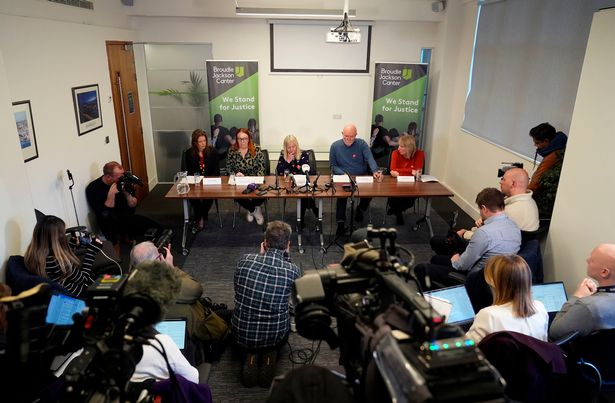 Families of the victims of the Hillsborough disaster respond to this week’s IOPC report into police failings(Image: PA)
The reports of the injuries to the horse were accepted as fact by Lord Justice Taylor in his official 1989 report into the cause of the disaster. West Midlands Police – the force investigating the tragedy – looked into complaints about the actions of PC Scott on the day but did not find the supporter who had been struck and no disciplinary proceedings against him were recommended.
But after the statements from PC Scott and Mr Webb were published online by the Hillsborough Independent Panel, the IOPC received a complaint that they may have been exaggerated, with the person who complained suggesting that “if the injuries were as bad as claimed, the horse would have needed veterinary treatment”, but there was no record of any such treatment. He also pointed out that there were no photos of the supposed injuries.
In its own investigations, the IOPC reviewed the video footage of the incident involving PC Scott but did not see any signs of the horse being in distress. Investigators took statements from other members of SYP’s mounted section and said that while some recalled hearing about a horse being burned – no one had seen the injuries.
The SYP press log showed that the head of the force’s mounted section had “expressly denied that a horse had been burned but said it had been threatened.”
As part of its probe, the IOPC spoke with a professor specialising in equine surgery. She explained that she would expect that a horse being burned multiple times would show some signs of distress, such as “kicking out or swishing its tail” and said she saw no evidence of either.
She then conducted a number of tests to assess the likely impact of a cigarette burn to a horse’s skin. She did this by applying a lit cigarette to the body of a horse that had been recently euthanised and said it did not result in the kind of marks that Mr Webb had described.
At this point, the IOPC re-interviewed Mr Webb and PC Scott. The report states that when he was shown the new evidence, Mr Webb changed his account and stated that he was “not sure if he had actually seen burn marks,” suggesting it was possible he had made a statement to the police because he was “disgusted” at what he had heard from PC Scott about the burns, rather than having seen them himself. PC Scott made no further comment.
The IOPC said it also established that PC Scott and Mr Webb knew each other socially and that PC Scott had attended Mr Webb’s wedding.
The report states: “The claim that supporters burned a police horse with cigarettes was a damaging allegation that painted a picture of supporters being either sufficiently cruel to deliberately cause the injuries, or sufficiently insensitive as to not realise that they were doing so. The evidence gathered by the IOPC indicates this alleged incident did not take place.”
Based on the evidence gathered, in June 2017 the IOPC referred PC Scott and Mr Webb to the Crown Prosecution Service (CPS), requesting a decision on whether both individuals should be charged with the criminal offences of perverting the course of justice and conspiracy to pervert the course of justice.
In December 2017, the CPS announced that no charges had been authorised against either individual. The decision was challenged under the Victims’ Right to Review Scheme. The evidence was reviewed by a different prosecutor, who upheld the CPS decision.
In its new report, the IOPC said that if he had still been serving with the police today, PC Scott would have a case to answer for gross misconduct, for falsehood or prevarication.