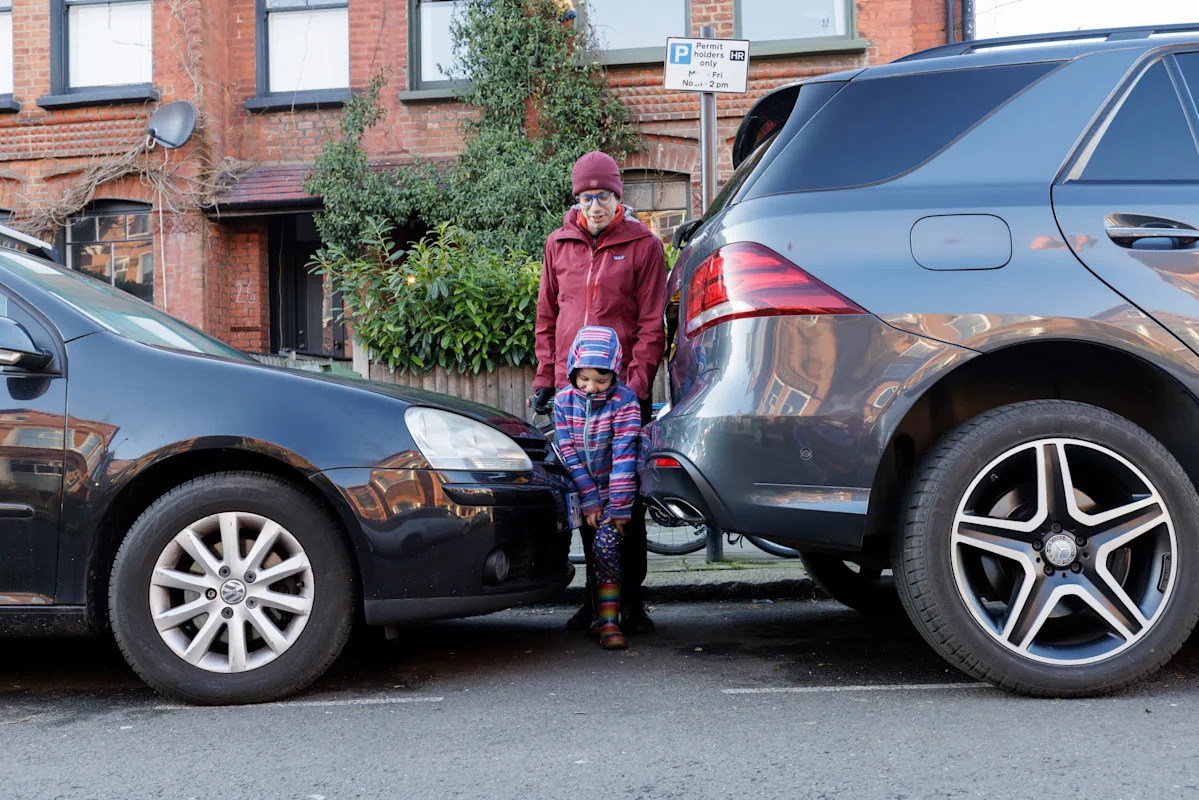
SUVs are now Britain’s best-selling type of car and as a result, local councils are scrambling to adjust for the influx of larger, more polluting and potentially more dangerous vehicles.
British drivers now favour larger vehicles over traditionally more diminuitive models, with sports utility vehicles (SUVs) accounting for 62% of new car sales. Dubbed ‘carspreading’ by campaigners, vehicles are getting bigger as a result – about 1cm wider every two years – and restricting space on our streets.
As part of her autumn budget, Rachel Reeves introduced a new charge on electric car drivers expected to pay 3p per mile, while plug-in hybrid drivers will pay 1.5p per mile, from April 2028. But campaigners say the chancellor missed a chance to further tax SUVs, given the ‘harm’ they’re causing.
Oliver Lord from Clean Cities, a network or firms calling for lower emissions, told Yahoo UK: “We are disappointed Rachel Reeves didn’t look a little closer at taxing SUV’s. If you brought in a levy for larger vehicles we could bring in up to £2bn annually that could help fix potholes.”
The Transport and Environment (T&E) non-profit think-tank, part of Clean Cities’ network, also advocated for a ‘large vehicle levy’ in the budget.
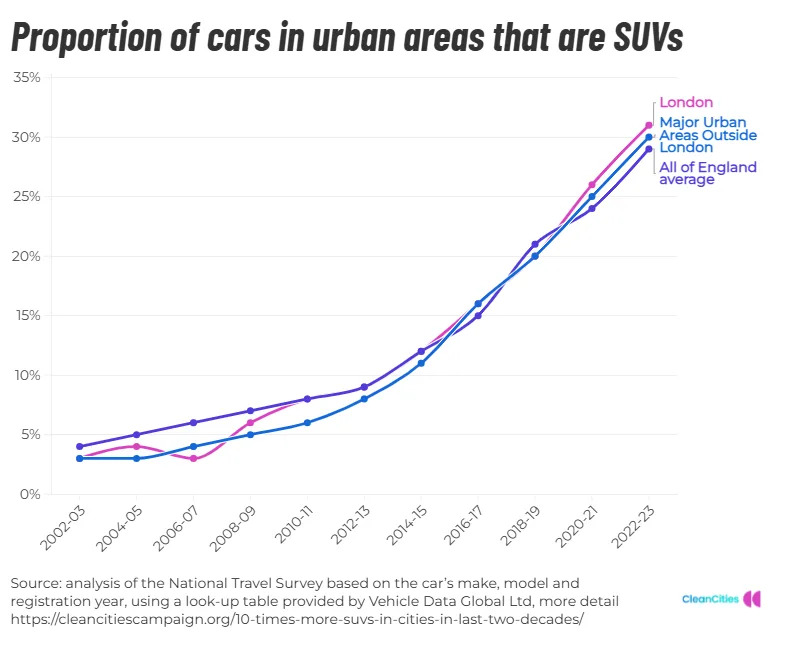
SUV vehicles have seen a surge on popularity in recent years – particularly in urban areas. (Clean Cities)
“We believe there needs to be a much more rounded package. Before we have resolved the issue on charges for electric vehicles, we should actually address the issue that it can be cheap to buy a polluting car.”
Clean Cities also want councils to make car parking “fairer” by varying costs based on the size, or weight, of larger vehicles – but critics warn this could unfairly target families with larger vehicles or businesses that need extra space to ferry and deliver goods.
What is ‘carspreading’?
Carspreading is the “continued trend towards wider, longer, higher and heavier cars”, which has been fuelled by the rise of SUVs.
The increase in size of these new cars raises questions about road safety, how to use space in our cities, and environmental impact. Campaigners say these types of vehicles cause more pollution, with petrol and diesel SUVs burning around 20% more fuel, and larger electric vehicles (EVs) needing larger batteries.
The intergovernmental International Energy Agency (IEA) say the oil consumption of SUVs globally increased by 500,000 barrels per day, accounting for one-third of the total growth in oil demand.
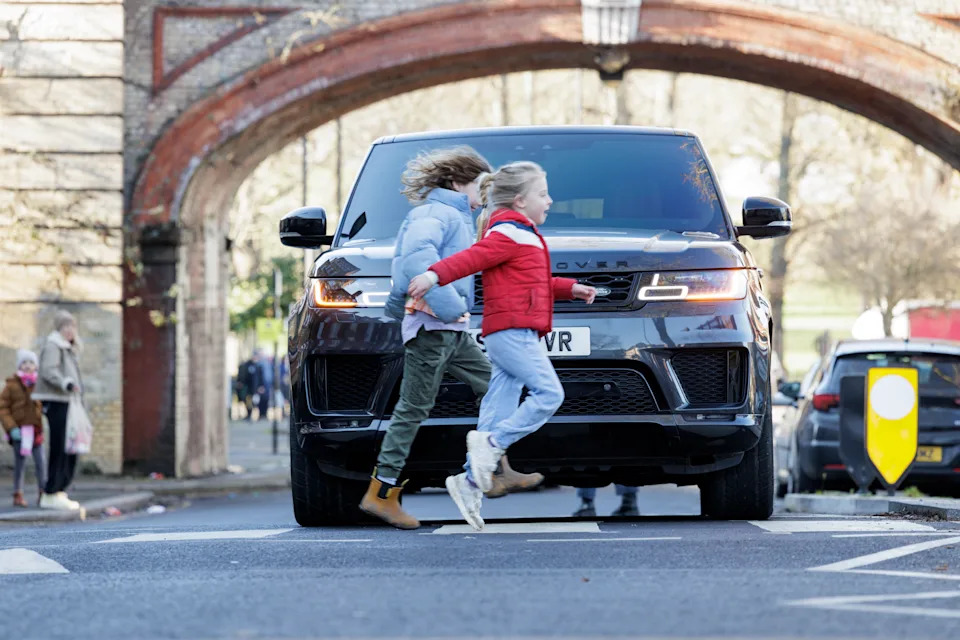
Campaigners say the higher bonnets of SUVs make them more dangerous to pedestrians, smaller cars, cyclists and children. (CleanCities)
SUVs are also more dangerous for pedestrians, with young children three times more likely to die from a collision when hit by an SUV, according to a study by the London School of Hygiene and Tropical Medicine, which examined data from 359,000 police crash reports.
Growing vehicle bonnet heights are also closely linked with the risk of death and serious injury in the event of a crash. In the UK, average bonnet heights have increased from 76.9cm in 2010 to 83.8cm in 2024, with nearly half of cars sold in 2024 had bonnets at least 85cm in height.
The WWF say that on average, SUVs are longer (by 26cm), wider (by 10cm) as well as heavier (by 205kg) and more powerful (by 26 horsepower) than a regular car. This means there is more traffic congestion and more chance that spaces earmarked for cycle lanes and parking areas are impacted.
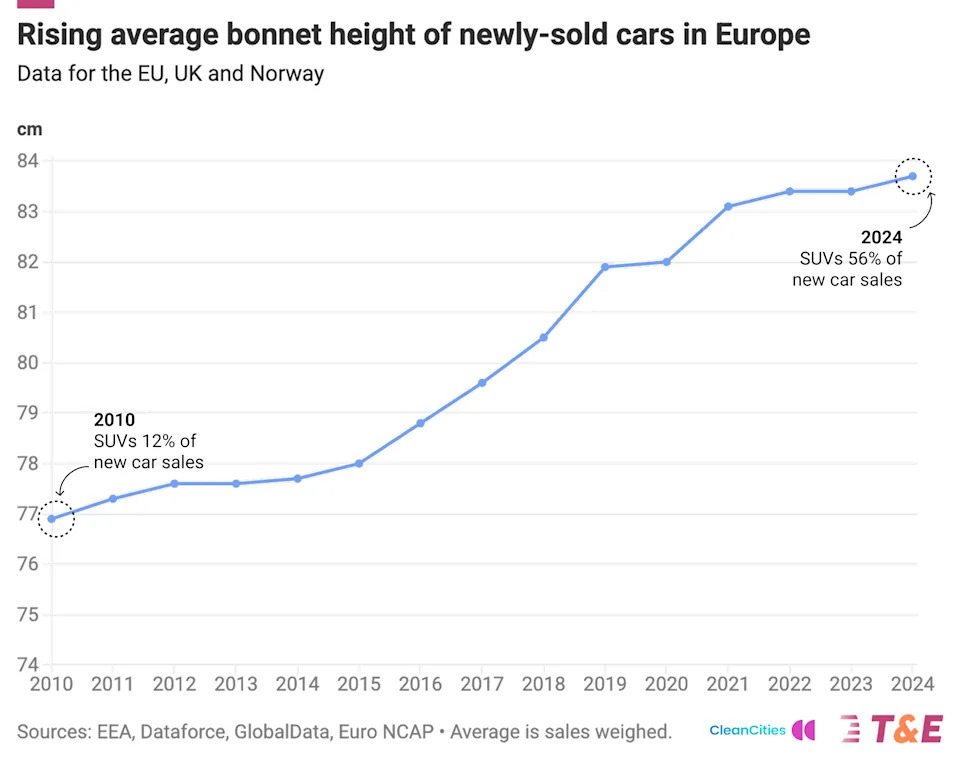
The average bonnet height of vehicles in the UK has been increasing since 2010. (Clean Cities)
Lord said these vehicles are often seen as a luxury and “very few people believe there should not be any extra charges for SUVs”.
He added: “We found the majority of car owners actually agreed they take up too much space in towns and cities, making it more difficult to drive and park. Almost half of all cars do not fit in a typical urban parking space because they are too wide.”
The campaign group the SUV Alliance, said “the UK remains a relative tax haven for SUVs” due to the low Vehicle Excise Duty, which is a fraction of the amount paid in France and the Netherlands.
What are councils doing about SUVs in the UK?Larger vehicles charges
In October, Cardiff Council became the first UK local authority to impose a parking premium on SUVs to combat the dangers of larger vehicles. The city parking plan aimed to reduce commuter parking and encourage the use of sustainable transport, implementing a surcharge on larger and more polluting vehicles.
The plan states that vehicles weighing more than 2,400kg fully laden will be subject to a surcharge, and will be introduced over the next decade.
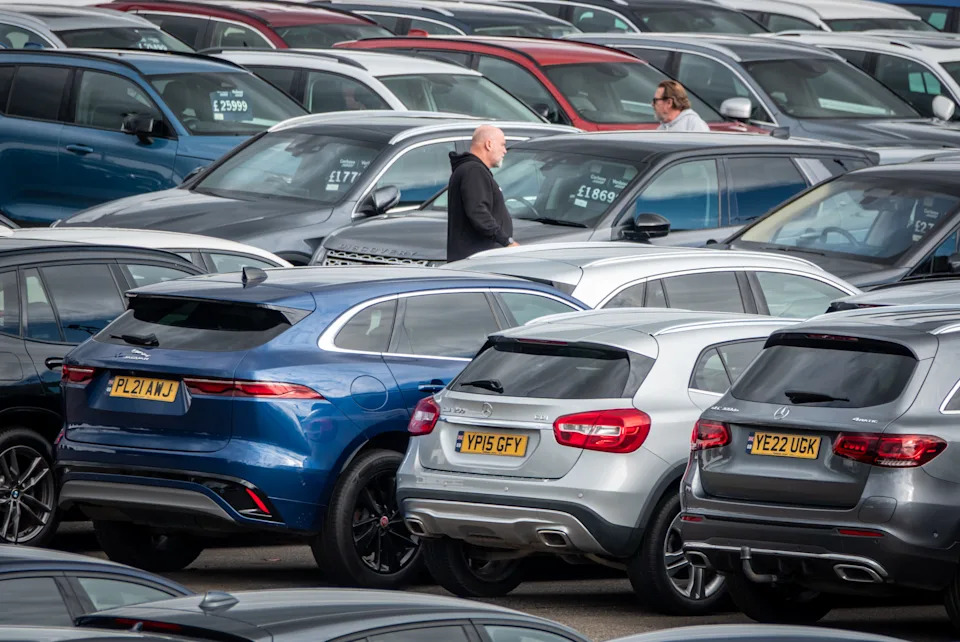
SUVs are now Britain’s best-selling type of car. (Photo by Anna Barclay/Getty Images)
In the French city of Paris on-street parking charges for visiting “heavy” vehicles, from 1.6 tonnes upwards, were trebled in October 2024 following a public vote, taking them from €6 to €18 for a one-hour stay.
Emissions-based permit prices
Many London councils, including Newham, Hackney and Lambeth, have implemented emissions-based parking charges for resident permits, visitor parking, or pay-and-display.
For example, Lambeth have introduced emissions-based parking charges to “reduce carbon dioxide emissions and improve air quality” based on the vehicle’s CO2 emissions or engine size.
Car parking limit
In 2024 six local councils introduced length restrictions on vehicles using their parking facilities.
Wokingham, South Hams, Broadland and South Norfolk, and West Devon all have a 5m restriction in place, whilst Thurrock, in Essex, has a 5.35m car length restriction. This means cars such as the Audi A8 or a Range Rover will exceed this limit and are therefore not allowed to be parked on council grounds.
Where next?
In 2025 the London Assembly passed a motion calling on London mayor Sadiq Khan to help tackle the rise in SUV vehicles in London, stating heavier cars put cyclists and children, among others, at increased risk of harm.
Citing carspreading specifically, they encouraged the mayor to ask the treasury to introduce a progressive tax on vehicle weight into vehicle excise duty and ask London councils to “explore the feasibility of boroughs charging higher parking charges to SUVs”.
Another London borough could also implement charges after Greens at the London Borough of Richmond upon Thames tabled a motion in July 2025 accusing the borough of failing to respond to “rising carspreading”.
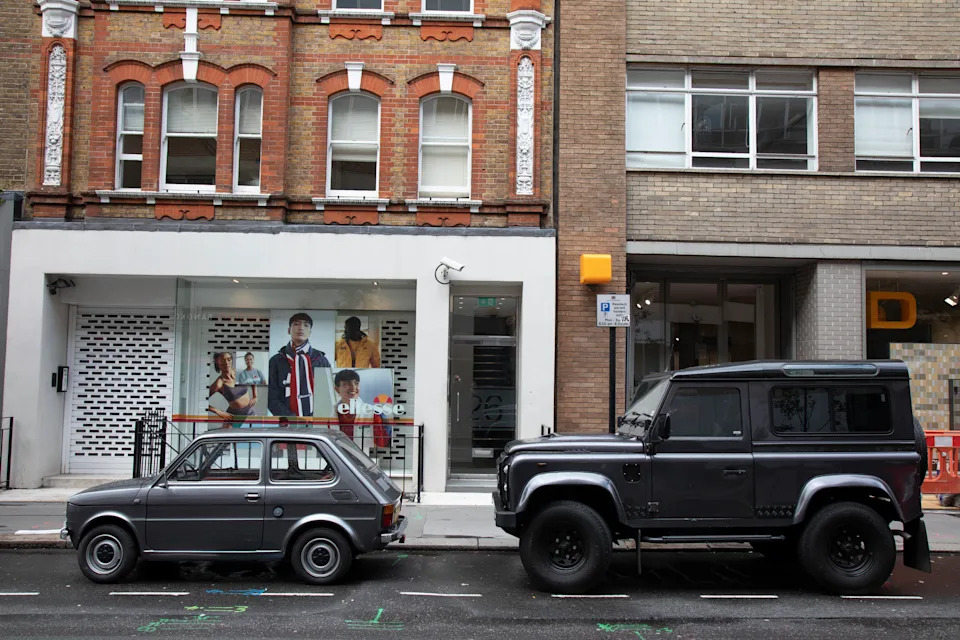
A small Fiat 126 car and a large Land Rover Defender on the streets of London. (photo by Mike Kemp/In Pictures via Getty Images)
The Greens said that parking charges, which could be implemented next year, should reflect vehicle size and emissions, saying: “carspreading is squeezing our Victorian streets and putting people at risk. If you choose a larger, more polluting vehicle, you should cover its true social cost.”
Other cities such as Bristol and Bath are also considering measures to implement such charges in coming years, as part of wider efforts to reduce pollution.
Lord believes “a lot of politicians are sympathetic to the issue”. He said: “Theres a time and place for these cars and it’s usually not in our congested towns and cities, we are asking local leaders and city leaders to do something with what they can do – and that boils down to parking policy.”
Why are SUVs so popular in the UK?
Back in 2013 SUVs accounted for just one in 10 new models making their way onto UK roads.
Eleven years later, SUVs accounted for 33% of all registrations in 2024, with 1,145,456 registered in the UK, making up 62.41% of all new car registrations. According to Clean Cities, since 2021 around 4.6 million cars sold in the UK have been larger than a “typical urban car parking space”.
A recent poll by YouGov found 12% of UK adults own or drive an SUV or pickup truck, despite 61% of Brits believing that pick-up trucks and SUVs have become too big in recent years.
The most cited issues with SUVs are that they’re hard to park (62%) and that they’re bad for the environment (59%).
And more than half of Britons believe that pickup trucks and SUVs are more dangerous for other vehicles on the road (58%) and for pedestrians and cyclists (66%).