
ITV and NHS doctor Amir Khan has highlighted how hormones can affect symptoms for some people
Amber O’Connor Money and Lifestyle reporter U35s
14:41, 03 Dec 2025Updated 07:57, 04 Dec 2025
 The NHS doctor is known for sharing practical health advice(Image: ITV)
Dr Amir Khan, ITV’s resident doctor and an NHS GP, has shed light on what could be ‘the most overlooked medical condition in women.’ During a recent episode of the No Appointment Necessary podcast, Dr Amir Khan joined presenter Cherry Healey to discuss ADHD.
In the weekly podcast episodes, the co-hosts regularly discuss health topics and share lifestyle tips. As highlighted in the latest clip, the doctor used an episode to explain ‘how hormones can change the way ADHD shows up’, from ‘masking symptoms’ during the cycle to making them ‘hit harder’ around menopause. He also touched on ‘why so many women go undiagnosed for years’ and ‘what’s really going on in the brain.’
Women who have ADHD often get really good at hiding, or ‘masking’, their symptoms by using different ways to cope and strategies to blend in with what society expects. This makes it more difficult for people to recognise their condition, and many may go years without knowing they have it.
ADHD, or attention deficit hyperactivity disorder, refers to a condition where the brain works differently in some people. The NHS explains: “If you have ADHD, you may have trouble with things like concentrating and sitting still. There are things you can do to help manage your symptoms.”
While men are more likely to be diagnosed with ADHD, the NHS says women may be more affected by their ADHD, as it often remains undiagnosed for a long time. The mean age of ADHD diagnosis in women who have not been diagnosed as children is 36 to 38 years old.
Berkshire Healthcare NHS Foundation Trust states: “Although males are still more likely to be diagnosed with ADHD in practice, the reality is that women experience the same type, number, and severity of symptoms as males with the condition. Women may be even more affected by their ADHD as it can remain undiagnosed for a long time.”
The advice goes on: “Women often internalise how they feel, and they can ‘mask’ their symptoms in an effort to adhere to social norms and expectations. By doing so, they soon learn to compensate for many of their challenges. Although compensatory behaviours can be helpful, women with ADHD may appear as though they are in control of things, and as such, their challenges often remain hidden from others. This, in turn, complicates inner feelings and emotions for women with ADHD.”
In the podcast, Dr Amir Khan discussed how hormones can also impact symptoms, reports the Mirror. The expert explained: “ADHD in women is probably the biggest unrecognised medical condition that we have right now. Because oestrogen and to a lesser degree progesterone have an impact on how your ADHD is.”
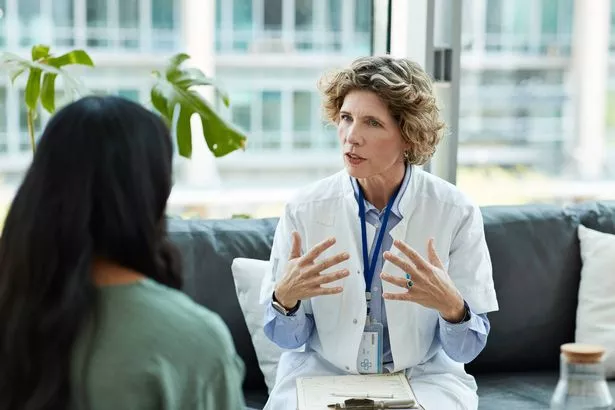 ADHD can remain undiagnosed for a long time (stock photo)(Image: Getty)
He said: “What oestrogen does is positively reinforce the signalling pathway in your brain of dopamine. Now what women might find who have ADHD if they’re menstruating is because for the first two weeks of your period cycle, your oestrogen levels are higher, you become better at masking or managing your symptoms of ADHD.
“Then you head into your period, and at that moment, anyway, you might suffer from period mood issues, and at the same time, your ADHD. Because that oestrogen cushion has been removed, your ADHD symptoms hit harder as well.
“And then there’s the other big one, isn’t there? The menopause. With the menopause, of course, oestrogen levels drop again, and masking becomes almost impossible. So masking in ADHD, I can’t stress this enough, is absolutely exhausting.”