
Maltesers can cost more per gram than sirloin steak at some supermarkets, as a cocoa shortage drives record prices for many Christmas treats.
A 126g box of Maltesers white “more to share” chocolates now costs £4 at Sainsbury’s, the equivalent of £31.74 a kilo, which is more expensive than the same store’s matured sirloin steak at £31.33 a kilo.
In recent weeks, the price of Maltesers has risen by 16 per cent, according to data gathered by The Grocer, a trade journal for the food industry. It noted that Maltesers milk chocolate 93g packs rose from £1.61 to £1.75 in Asda during October and then rose again only five days later to £1.88.

A sharing bag of white chocolate Maltesters was more expensive per gram than sirloin steak
Chocolate prices overall have gone up 15 per cent in a year, according to the Office for National Statistics.
The reason is the wholesale cost of cocoa. Historically traded at between $3,000 to $5,000 a tonne, the price of the commodity skyrocketed to a record-breaking $12,906 last year after extreme weather in west Africa and diseases, such as cacao swollen shoot virus, cut global output by more than 14 per cent.
The cost of cocoa butter, which is used in the production of white chocolate, rose even faster.
Oisin Hanrahan, chief executive of Keychain, which supplies product data to supermarkets, said: “This price issue is a snowball effect from the past year. Extreme weather in west Africa last year has led to poor yields in countries like Ivory Coast, which is the world’s leading producer of cocoa, as well as diseases also hitting harvests. ”
While wholesale prices have gradually fallen back to less than $6,000 a tonne this year, the cost remains well above its long-run average.
High costs are hurting artisan producers particularly hard because they are less willing than large multinational producers to substitute cocoa for cheaper ingredients. Over the past year, for example, Nestlé has reduced the quantity of cocoa butter in white KitKats while McVitie’s has reformulated Penguin and Club bars with more palm and shea oils.
Giles Atwell, co-founder of Russell & Atwell, an artisan chocolate-maker based in Birmingham, said: “We’ve had to make savings elsewhere, like in our packaging and efficiencies, to offset these daunting increases. It’s a challenging time for small-batch makers like us, who are determined to uphold quality without pricing ourselves out of reach.”
Other small producers are struggling to secure sufficient stock.
Chloe Oswald, founder of Chocolatia, said her company, which is based in Angus, Scotland, and uses ethically produced and certified chocolate from the French premium manufacturer Valrhona, had been outbid for cocoa.
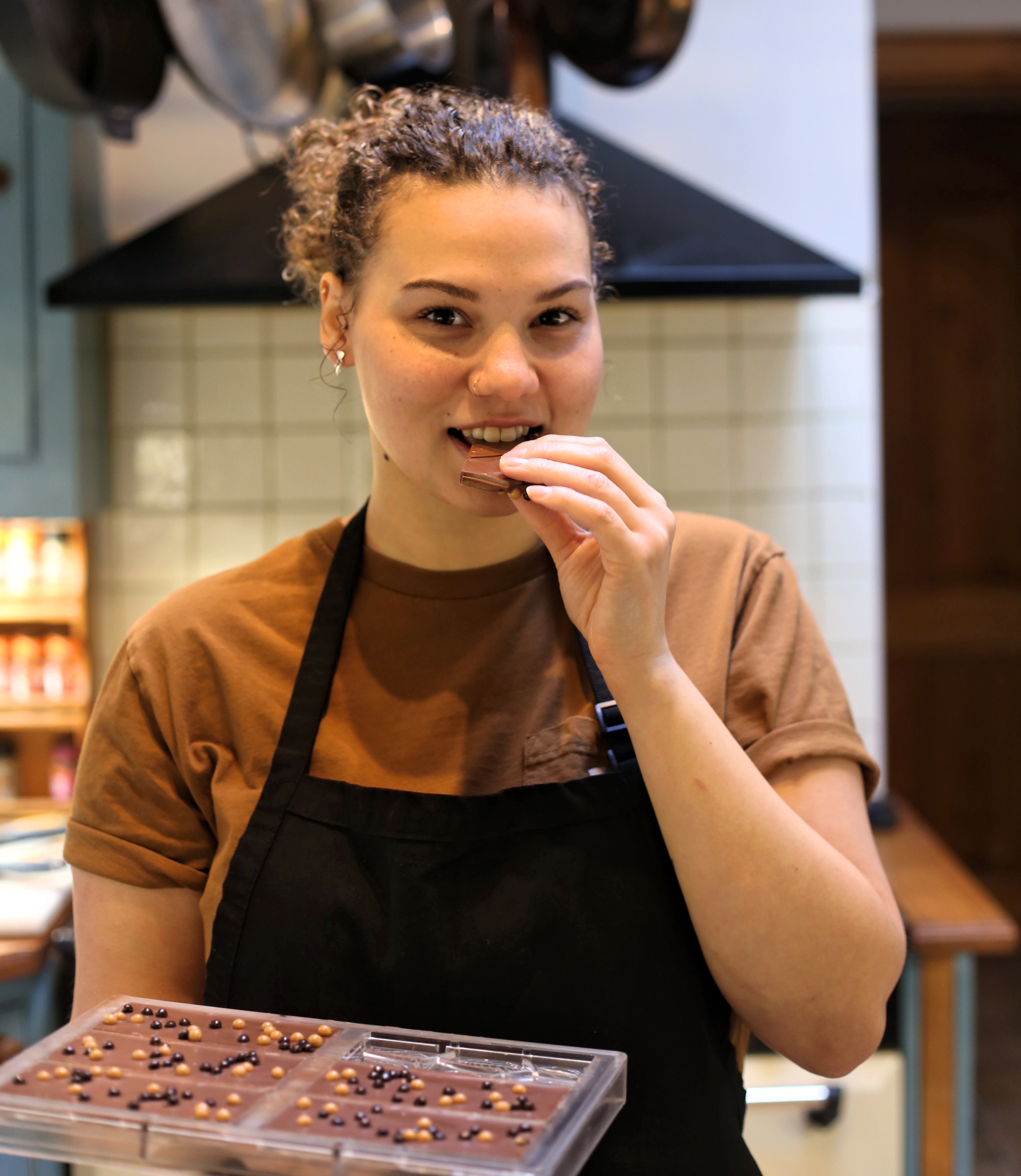
“The real problem has been inflation and bigger chocolate companies buying beans in bulk, causing the prices for the remaining beans to skyrocket, ” she said.
The price war has been so bad for Oswald that she and her partner have decided to temporarily stop selling chocolates and have a baby.
“It’s a bit of an unorthodox decision, but at one point it was costing me more to actually make chocolates than it was to keep the business,” she said. “So we decided now was the right time to start a family and come back to chocolate when the prices have settled down.”
Shoppers looking to keep chocolate affordable this Christmas may need to be more tactical. Larger sharing bags and multi-packs usually offer a lower price per gram than single bars, while supermarket own-brand chocolate can be significantly cheaper than branded products with similar cocoa content.
Promotions are increasingly limited, but loyalty-card prices might offer a few ways to save. Buying early can also help, as seasonal lines often rise in price closer to Christmas.
However, the reality is that rising prices are going to be hard to avoid. Having a sweet tooth has always been a weakness, but this Christmas it might also start to feel like a financial liability.