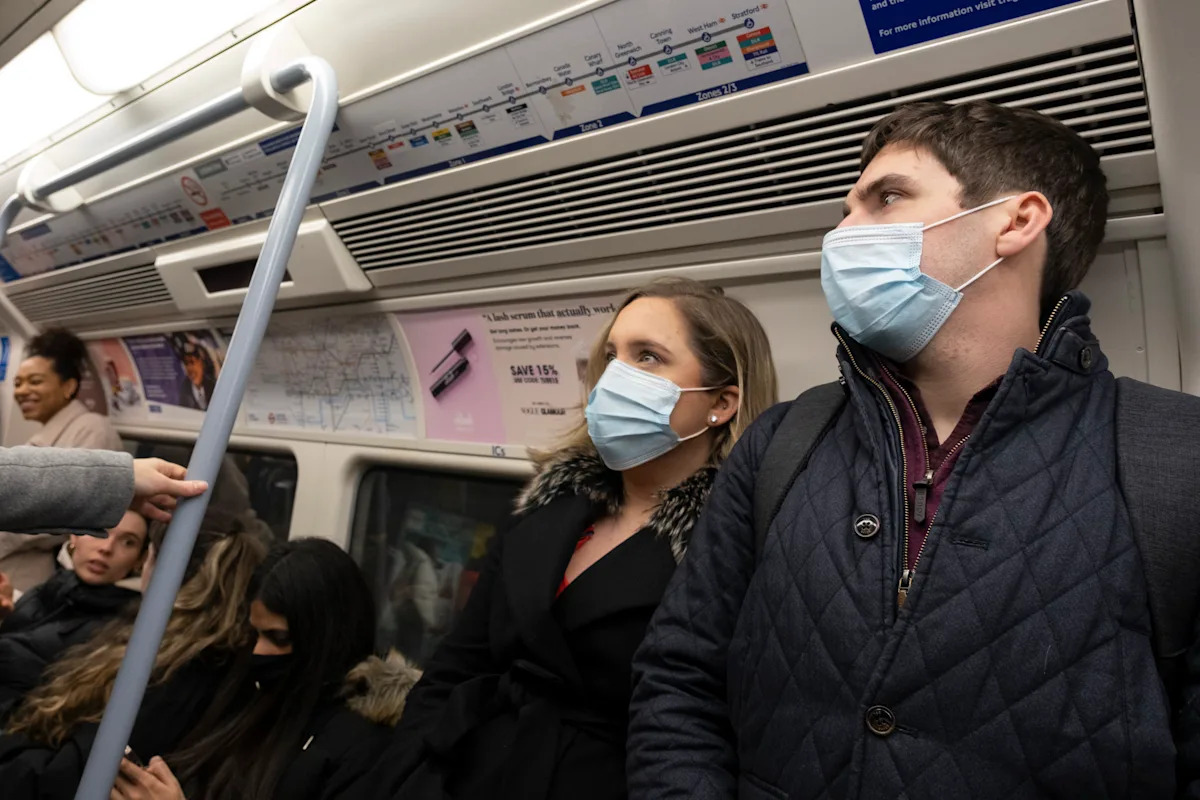
People experiencing flu or cold symptoms should wear face masks in public to help tackle a “tidal wave” of illness this winter, an NHS leader has said.
Daniel Elkeles, chief executive of NHS Providers, which represents NHS trusts, said the country is seeing a “very nasty strain of flu” that has occurred earlier in the year than normal.
“So children are still at school, it’s warm and wet, so it’s perfect flu-spreading conditions,” he told Times Radio.
Elkeles said that during the Covid-19 pandemic “we were all very good about infection control” and that “we really, really need to get back to that now”.
“I think we need to get back into the habit that if you are coughing and sneezing, but you’re not unwell enough to not go to work, then you must wear a mask when you’re in public spaces, including on public transport to stop the chances of you giving your virus to somebody else,” he said.
“We need to have a big debate probably after this flu season about how we prepare the public better for what happens every year,” he added, encouraging those who are eligible to take a flu vaccine.
It comes after the NHS warned of an “unprecedented” wave of flu this winter, with health officials saying the number of people in hospital with influenza in England was more than 50% higher than last year.
Children are thought to be particularly affected, with one school in South Wales temporarily closing after more than 250 pupils and staff members fell ill with the flu.
Here, Yahoo News takes a look at how bad cases are this year, and why it appears to be hitting children harder.
What makes this year worse?
One of the influenza strains circulating this year (H3N2) is less like the one seen in 2024’s flu season, said Professor Punam Mangtani, an epidemiologist at the London School of Hygiene and Tropical Medicine.
“This means there may be a bit less immunity already in the population, so the virus can transmit and infect people more easily and could be a reason why cases have risen earlier than last year.”
Vaccine uptake rates in the UK also seem to be lower this year in older adults than the same period last year, while hospitalisation rates are already rising, especially in over 80-year-olds, she added.
Dr Jamie Lopez Berbnal, consultant epidemiologist at the UKHSA, told Sky News on 6 December: “The new strain circulating has evolved a bit more rapidly than normal.
“And that could mean that there’s a bit less immunity in the population from what we normally see in a flu season.
“And that could mean that the flu virus spreads a bit more than usual. And that’s something that we’ve started to see already, in particular in children and young adults.”
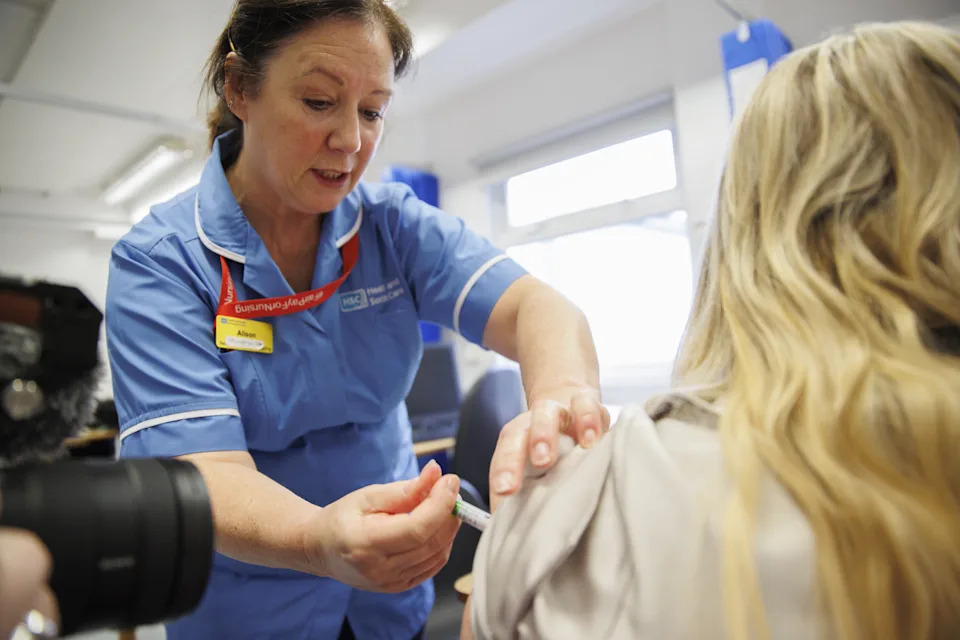
Medics have encouraged people to take flu vaccines. (Getty Images)
Why is flu spreading so much among children?
“Children are also a key group in the spread of flu, as they have been less exposed to ‘flu seasons so have less immunity and mix frequently with other children,” Mangtani adds.
“They are therefore often the first to get infected. We are already seeing increased flu cases in children across the UK, which is an early warning of the season ahead.”
Paediatric consultant Dr Julie-Ann Maney said her department at Belfast Hospital for Sick Children has been “extremely busy” due a rise in cases.
Describing this as the “most severe influenza outbreak” she’s seen since becoming a consultant in 2010, she told BBC News that this “particularly virulent strain” means there are “lots of children experiencing very high temperatures and they are experiencing the flu for much longer than we would expect”.
What has the impact on schools been?
Some schools have taken drastic measures to reduce the spread of influenza among staff and pupils.
St Martin’s School in Caerphilly, South Wales, has been temporarily closed after 242 pupils and 12 members of staff were absent with the flu.
In a letter to parents, head teacher Lee Jarvis said they had been experiencing “vomiting, diarrhoea, high temperatures, cough, headaches, fatigue and “general flu-like effects”.
He said a deep clean of the school would be carried out during the short “firebreak” period with online learning taking place of classroom lessons, Wales Online reports.
Congleton High School in Cheshire temporarily closed in late November for a deep clean after around 200 pupils were absent with flu-like symptoms, Cheshire Live reported.

Children are particularly prone to infections as they mingle frequently at school. (Getty Images)
Brian Guthrie, principal of Ebrington Primary School in County Londonderry, Northern Ireland, said 170 pupils were off on just one day, comparing the situation to “being back in Covid times”.
“It’s not just been flu, it’s been stomach bugs, very sore throats and illnesses in other ways as well but over the course of last week, it was very, very challenging with the number of pupils and staff off,” he told the BBC.
However, confirmed flu cases among adults and children across Northern Ireland have risen from 273 to 954 in just two weeks, official figures show.
Meanwhile, Wigton Moor Primary School in Leeds has stopped singing in assemblies to limit the spread of flu, among other Covid-style measures such as opening windows and hand sanitiser dispensers.
“We’ve not sung in assemblies because again, we know that that’s something that spreads it quite a lot,” headteacher Elaine Bown told the BBC.
Rehearsing for this year’s nativity plays has been a challenge, she said, adding: “But we are also trying hard not to cancel Christmas… so we are trying to make it as non-infectious as we can manage.”
What age groups are most affected by flu?
People aged between five and 14 are testing positive the most for flu by a wide margin.
Data from the UK Health Security Agency (UKHSA) up to 24 November shows that among those in this age group who took a PCR test, 36.25% had a positive result (as per the chart below).
While not everyone with the flu gets tested for it, the data indicates that children are being disproportionately affected.
People aged 15 to 44 were the second highest, with 20.88% of PCR tests coming back positive, followed by children aged 0 to four (11.8%), people aged 45-to-64 (9.83%), those aged 65 to 79 (9.31%) and people aged 80 and over (7.32%).
Longer-term data going back to 2023, shown below, paints a similar picture, with 15 to 44 year olds testing positive the most compared to older generations.
While flu can in some cases be very serious for older people, it appears to be more prevalent among young people for a few reasons.
As mentioned by the London School of Hygiene and Tropical Medicine, young people mix much more closely at school and have been less exposed to flu seasons, meaning many in this group have lower immunity.
People aged 65 and over are also more likely to be vaccinated against influenza, with 74.9% receiving the jab, compared to just 18.4% for all other people, UKHSA figures show.
Read more