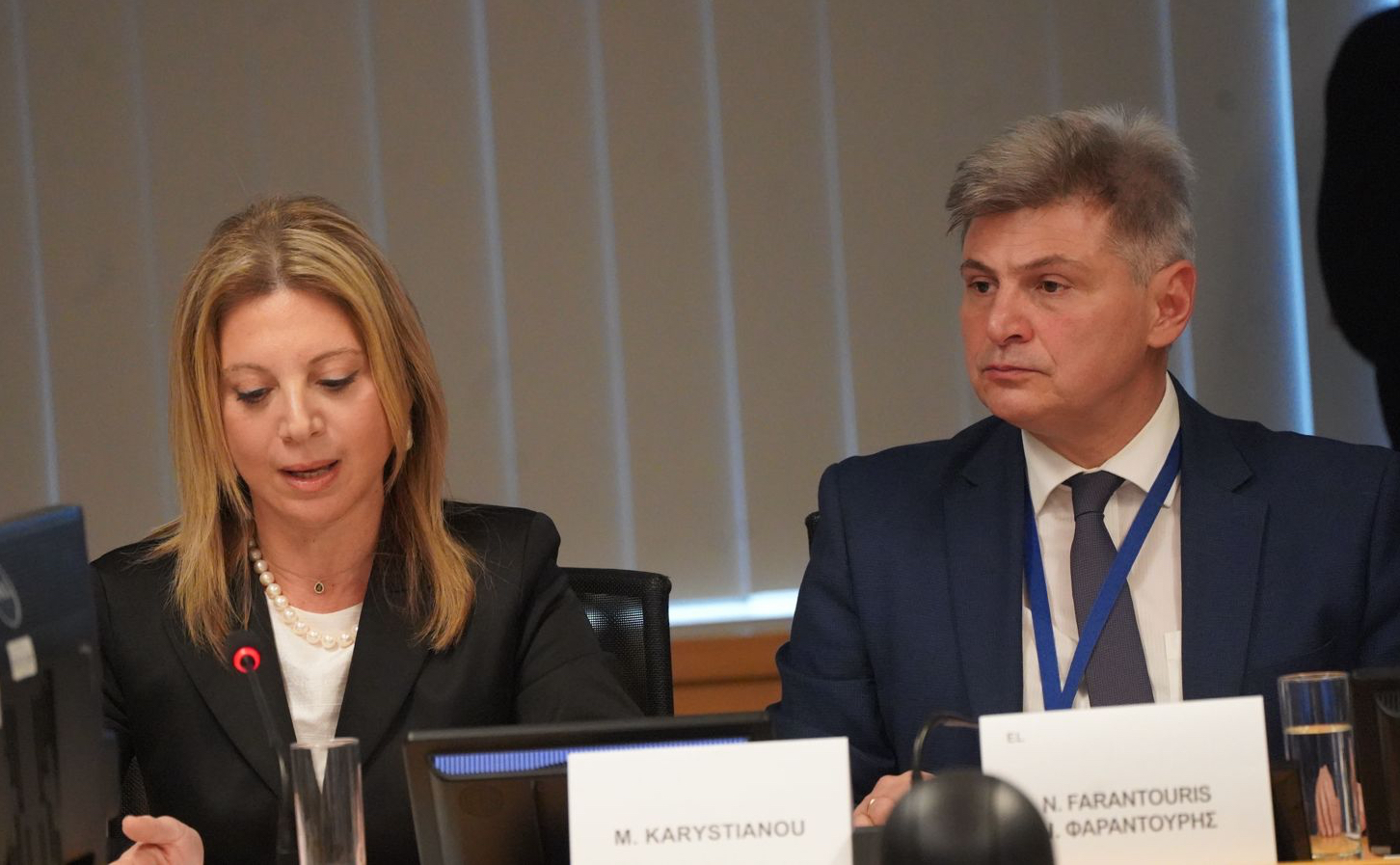
EU prosecutors should uphold the primacy of EU law and move beyond what she calls Greece’s “constitutional shield” protecting ministers, Maria Karystianou, a mother whose daughter died in the biggest train crash in Greece in recent years, told Euractiv.
The deadly collision on the Athens-Thessaloniki line killed 57 people, most of them youngsters, and continues to dominate national politics nearly two years later, as one controversial article in the Greek Constitution prevents courts from pursuing ministers unless parliament grants permission.
“The European Public Prosecutor’s Office (EPPO) has a duty to seek the truth and prosecute the politicians responsible for the deaths of 57 people,” said Karystianou.
Just eight days before the crash, the then Transport Minister, Kostas Karamanlis, publicly dismissed safety warnings raised by opposition parties and railway staff. He resigned on 2 March 2023, citing “political responsibility”.
Before the accident, EU Chief Prosecutor Laura Kövesi had already opened an investigation into a 2014 contract for signalling and remote-control upgrades on the Athens–Thessaloniki–Promachona railway. The EU-funded modernisation, long delayed, would likely have prevented the collision, Kövesi has said.
“If the EU funds for this contract had been used properly, my child would be alive today,” echoed Karystianou.
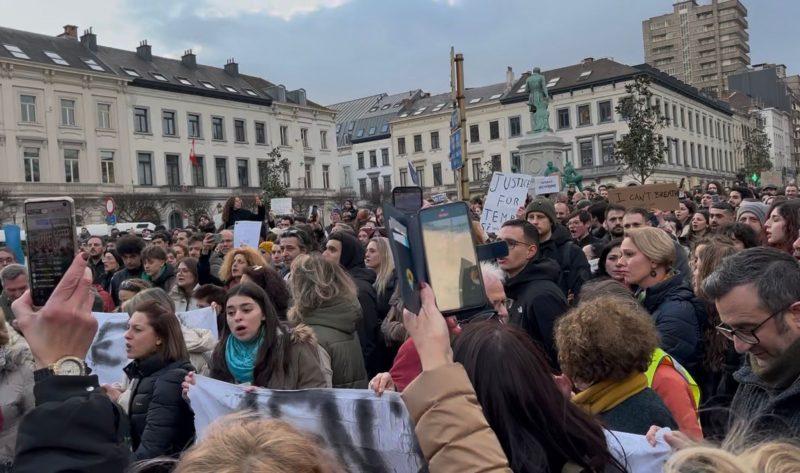
Thousands of Greeks gathered in front of the EU Parliament last February to protest Article 86 – Photo source: Euractiv
Give that only the Greek parliament can authorise the prosecution of ministers, and the governing majority routinely blocks such requests, Karystianou argued that Kövesi should apply the principle of primacy of EU law and the EPPO Regulation (2017/1939).
“She has all the legal tools at her disposal – but she is not using them. This undermines the trust of millions of citizens seeking justice, who cannot tolerate politicians deciding for themselves whether they are guilty or innocent,” she added.
The immunity debate has also resurfaced amid the recent EU farm scandal, when the EPPO sought to prosecute two Greek ministers, and Health Minister Adonis Georgiadis insisted that the governing majority alone determines whether ministers can be investigated.
A ‘black hole’ for Europe
At an event in Brussels on Tuesday, Greek leftist MEP Nikolas Farantouris warned that provision 86 in the Greek Constitution acts as a “shield of impunity” for political figures.
A professor of EU law, Farantouris, presented on Tuesday a legal opinion asserting that EU law must prevail over conflicting national provisions, including constitutional clauses.
“Constitutional provisions must be interpreted in the light of the Union legal order and must not run counter to it or render it ineffective,” he told Euractiv. Article 86 of the Greek constitution, he argued, creates a “black hole” in the EU’s rule-of-law architecture.
According to Farantouris, the EU and the EPPO should bypass the article and prosecute the responsible politicians. Otherwise, even the last hope in the European institutions will be lost, creating the “perfect fertiliser for Euroscepticism.”
Article 29 of the EPPO Regulation states that when national immunity rules obstruct an investigation, the EU prosecutor must issue a reasoned request to have those protections lifted, following national procedures.
Commission under fire
An EPPO spokesperson told Euractiv that Kövesi wrote to then Justice Commissioner Didier Reynders in January 2024, urging the European Commission to act against Greece’s immunity regime.
Reynders replied a month later, but according to a source familiar with the exchanges, the Commission merely “took note”, and no further steps followed.
The same source stressed that as long as Article 86 remains unchanged, the EPPO’s hands are tied.
Meanwhile, Karystianou lashed out at the Commission, saying that, as the guardian of EU treaties, it should have acted earlier, as Athens has long failed to meet its transport safety obligations.
“What is preventing the Commission from acting decisively… and initiating proceedings against the member state for violations? Could there have been special ties with the Greek government explaining its inaction and omissions?” Karystianou asked.
The European Commission did not respond to Euractiv’s request for a comment.
(cs, mm)