
The long and winding road towards a naming rights deal for the London Stadium has taken yet another turn for West Ham.
A commercial partnership for the venue itself – and potentially the surrounding Olympic Park – has been talked about for virtually two decades, years before the 2012 Olympic Games.
When West Ham moved in at the beginning of the 2016-17 season, it was anticipated that the search for a sponsor would accelerate.
But like the fans’ connection with the ground, the relationship between the club and its landlords has been strained since the outset.
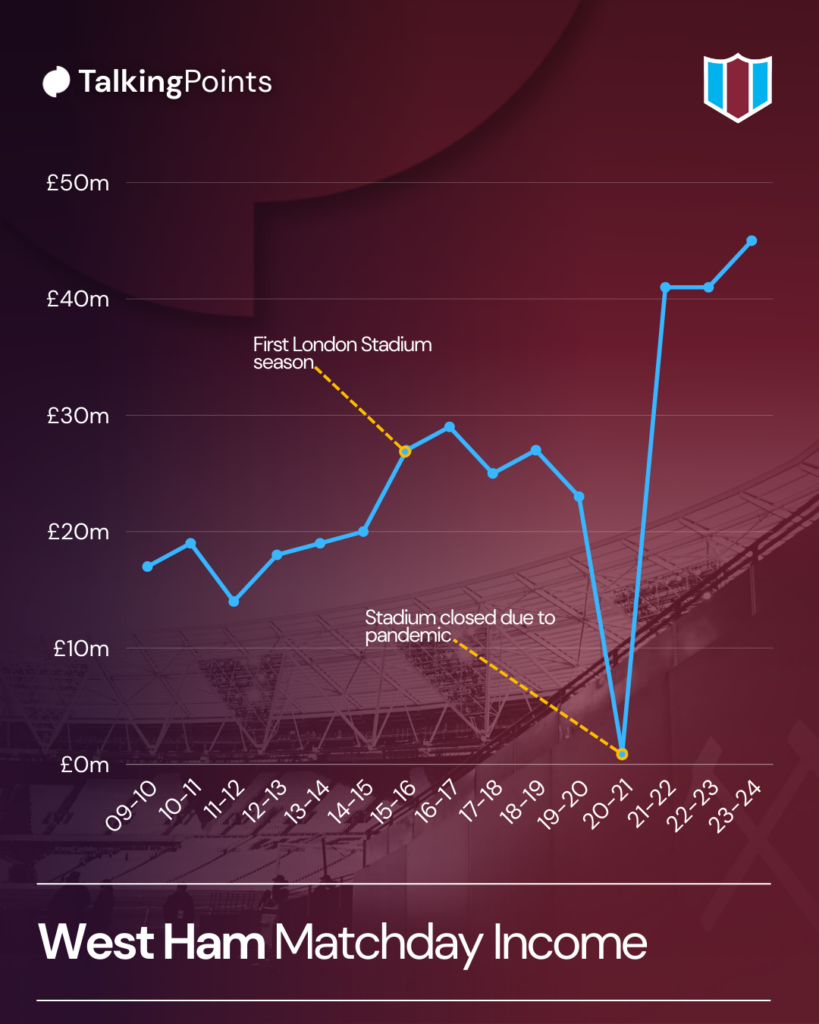
West Ham’s matchday income has doubled since 2016
But is there any amount of money that would let you accept the London Stadium?
 West Ham matchday income
Credit: Liverpool FC/Getty Images
👇 Join the debate; share your insight. Use the comment button on the bottom left to have your say
The Hammers pay a peppercorn rent to the Greater London Authority (GLA) for the London Stadium. In the last financial year, it was about £4.5m. In exchange, David Sullivan can expect baseline matchday income of about £45m annually, compared to the £20m or so they were getting at Upton Park.
The club don’t have to pay for maintenance or upgrades such as periodic seating reconfigurations or the solar panel installation in the summer.
The taxpayer, meanwhile, foots a seven-figure bill every season. Ostensibly, when viewed through a cold, rational lens, it’s a pinch-me deal for West Ham.
 Photo by Tom Dulat/Getty Images
There are, however, umpteen drawbacks, even before the grey atmosphere, ticket price mission creep, soul-sapping legal issues, and the Ship of Theseus argument about whether the Irons are the same club in E20 as they were in E13.
And the naming rights saga is emblematic of the malaise the club has experienced since the move away from the less lucrative but altogether more beloved Boleyn Ground.
GLA’s pivot could exclude West Ham and London Stadium from naming rights deal
As readers are probably aware by now, the complexities of West Ham’s 99-year lease for the London Stadium mean the club has to share the burden/benefits of a would-be naming rights deal with GLA.
The publicly-funded body are entitled to the first £4m of any deal, with any leftover value split 50-50 with the club. The rights are variously valued at between £5-15m, although the time that elapsed since West Ham pitched up at the stadium means we’re now probably looking at the bottom end of that scale.
That said, West Ham are looking for a new front-of-shirt partner ahead of the Premier League’s ban on front-of-shirt gambling sponsorship from 2026-27, and a stadium-shirt package could notch up the value.
 Photo by Liverpool FC/Liverpool FC via Getty Images
However, 2025 has also been something of a bellwether for naming rights deals, both in terms of the UK market and football as a sport.
Everton (Hill Dickinson), England Rugby (Allianz), Atletico Madrid (Riyadh Air) have all overperformed with the value of their respective naming rights deals relative to industry expectations in the last year.
Previously, the London Legacy Development Corporation, who ceded control to GLA in 2025, came close to naming rights deals with Vodafone, Stage Front and Allianz respectively.
SportBusiness’ excellent, comprehensive reporting on the subject in recent months suggests that Allianz’ offer was worth £7m-a-year for 10 years, which would leave West Ham with just £1.5m annually.
The industry publication also reports that West Ham – who have a veto on any deal – have been told they can effectively buy back the naming rights for £5m per year, if they think they can get a better rate.
In SportBusiness’ latest report, it is claimed that the Olympic Park has renewed its search for a naming rights deal. However, the process excludes the London Stadium itself, focusing instead on the aquatics centre, velodrome and various sports facilities in E20.
London Mayor Sadiq Khan is now said to have brought the naming rights deal into his purview, while Lord Sebastien Coe is also reportedly part of the refocussed procurement proceedings.
Could West Ham ever buy – or vacate – the London Stadium?
Across English football, clubs are piling their chips high on stadium builds, expansions and revamps.
Once Manchester City’s capacity increase is complete, all of the so-called ‘Big Six’ can expect £100m-plus in matchday income. In good seasons, Manchester United, Arsenal and Spurs could push £200m.
Based on official figures for 2023-24, the last season for which a full data set is available, West Ham (£45m) earned the ninth-most through the turnstiles of any Premier League, with the Big Six then Newcastle and Aston Villa ahead of them.
Imagine YOU have just taken over West Ham?
What is the very first thing you do?
 West Ham protests
Credit: Alex Pantling/Getty Images
👇 Join the debate; share your insight. Use the comment button on the bottom left to have your say
But going forward, the Hammers will likely be surpassed by Everton and Leeds United. The Hill Dickinson Stadium will triple the Toffees’ matchday takings, while Leeds will be hoping to match West Ham’s £45m even before they expand Elland Road to 53,000.
In the era of Profit and Sustainability Rules (PSR), the Premier League’s incoming Squad Cost Ratio (SCR) system and relentless wage and transfer inflation, what one earns in gate receipts has arguably never had more material influence over what happens on the pitch.
While media and TV money is still the biggest show in town, it is centrally negotiated by the Premier League. Commercial revenue is an ultra-competitive field, so it’s difficult to steal a march on rivals there too.
But clubs with huge match-going fanbases like West Ham have an inherent advantage over many of their peers. That edge, however, comes with a great deal of political baggage.
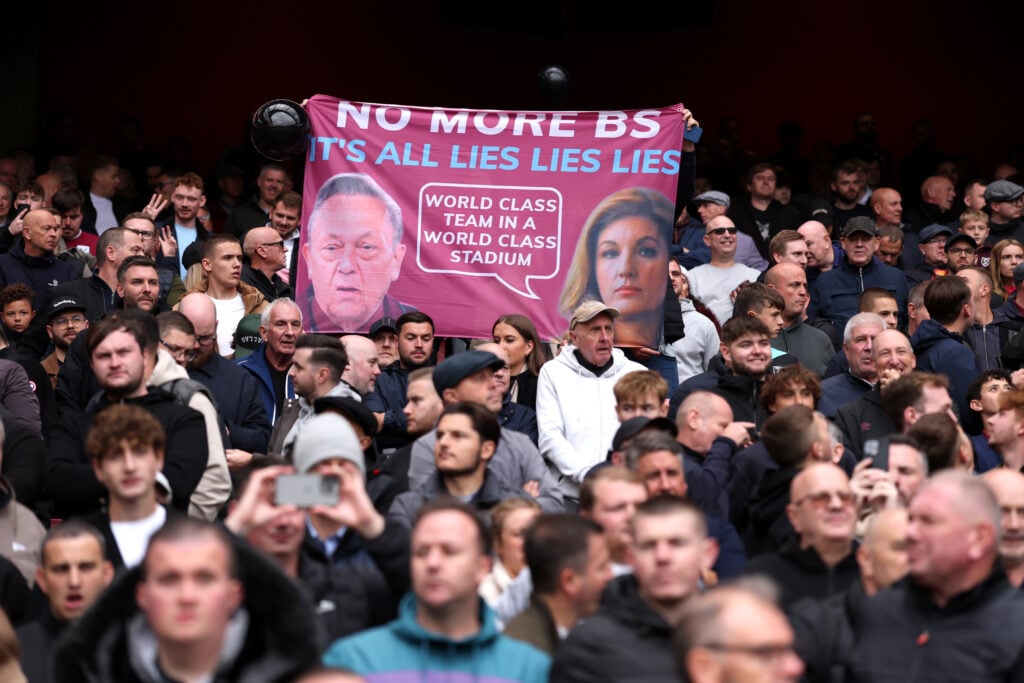 Photo by Alex Pantling/Getty Images
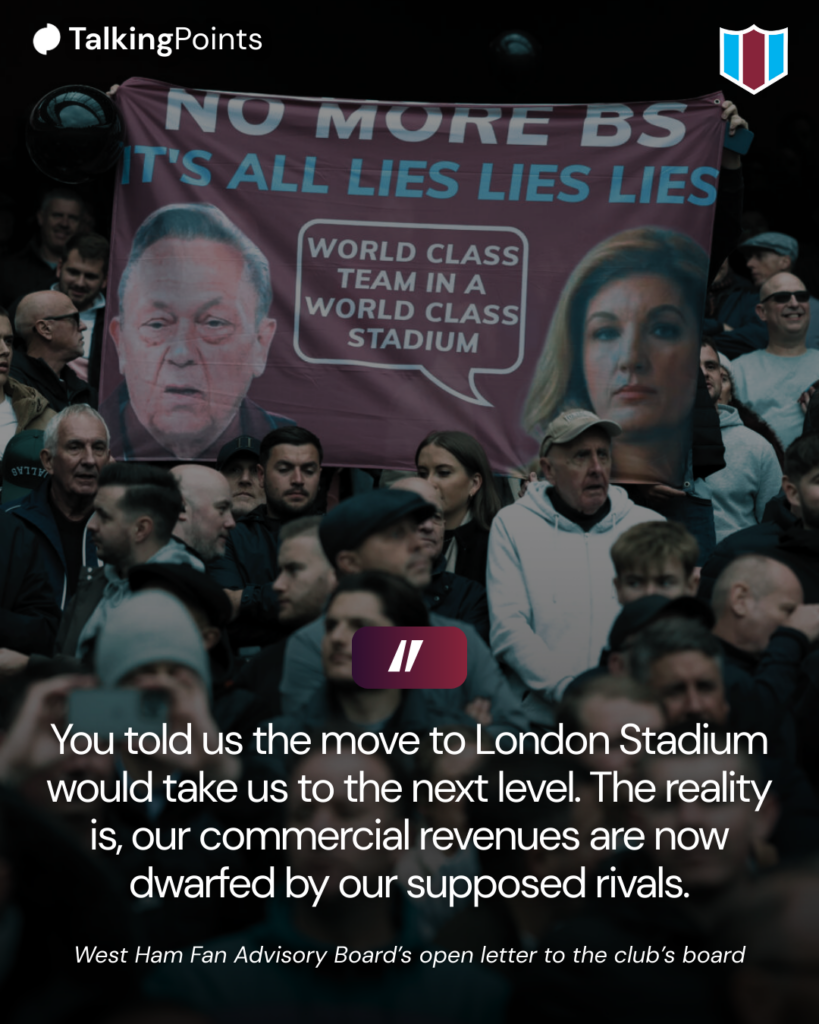
West Ham fans’ brilliant Save Our Concessions campaign and the broader pushback against the perceived over-commercialisation of the club are emblematic of the balance that Sullivan, Karren Brady and the board must strike.
The crux of the issue here, though, is that as long as the existing London Stadium agreement remains in place, it will be nigh on impossible to keep up with rivals financially without significantly hiking ticket prices. At least, under the current ownership, who are reluctant to fund the club via a benefactor model.
But if they owned the stadium? That wouldn’t have to be the case.
For one, West Ham can’t expand capacity beyond a few hundred extra seats. They also can’t tailor and scale their hospitality offering to the same extent as their rivals. And while the prawn sandwich brigade aren’t the most popular demographic, they pay through the nose. Other clubs – especially in Germany – have shown that increasing hospitality yield helps keep down the cost of general admission tickets for bedrock fans.
There’s also the naming rights issue, which – if it is ever sorted – will see West Ham lose out on at least £4m annually compared to if they owned the stadium. And unlike the Tottenham Hotspur Stadium or any of the Premier League’s other multi-use new-build arenas, West Ham don’t get money from concerts or non-football events at the London Stadium either.
And because the club doesn’t own the land around the stadium, there is also no opportunity for the kind of property development which many clubs see as the next revenue panacea.
Then, there’s the Women’s team, who don’t play at the London Stadium because of the costs to the club.
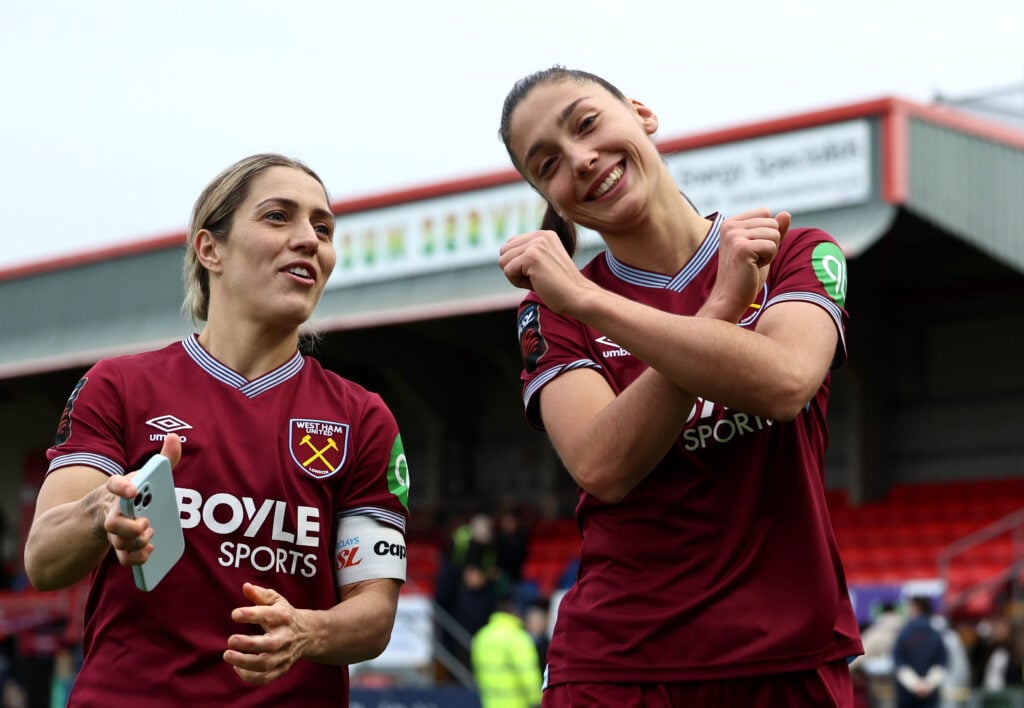 Photo by Leila Coker – WSL/WSL Football via Getty Images
As well as that being a failure of representing the club’s fanbase and community, it’s also a missed revenue opportunity. Currently, West Ham are in talks with private equity fund Monarch Collective about selling a stake in the women’s team at a valuation of £55m. But without a stadium (they currently play at 6,000-capacity Victoria Road in Dagenham), that appraisal looks difficult to justify.
“While it is a fantastic deal for West Ham, there is no such thing as a free lunch, and this is where the small print comes back to bite them,” says University of Liverpool football finance lecturer and Price of Football podcast host Kieran Maguire, speaking exclusively to Hammers News.
“They make a huge profit on men’s matches taking place at the London Stadium, but they make a huge loss on the women’s because it’s a separate deal at a fixed cost.
“You have to look at marginal revenues relative to marginal costs. To host a women’s match, it is going to be loss-making. West Ham clearly don’t want to go down that route.”
Buying the stadium would unlock all of those revenue streams and scalability. While the initial cost might be, say, £300-400m, the club would borrow the money and pay interest over perhaps 20-30 years.
Stay, leave or improve…
What should West Ham do with the London Stadium?
Photo by Liverpool FC/Liverpool FC via Getty Images
👇 Join the debate; share your insight. Use the comment button on the bottom left to have your say
The calculation would be whether the extra revenues outweighed the interest payments and increased running costs. Stewarding, for example, is covered by the GLA.
But with naming rights, extra matchday income, a targeted hospitality focus, lucrative non-football events, opportunities for the women’s team and £4m-plus saved in annual rent, more ambitious owners would likely either have tried to engineer the purchase of the stadium or built a new one on another site.
And while harder to quantify, the benefits of revamping a stadium, creating a sense of belonging and soothing the relationship between the board and fans who currently feel alienated would be both emotionally and commercially transformative.
In 2023, it emerged that West Ham were ‘open’ to buying the stadium. Sadiq Khan has aspirations for London to host the 2040 Olympics, but he would have conversations with the club if they wanted to end their 99-year lease, though he has previously poured cold water on the prospect of an outright sale.
But whether the future is in a new home or an improved London Stadium, the prospect of change under the current ownership appears remote.
Join Our Newsletter
Receive a digest of our best West Ham content each week direct to your mailbox