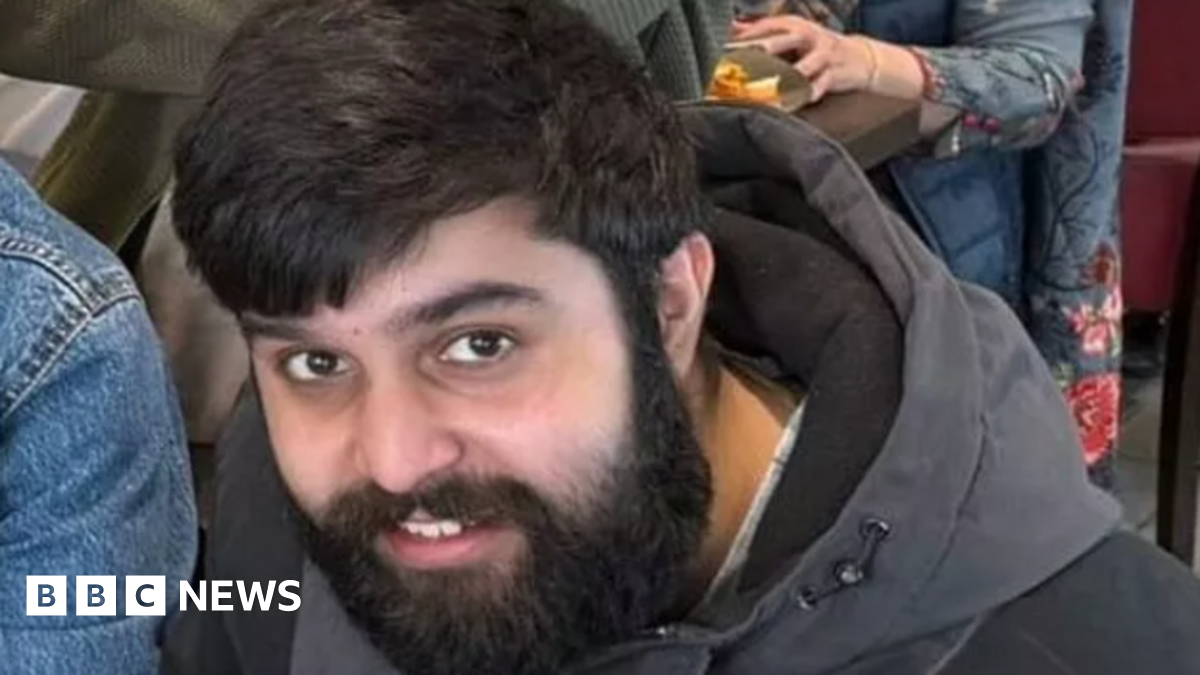
The inquest at Nottingham Coroner’s Court heard Mr Hussain first called 999 on the morning of 12 May, complaining of abdominal pain and vomiting, and was mistakenly told to expect a call from his GP within 24 hours.
Upon a second 999 call, Mr Hussain was told to go to a walk-in centre, which he did.
He was triaged to the urgent treatment centre the same day, but discharged by 11:29 BST.
Assistant coroner Elizabeth Didcock said during a third 999 call on 12 May she found “the seriousness of [Mr Hussain’s] condition was not recognised”.
On 14 May during a call to 111, Mr Hussain was told an ambulance would attend.
Dr Didcock said at this stage it was likely Mr Hussain had developed sepsis.
A request for an ambulance was sent digitally to East Midlands Ambulance Service (EMAS) but was subsequently not deemed serious enough for attendance.
The court heard non-clinical staff making the assessment looked at limited information on its system, rather than the whole sequence of events.
This meant Mr Hussain’s log of calls and what happened during them was not looked at.
The coroner said if an ambulance had been sent at that point, Mr Hussain “would have been likely identified as having sepsis.”
Dr Didcock said the process for assessing the calls was unsafe, adding “the 111, EMAS and Nottingham Emergency Medical Services (NEMS) interface is not providing enough and/or timely care.”
After Mr Hussain’s fourth call to 999 at 20:23 on 14 May, he was referred to NEMS for another telephone clinical assessment.
During the 999 call, which was heard in court, Mr Hussain was struggling to breathe and speak and told the call handler he was unable to walk.
Dr Didcock told the court the NEMS assessment also “fell far below the standards”.
An ambulance finally attended to Mr Hussain at 15:23 on 15 May but on its arrival, he suffered a cardiac arrest. He died in hospital the following day.