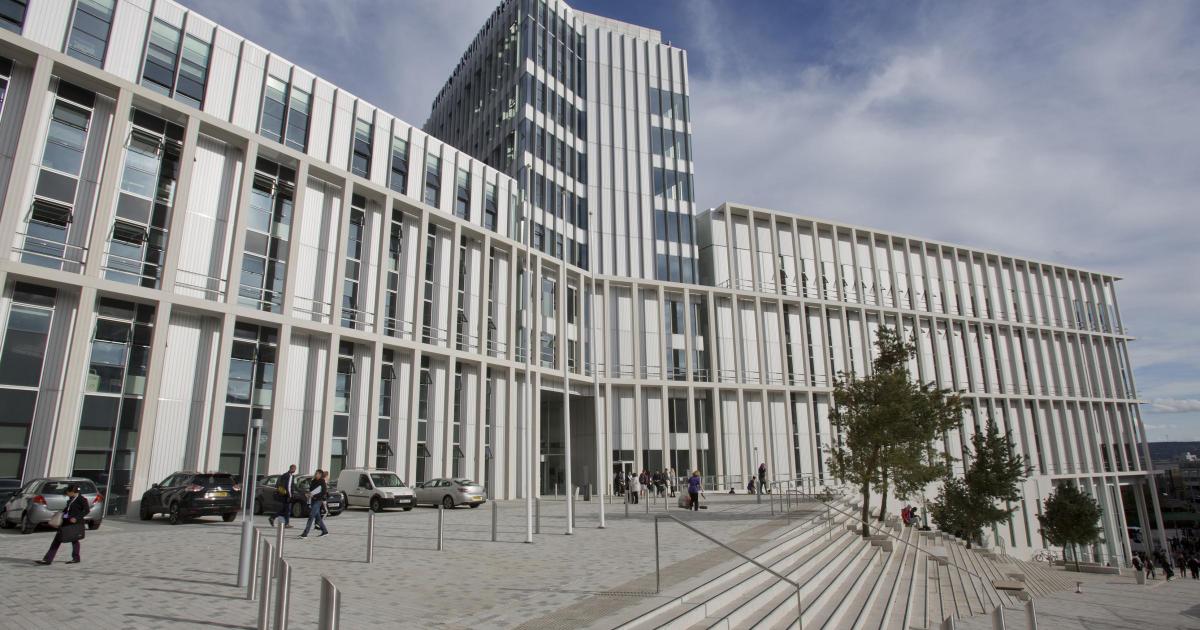
Figures released under Freedom of Information reveal the college spent £130,948.42 on international travel for staff between January 2024 and July 2025.
Most of the entries included are for the purpose of ‘business development’ or ‘business meeting’, with other travel for teaching, research or student recruitment.
Read More:
Of that figure £42,000 was spent flying into Dubai and £13,700 went on flights to Doha, with both often used as waystations on the way to other destinations.
Principal Paul Little has previously been criticised for his travel habits, claiming more than £100k in taxpayer-funded expenses between 2014 and 2024, including £13k for staying a private members’ club in London. It is not stated in the breakdown of costs which staff were taking the flights.
Colleges Scotland warned last month that 11 colleges across the country could run out of cash next year without investment, with the Scottish Funding Council warning the sector as a whole faces a cash deficit of £46.2m by the end of 2027-28.
City of Glasgow College reported a small surplus of £130k in its most recent accounts and “has adequate resources to continue in operation for the foreseeable future” but is facing “unprecedented financial and funding challenges”.
Dr Little received £174,674 in salary for 2023-24 and £1,456 for private health insurance.
Scottish Greens co-leader Ross Greer said: “With a salary far higher than the First Minister, Paul Little has become a notorious example of excess in our college sector.
Ross Greer (Image: Scottish Greens)
“He has a long history of lavish and outlandish spending, which his board has never held him accountable for. This is yet another slap in the face to the City of Glasgow college staff doing outstanding work despite the threat of more redundancies hanging over them.
“It seems totally inappropriate for the college to rack up so many air miles at such vast expense. Scotland’s colleges have a well-deserved international reputation and some travel will always be necessary, but absolutely not on this scale.
“I have long called for City of Glasgow’s board to review the college’s expenses policy. This again emphasises how important that review is. The public need to be confident that their money is being well spent.”
A spokesperson for City of Glasgow College said: “International travel and activity are essential to the financial sustainability of City of Glasgow College. After years of real-term funding reductions, generating commercial and international income is critically important for our students, staff, and long-term viability.
“We have partnerships in 40 countries, across six continents, and support around 4,000 international students. In 2023/24 and 2024/25, this international activity generated £5.3 million in income. No taxpayer-funded resource is used to subsidise international travel; on the contrary, this work brings in approximately forty times more to the College than is spent on travel and this return is vital to safeguarding jobs and maintaining the breadth of opportunities available to learners. ”
Questions have also been raised over the climate impact of the college’s activities.
The college has committed to achieving Net Zero by 2040, but figures show its total reported carbon emissions for 2023/24 were 10,249 tonnes of CO2 equivalent.
That was an increase from 9.8k the previous year and 4.9k in 2021-22, which the college said was largely due to emission conversion factors for the supply chain being increased this year and improved reporting quality of international student relocation emissions.
The Environmental Association for Universities and Colleges (EAUC) produced a report for City of Glasgow College on its environment and sustainability work.
An executive summary provided under Freedom of Information showed the assessment of its progress on reductions in emissions.
Since 2014-15 the college has reduced its scope one emissions – direct emissions from owned or controlled sources such as company vehicles – and scope two emissions, which come from purchased energy.
It has achieved a 36.8% reduction in the former, described as “good progress”, and a 54% reduction in scope two, largely due to decarbonisation of the national grid.
However for scope three emissions, which include things such as business travel, employee commuting, waste disposal and purchased goods and services there has been a 567% increase since 2015/16.
The EAUC recommended that “the college should focus on reducing its use of flights for business travel, support sustainable staff and student commuting behaviours, and continue to lead on responsible procurement”.
The college has previously pointed to having invested in an industrial composter to divert all its food waste from anaerobic digestion by composting directly onsite as an example of its drive toward net zero.
The composter was purchased at a cost of £26,644 plus VAT.
The machine was taken out of service in January 2022, with the college stating that this was due to the gardener in charge being deployed elsewhere due to the need to address an £18m budget deficit.
In response to an FOI request by The Herald in June 2024, City of Glasgow College said work was being undertaken to return the composter to service that year.
In April of this year, the college said the machine was “now back in service and fully operational”.
It confirmed in the previous year, from April 2024 to March 2025, the college has spent £5,841.29 plus VAT on food waste disposal but “these running costs will now substantially decline because the composter is fully operational again”.
However, in 2024-25 the composter ran for only five days and produced no compost, which City of Glasgow College said was due to “staff retention”.
City of Glasgow College said: “On carbon emissions, it is self-evident that our overall emissions for 2023/24 are higher than during the period of Covid-19 restrictions in place from March 2020 to March 2022, when travel, building use, and on-campus activity were drastically reduced. As Scotland returned to normal levels of activity, emissions inevitably rose in line with that profound change. We welcome the significant reductions achieved in our Scope 1 and Scope 2 CO2 emissions since 2015/16, which are 36.8% and 54% lower respectively. These substantial reductions reflect our continued investment in energy efficiency and estate management.
“The rise in Scope 3 emissions is a direct result of the Scottish Government’s expansion of mandatory public sector reporting under the 2020 Climate Change Amendment Order, which considerably widened the boundary of what must be included. Public bodies are now required to report far more comprehensive indirect emissions, including those associated with procurement, purchased goods and services, business travel, waste, and employee commuting or homeworking. These categories were previously unreported or only optional and, therefore, the increases in Scope 3 right across public sector bodies reflect a change in reporting obligations, not a deterioration in environmental performance.
“Regarding the industrial composter, while its operating days have been limited due to staff retention issues, it remains an asset that will generate significant financial savings in the medium and long term. Meanwhile, all our food waste continues to be diverted from landfill and is converted into renewable energy through Anaerobic Digestion in partnership with Enva.
“City of Glasgow College remains fully committed to strong financial stewardship, environmental responsibilities, and ensuring that our students benefit in their learning from every possible investment and partnership.”