US and Ukrainian negotiators are set to meet for high-stakes peace talks in Berlin on December 14 as disagreements persist over territorial control and security guarantees and as Russia intensifies attacks on Ukrainian infrastructure sites.
Ukrainian President Volodymyr Zelenskyy is scheduled to confer with Kyiv’s delegation, which is meeting on December 14 with US President Donald Trump’s special envoy, Steve Witkoff, and son-in-law Jared Kushner in the German capital.
Trump on December 11 said he would send US representatives to the talks only “if we think there’s a good chance [for progress]. And we don’t want to waste a lot of time if we think it’s negative.”
A German government source told Reuters on December 13 that “talks on a possible cease-fire in Ukraine are taking place in Berlin this weekend between foreign policy advisers from, among others, the US and Ukraine.”
It was not immediately clear which other officials might participate in the talks.
On December 15, German Chancellor Friedrich Merz is scheduled to meet with Zelenskyy and several other key European leaders and NATO chief Mark Rutte also in Berlin.
British Prime Minister Keir Starmer and French President Emmanuel Macron are also expected to participate in that meeting.
The Berlin meetings are the latest in a series spanning the globe as part of Trump’s push to bring about a cease-fire or peace deal in Russia’s war on Ukraine.
The diplomatic activity intensified after the Trump administration in November pressed Kyiv to accept a 28-point peace plan that critics said was heavily tilted toward Moscow’s interests.
European Allies Press Changes To Plan
Ukraine and its European allies — led by Britain, France, and Germany — have scrambled to include changes that would make the deal less lopsided and, crucially, ensure Ukrainian security against any future Russian attacks. Kyiv submitted a 20-point plan this week.
The White House has also been pushing for Ukraine to hold elections even though Ukraine’s constitution doesn’t allow for elections during wartime.
The possibility of holding elections has been regularly dismissed, with officials saying it would be impossible given daily Russian air strikes across the country, thousands of soldiers battling on the front lines, and millions of Ukrainians displaced.
Zelenskyy has said he is ready to hold elections in his war-torn country if the United States and other allies can provide the security necessary to ensure the vote can be held safely.
Russia on December 12 rejected a proposal to hold a referendum to let Ukrainians decide on giving up territory in the eastern Donbas region, highlighting a key sticking point as negotiators head to Berlin.
“This area is Russian territory,” Yuri Ushakov, foreign policy adviser to Russian President Vladimir Putin, said referring to Russia’s 2022 illegal annexation of the Ukrainian region after it had launched its full-scale invasion earlier that year.
Putin has so far shown no intention of compromising or backing down from the Kremlin’s hard-line positions, including the demand that Kyiv cede territory to Russia — including some areas that Ukraine still controls.
Separately, the European Union will make a push for a way to finance support Ukraine for the next two years as the bloc’s leaders gather in Brussels on December 18-19.
A potential key component of this is a so-called reparations loan for Kyiv. The International Monetary Fund (IMF) has estimated that Ukraine needs around 135 billion euros ($158.3 billion) for the next two years and that it is facing a budget shortfall of 71.7 billion euros in next year alone.
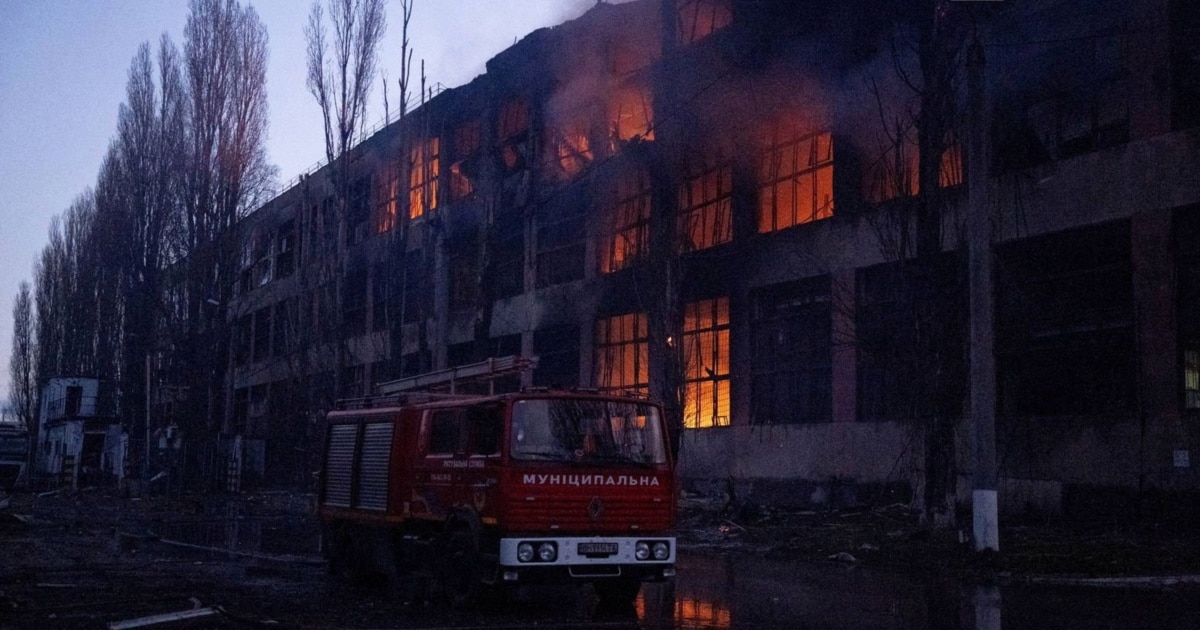
Even as talks takes place at various sites around the world, Russia has maintained its relentless overnight attacks on Ukrainian territory and pressed its ground offensive near the key Ukrainian town of Pokrovsk.
Ukraine’s Zaporizhzhya nuclear power plant temporarily lost all offsite power overnight on December 13 following because of area military action, the International Atomic Energy Agency (IAEA) said. Both power lines were later reconnected.
The status of the Zaporizhzhya plant — Europe’s largest and occupied by Russia since early following Moscow’s full-scale invasion of February 2022 — is another divisive issue in the peace talks. The IAEA has often expressed concerns over the safety of the plant amid intense area fighting.
Russia Maintains Overnight Attacks
Zelenskyy on December 13 reported new overnight attacks by Russia throughout Ukraine, saying that more than 450 drones and 30 missiles had been launched.
“The main strike again hit our energy supply, the south and the Odesa region,” wrote on social media.
“All necessary services are currently working to restore electricity and water supply in our communities affected by Russia’s overnight attack,” he wrote.
“More than a dozen civilian facilities have been damaged across the country.”
Russia denies targeting civilian sites despite widespread evidence of such attacks. Ukraine has been hitting sites with drones inside Russia that it claims are used by the Kremlin’s forces to launch strikes against Ukrainian cities.
On the ground, the Russian Defense Ministry said its forces had thwarted a counterattack by Ukrainian forces near Pokrovsk, which the Kremlin’s troops have claimed to have captured.
Ukraine’s top military commander on December 12 said Ukrainian troops continue to control part of Pokrovsk, a strategic city in the Donbas region that had a prewar population of more than 60,000 but which is mainly in ruins after months of fighting.
Reports from the area cannot be independently confirmed.
Along with his diplomatic trips, Zelenskyy has continued to travel to the front lines, meeting on December 12 with troops in the Kupyansk region. The Ukrainian president posted a video from the area following Russian claims that it had captured the town.
“The reality speaks for itself,” he said on the video from what appears to be near the town center.
With reporting by RFE/RL’s Ukrainian Service, Reuters, and dpa