Scotland’s biggest city has just gained a new rail link, making it cheaper to enjoy its creativity and friendly outlook
Scotland’s biggest city charms with its beautiful architecture, green spaces, cool neighbourhoods, bags of culture and lively dining scene. And of course, with Glaswegians, renowned for their wit and warmth.
While Edinburgh dominates tourism statistics – racking up more than 5 million overnight visits last year – everyone, it seems, is talking about Glasgow now.
The city recorded more than 2.6 million overnight visits in 2024 and has retained its title as the UK’s friendliest city in Condé Nast Traveller’s Readers’ Choice Awards. Consumer champion Which? this year named it one of the UK’s top cities for food and drink as well as one of the top five large UK cities for short breaks.
New FeatureIn ShortQuick Stories. Same trusted journalism.
It also ranked above Venice and Nice in the annual Resonance Consultancy’s best European cities, considered to be the world’s most comprehensive city ranking.
I’m not surprised. I went to university in Glasgow when it became the UK’s first European Capital of Culture in 1990 and have watched it blossom since.
Yes, Edinburgh has its festivals in summer, but Glasgow kicks off the new year with the Scottish National Whisky Festival on 24 January, followed by the Glasgow International Comedy Festival (11-29 March) and the Commonwealth Games from 23 July. And while Edinburgh’s tourist tax kicks in next July (five per cent on top of the cost of accommodation), Glasgow’s doesn’t start until 2027.
From this week, it has also become cheaper to visit – electric train operator Lumo has extended a handful of its London Kings Cross to Edinburgh services to Glasgow. Advance fares from London start at £33.90, and from £10.90 from Newcastle.
These are just some of the reasons why it’s worth staying on the train after Edinburgh…
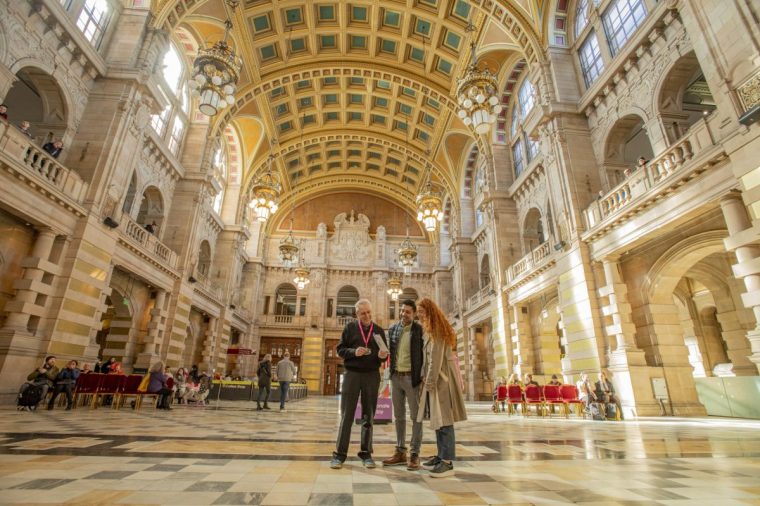 Kelvingrove museum in the West End (Photo: Paul Watt)
The suburbs are anything but dull
The city is broadly divided into four – southside, the West End, east end and north. While the city centre is vibrant, the suburbs add to Glasgow’s hip feel.
Southside is bohemian, community-centred and creative – its heartland is Shawlands, a hive of indie cafes, bakeries, makers and murals. The East End has the legendary Barrowland music venue, Tennent’s Brewery and some of Glasgow’s oldest buildings – such as the medieval Provand’s Lordship, the oldest house.
In the quieter north, the Forth and Clyde Canal adds a rural feel, while the West End is defined by independent shops, iconic buildings and great nightlife. Here, Finnieston is the neighbourhood to aim for great restaurants such as Gloriosa, Crabshakk and Michelin-starred Unalome, as well as Trust by Modou – a restaurant by a Senegalese-Spanish cook with an affordable 10-course tasting experience that has no menu (£39).
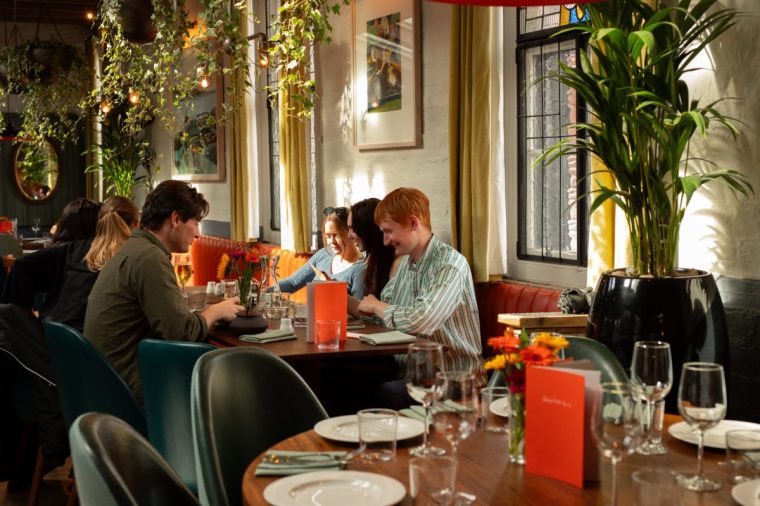 The Ubiquitous Chip is a local institution
The food is glorious
Glasgow’s culinary claim to fame is no longer the deep-fried Mars Bar. Restaurants are inspired by its cosmopolitan residents and a verdant local larder – plus, they’re generally great value.
Locals’ favourite Paesano Pizza claims to have been the first restaurant in Glasgow to serve authentic Neopolitan pizzas, starting at £10. At Maison by Glaschu, a brasserie in buzzy Princes Square, the service is impeccable. Expect dishes like Cumbrae oysters, chargrilled Angus sirloin and French onion risotto. Midweek three-course set lunches are £25.
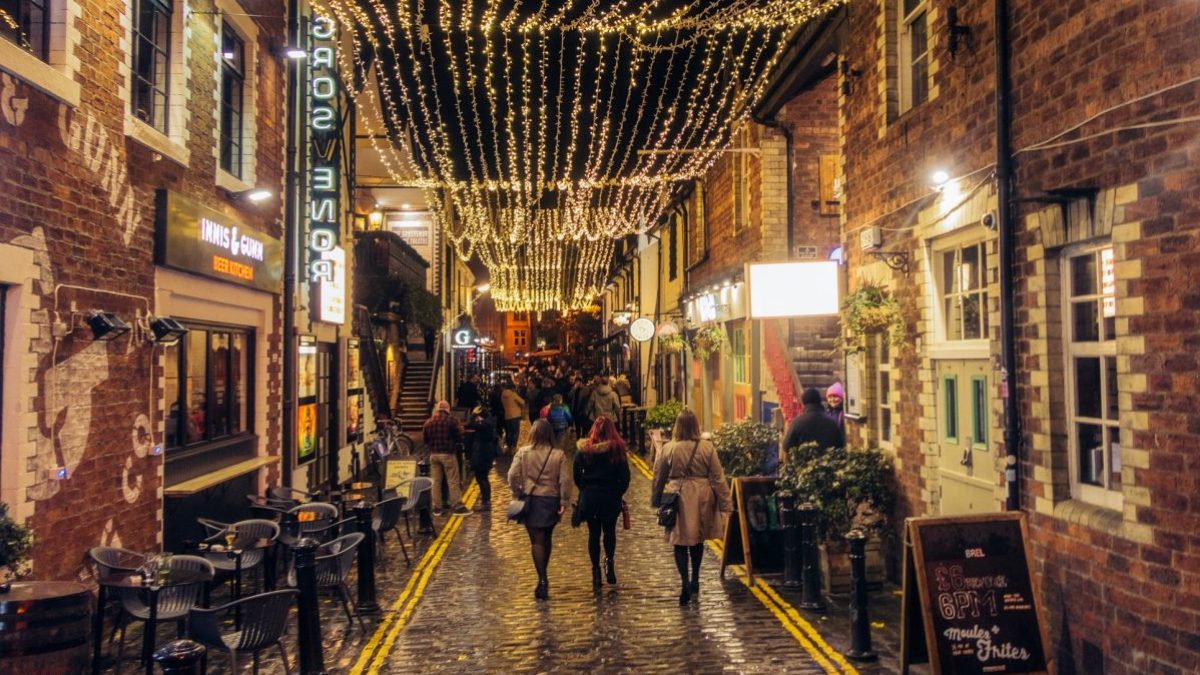
In the West End, on the cobbled, fairy-light strewn Ashton Lane, lies a Glasgow institution: the Ubiquitous Chip. Its relaxed brasserie is cheaper than its restaurant and has a menu combining Scottish stalwarts (haggis, Shetland mussels), modern flair (scallop taramasalata and seaweed crackers) and comfort food (pork ragu with mafaldine pasta).
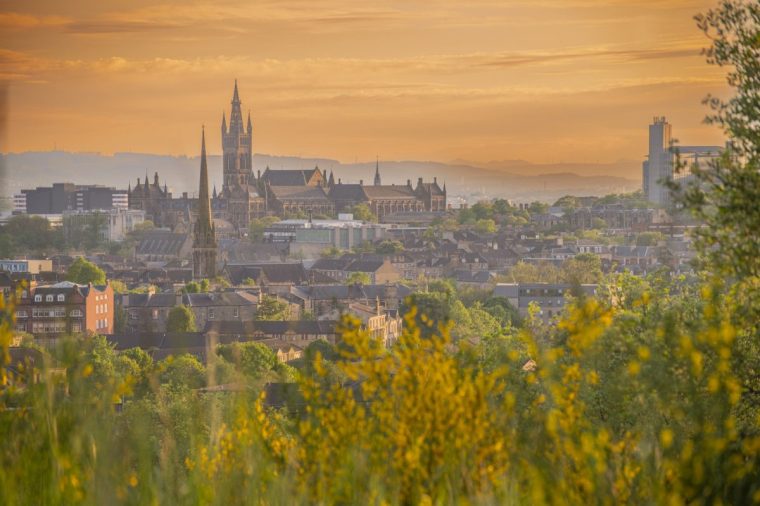 Glasgow University looms over the West End (Photo: Paul Watt)
The buildings are beautiful
A stroll around the city will reveal architectural treasures such as the opulent Victorian City Chambers and medieval Cathedral. Built in red sandstone in Spanish baroque style, the Kelvingrove Art Gallery and Museum in the West End is free to visit and includes Salvador Dali’s Christ of St John of the Cross.
Nearby the Gothic Revival-style cloisters and quadrangles at the University of Glasgow are said to have been the inspiration for Hogwarts. Discover more about the UK’s fourth-oldest university on a student-led historical tour, walking in the footsteps of graduates like economics guru Adam Smith and television pioneer John Logie Baird.
The shopping is diverse
Pedestrianised Buchanan Street is said to be the biggest and busiest shopping street after London’s Oxford Street. If the weather is being uncooperative, Buchanan Street is topped and tailed by indoor malls. Alternatively, enjoy browsing the upmarket jewellers in Argyll Arcade, one of Europe’s oldest.
Market-wise, the Barras has been a staple of the East End for more than 100 years, with hand-painted furniture and fairtrade goods. Out west, Byres Road is fabulous for a browse – try Postmark for stationery and Nancy Smillie for unique jewellery – and Hillhead Library hosts craft fairs.
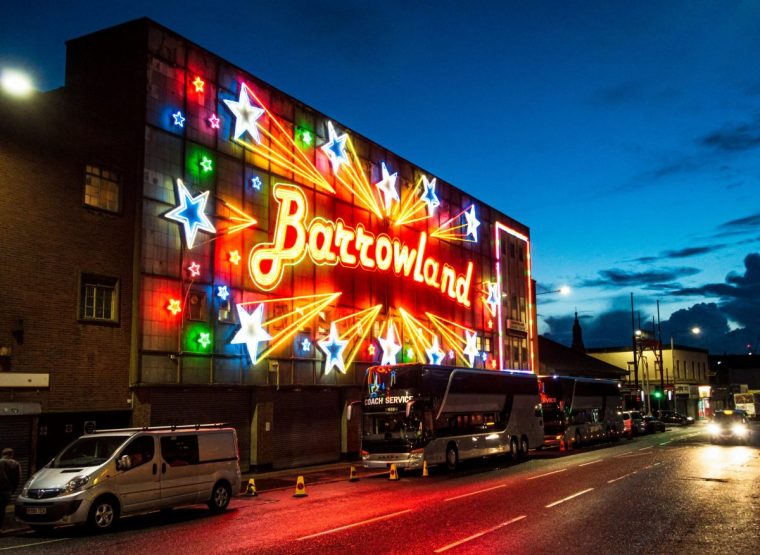 There’s plenty to do after dark (Photo: George Clerk/Getty)
You won’t go thirsty
With historic pubs and gin palaces, craft tap rooms, gastropubs and chic cocktail bars, there are plenty of places for a drink. In the city centre, the lively Pot Still stocks more 1,000 whiskies, while in Finnieston the “Highland Triangle” of The Ben Nevis Bar, The Islay Inn and The Park Bar serve a huge collection of malt whiskies. The Anchor Line, set in the former HQ of an old shipping line, offers sophisticated cocktails.
In the West End, Crescent on Argyle Street also does great cocktails (try the Tropic Thunder with Talisker Skye whisky).
The theatre is world-class
Theatre fans are spoiled for choice. The biggest and oldest is the magnificent 158-year-old Theatre Royal – as famed for its distinctive curved glass panelled front and ornate Victorian interior as it is for its world-leading shows. Home to both Scottish Opera and Ballet you can catch Death On The Nile there in February and Woman in Mind with Sheridan Smith and Romesh Ranganathan in March.
For contemporary performances head to the Citizens or the Tron – set in a 16th-century church – or for something completely unique watch mechanical sculptures come to life at the Sharmanka Kinetic Theatre. A Play, a Pie and a Pint at Òran Mór features new hour-long plays six lunchtimes a week – accompanied as the name suggests by a pie and pint.
It’s surprisingly green
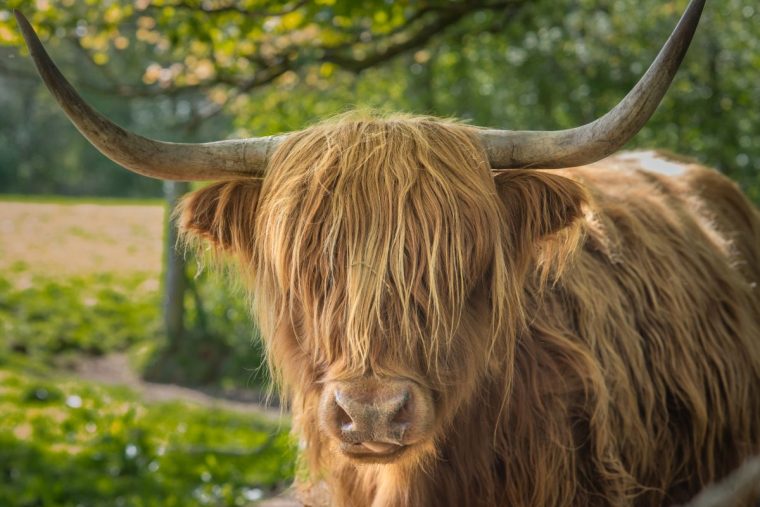 A Highland Cow in Pollok Country Park (Photo: Yvonne Stewart Henderson/Getty)
Glasgow is green and walkable, with 90 parks and gardens. The largest is Pollok Country Park, home to the Burrell Collection (a former Art Fund Museum of the Year) and a herd of Highland Cattle. Glasgow Necropolis is a Victorian garden cemetery modelled on Paris’s Père Lachaise, while the Botanic Gardens has stunning Victorian tropical glasshouses.
For a sense of Glasgow’s shipbuilding past, amble along the River Clyde walkway past the iconic Finnieston Crane and the Zaha Hadid-designed Riverside Museum.
Getting there
Rail services from the South and West, including Avanti West Coast from London, arrive at Glasgow Central station, while those from the North and East, including Lumo’s new service from London Kings Cross via Newcastle and Edinburgh, arrive at Glasgow Queen Street.
Staying there
The Voco Grand Central at Central Station’s entrance offers old-fashioned grandeur and upgraded doubles with brunch and late checkout from £119.
More information