United States Soup Market Overview
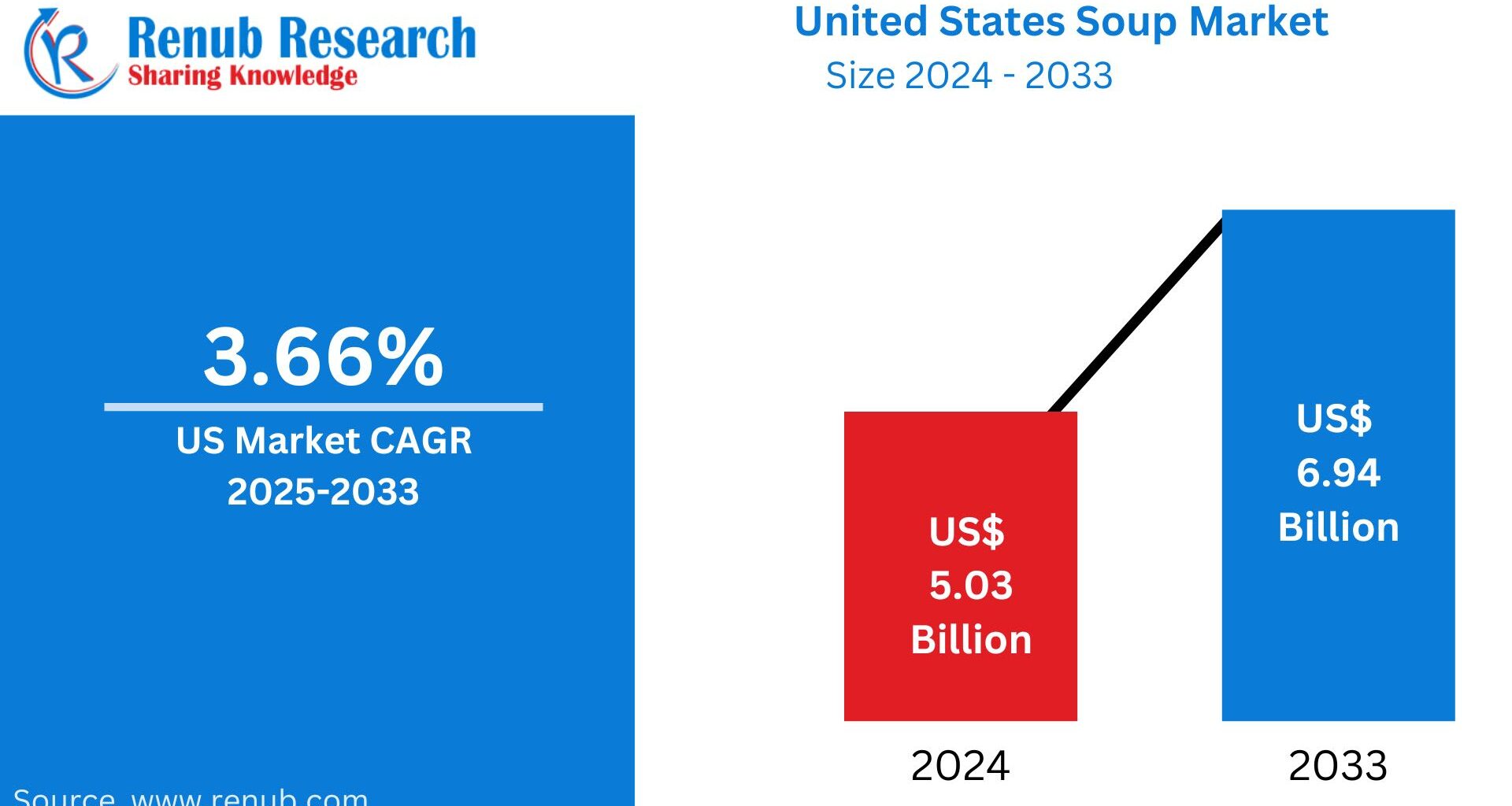
The United States soup market continues to be a resilient and evolving segment of the packaged and foodservice food industry, blending tradition with modern consumer demands. According to Renub Research, the U.S. soup market stood at approximately US$ 5.03 billion in 2024 and is forecast to reach around US$ 6.64 billion by 2033, expanding at a compound annual growth rate (CAGR) of 3.66% between 2025 and 2033.
The growing demand for convenient, nutritious, and ready-to-eat meals is a key factor supporting steady market growth. As consumers seek faster meal solutions without compromising health or taste, soup continues to maintain its relevance in both retail and foodservice channels.
Market Size and Growth Outlook
Renub Research estimates indicate that the United States soup market will witness consistent expansion through 2033. Growth is driven by:
Rising consumption of ready-to-eat and single-serve soups
Increasing demand for clean-label, organic, and low-sodium products
Expansion of plant-based and functional soup offerings
Greater penetration of soups through online retail and foodservice channels
Despite competition from alternative meal options such as meal kits and protein snacks, soup remains a preferred choice due to its versatility as a light meal, appetizer, or comfort food.
Key Drivers of Growth in the United States Soup Market
Rising Demand for Healthy and Convenient Meal Solutions
Modern American consumers are increasingly balancing busy schedules with health-conscious eating habits. This has accelerated demand for ready-to-eat (RTE) soups, microwaveable bowls, and portion-controlled packaging. These formats eliminate lengthy preparation while offering warmth, satiety, and perceived nutritional benefits.
Health-focused consumers are also pushing brands to reduce sodium levels, eliminate artificial preservatives, and use recognizable ingredients. Organic, gluten-free, and non-GMO soups are no longer niche offerings but have become mainstream in major grocery chains.
A notable example of innovation in this space occurred in December 2024, when Panera Bread introduced a limited-release holiday soup cup collection, featuring new seasonal offerings alongside established favorites. With more than 140 million servings served annually, such initiatives reflect how major players continue to invest in innovation to meet evolving consumer needs.
Growing Popularity of Premium and Functional Soups
The U.S. soup market is witnessing a shift away from basic canned varieties toward premium, gourmet, and functional soups. Consumers are increasingly willing to pay more for soups that deliver restaurant-quality taste and added health benefits.
Functional soups containing bone broth, collagen, protein, turmeric, ginger, and superfoods have gained strong traction, particularly among wellness-focused consumers. Additionally, global-inspired flavors—Thai coconut, Korean spicy broths, and Mediterranean vegetable blends—are expanding shelf appeal.
In January 2022, Zoup! expanded its portfolio with gourmet, shelf-stable soups under the “Good, Really Good®” brand, showcasing how premium positioning and convenience can coexist successfully.
Expansion of Plant-Based and Vegan Soup Options
The rapid growth of plant-based eating habits in the U.S. has significantly influenced soup innovation. Lentil, chickpea, bean-based, and vegetable-forward soups are now common across retail shelves and restaurant menus.
Dairy-free creamy soups and vegetable-based broths appeal to vegans, flexitarians, and lactose-intolerant consumers. Sustainability concerns further reinforce demand for soups made with ethically sourced ingredients and eco-friendly packaging.
In November 2024, Amy’s Kitchen, a leader in organic and natural foods, launched five new soups inspired by international cuisines and Southern comfort foods, all crafted using organic ingredients. Such launches highlight how plant-based soups are becoming a key growth engine for the overall market.
Challenges Facing the United States Soup Market
Declining Appeal of Traditional Canned Soups
Traditional canned soups face declining popularity, particularly among younger consumers who associate them with high sodium levels, preservatives, and artificial ingredients. While convenience remains a strength, perceptions around health have forced legacy brands to reformulate recipes, redesign packaging, and emphasize transparency.
Although canned soup continues to hold market share, growth has slowed compared to refrigerated, frozen, and fresh alternatives.
Competition from Alternative Meal Options
Soups now compete with a wide range of alternative meal solutions, including meal kits, ready-made salads, smoothies, and protein shakes. As consumers seek variety, soup brands must work harder to position products as complete, nutritious, and satisfying meals rather than side dishes.
This competitive landscape requires continuous innovation in flavors, formats, and nutritional profiles to maintain relevance.
United States Soup Market by Product Type
Ready-to-Eat (RTE) Wet Soups
RTE wet soups are among the fastest-growing segments in the market. Refrigerated and microwaveable soups offer a fresh, homemade taste while maintaining convenience. Brands such as Campbell’s Fresh Reserve and Panera Bread have capitalized on this trend with premium, clean-label offerings.
Advancements in packaging technology have extended shelf life without compromising quality, making RTE soups increasingly popular among urban and working consumers.
Dry Soup Market
Dry soups, including instant mixes and dehydrated varieties, remain popular due to their affordability, portability, and long shelf life. Technological advancements such as freeze-drying have improved flavor retention and nutritional value.
Health-conscious brands are now introducing organic and low-sodium dry soups, expanding their appeal beyond budget-focused consumers to wellness-oriented buyers.
Frozen and Refrigerated Soups
Frozen and refrigerated soups are gaining momentum as consumers seek minimally processed alternatives. These products are often perceived as healthier and closer to home-cooked meals. Frozen soups offer extended shelf life without preservatives, while refrigerated soups attract premium shoppers looking for freshness and flavor authenticity.
United States Soup Market by Distribution Channel
Food Service Channel
Soups play a vital role in restaurants, cafés, and quick-service establishments due to their versatility and profitability. Seasonal soups, locally inspired recipes, and rotating menus help foodservice operators attract repeat customers.
Convenience stores and gas stations are also expanding grab-and-go soup offerings, further supporting market growth.
Retail Channel
Retail remains the dominant distribution channel for soups in the U.S. Supermarkets are expanding shelf space for premium, refrigerated, and plant-based soups. Private-label offerings are gaining popularity, offering quality products at competitive prices.
E-commerce has also contributed to retail growth, enabling consumers to access specialty and international soups not always available in physical stores.
Regional Insights into the United States Soup Market
East United States
The Eastern U.S. exhibits strong soup demand, driven by colder climates and rich culinary traditions. New England clam chowder, lobster bisque, and Manhattan-style soups remain regional favorites. The area’s cultural diversity also fuels demand for international soup varieties.
West United States
Western states, particularly California, lead in demand for organic, vegan, and clean-label soups. Consumers favor fresh, refrigerated, and locally sourced products, with sustainability and transparency playing a major role in purchasing decisions.
North United States
The Northern U.S. records high soup consumption during long winter seasons. Hearty soups such as beef stew, chicken noodle, and split pea are widely preferred. Convenience-focused formats like frozen and RTE soups dominate this region.
United States Soup Market Segmentation
By Product:
Ready-to-Eat Wet Soups
Condensed Wet Soups
Dry Soups
Frozen/Refrigerated Soups
Wet Broths and Stocks
By Distribution Channel:
Food Service
Retail
Online Stores
By Region:
East
West
North
South
Competitive Landscape and Company Analysis
The U.S. soup market is moderately consolidated, with both global food giants and specialized brands competing on innovation, quality, and branding. Key players analyzed from four perspectives—overview, key personnel, recent developments, and revenue—include:
The Campbell’s Company
Kellanova
PepsiCo
Nestlé
General Mills Inc.
The Kraft Heinz Company
Hain Celestial Group
Cargill Incorporated
Conagra Brands, Inc.
Greencore
These companies continue to invest in product reformulation, premiumization, and sustainability to maintain market leadership.
Final Thoughts
The United States soup market is evolving steadily, balancing tradition with innovation. With a projected value of US$ 6.64 billion by 2033, the industry’s future lies in health-focused formulations, plant-based offerings, premium flavors, and convenient formats.
While challenges such as competition from alternative meals and declining canned soup demand persist, ongoing innovation and changing consumer preferences are opening new growth avenues. For brands that prioritize quality, transparency, and convenience, the U.S. soup market will remain a warm and rewarding opportunity well into the next decade.