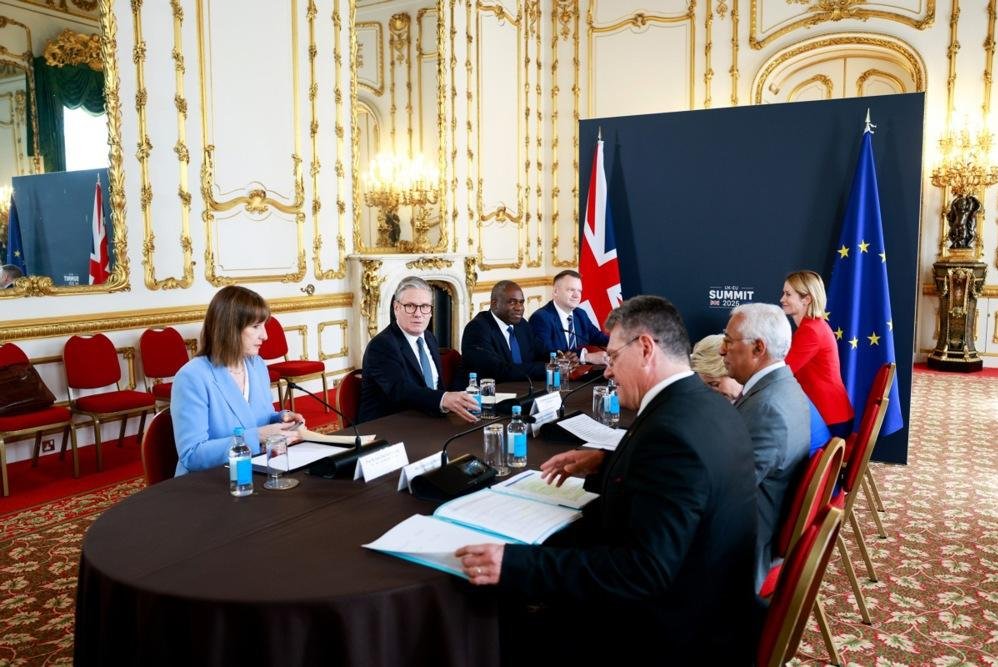
U.K. and E.U. officials on Wednesday announced the United Kingdom’s return to the Erasmus+ educational and training program in 2027 after holding talks in May that were aimed at resetting relations between the two. Photo by Jason Alden/EPA/Pool
Dec. 17 (UPI) — U.K. students and others can learn and train abroad as part of the European Union’s Erasmus+ program starting in 2027 amid a U.K.-E.U. relations reset.
The Erasmus+ program accepts students from all backgrounds and enables them to study and train while on the continent, the U.K. government announced in a press release Wednesday.
The program also enables students from member nations of the European Union to study and train in the United Kingdom.
“Joining Erasmus+ is a huge win for our young people, breaking down barriers and widening horizons to ensure everyone, from every background, has the opportunity to study and train abroad,” said Nick Thomas-Symonds, the United Kingdom’s E.U. Relations minister.
“This is about more than just travel: It’s about future skills, academic success, and giving the next generation access to the best possible opportunities,” he added.
Baroness Jacqui Smith, U.K skills minister, said the agreement “is about breaking down barriers to opportunity [and] giving learners the chance to build skills, confidence and international experience that employers value.”
The United Kingdom will pay £570 million — nearly $763 million — to participate in the Erasmus+ program, which is 30% less than the full amount normally required, the BBC reported.
More than 100,000 participants of all ages could begin participating in the Erasmus+ program in 2027, which offers educational and training opportunities for apprentices, those seeking to further their education, adult learners and students enrolled in degree programs.
The move returns the United Kingdom to the educational program six years after withdrawing from it following the nation’s exit from the European Union in 2020.
U.K. Shadow Foreign Secretary Priti Patel criticized the agreement, which she said is part of the U.K. Labour Party’s plan for “dragging Britain back under the control of Brussels” despite a 2016 vote to exit the European Union, popularly called “Brexit.”