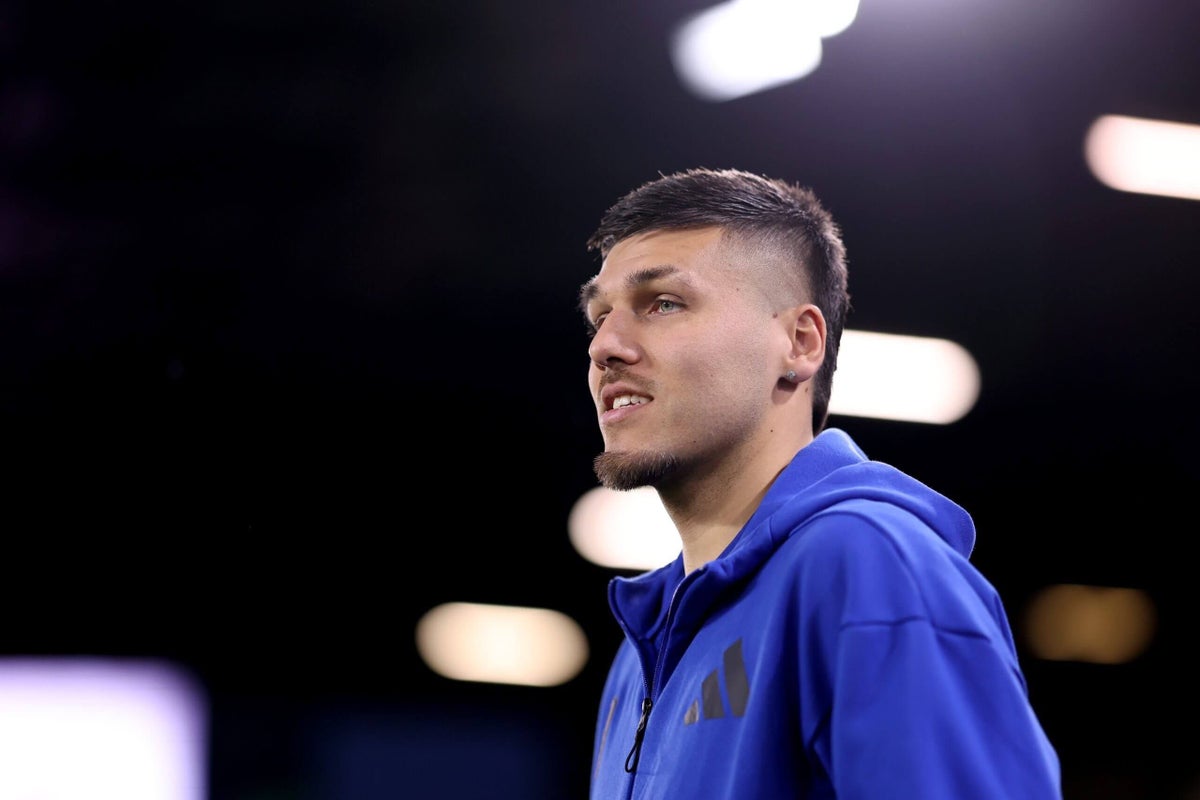
No outfield Leeds United player has seen their influence fall off a cliff as sharply as Joel Piroe this season compared to last.
In 2024-25, he was the top scorer in the Championship, scoring 19 goals and creating a further seven during his 3,090 minutes on the pitch as he helped his club gain promotion to the Premier League. Only four outfield players featured more under Daniel Farke last term.
But in 2025-26, Piroe has felt the full impact of the squad’s Premier League transformation, appearing in just eight of the 16 matches so far and starting only two of these. Of the 23 players used by Farke in the top flight this campaign, only three have played fewer minutes than the Dutchman.
Of course, Piroe is not the first to impress in the Championship and then see his minutes and goals dry up in the Premier League. Systems can change, while goalkeepers and defenders are significantly better than those in the second tier.
Farke started eight of May’s title winners on the opening day of the campaign against Everton, including Piroe at the tip of the attack. The No 10 had been sharp enough to edge out Lukas Nmecha in the pecking order, while Dominic Calvert-Lewin was registered too late and was weeks behind in preparation after missing pre-season.
Leeds won the game, Piroe played well enough and Farke retained 10 of those starters for the following match at Arsenal. They were humbled 5-0 and Piroe looked well out of his depth underneath the towering might of Gabriel and William Saliba, two of the world’s best centre-backs.
If Leeds were going to go longer with their distribution, fight for second balls, win duels and best their opponents physically, they were not going to do it with Piroe as the target man in a 4-3-3. The former Swansea City man has not started since, and there has been little clamour for his recall.
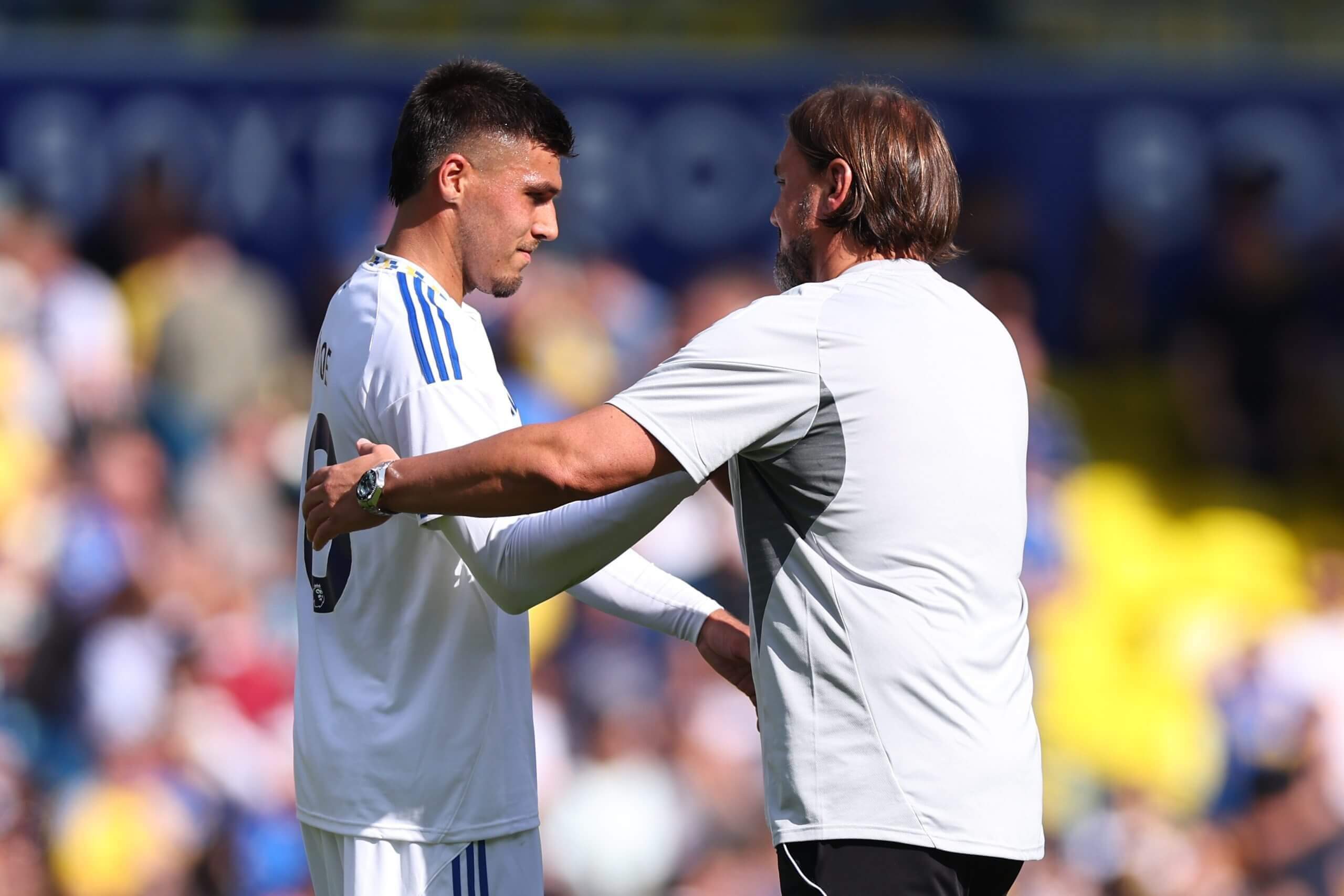
Piroe and Farke in pre-season in August (Robbie Jay Barratt – AMA/Getty Images)
Piroe’s been reduced to 11, 17, 16, 10, four and three-minute cameos in his six league appearances since that game on August 23. When Farke has needed to change games, he’s either overlooked Piroe for other alternatives on the bench or thrown him on too late to realistically achieve anything.
It’s been a tough period for Piroe, but, according to sources close to the player — who chose to remain anonymous when speaking to The Athletic to protect relationships — he remains optimistic and confident his time will come again before the season finishes. During the previous rare spells that Piroe has been outside the starting line-up at Leeds, Farke has always underlined how professional and diligent he has remained behind the scenes.
In October, Farke said: “Of course, it’s tough, especially when you have a player like Joel, who is giving everything, who has worked on his fitness level a lot, who is a top-class character. For me, he’s the best finisher I’ve ever worked with — and there’s been some good finishers.”
The recent switch to a 5-3-2 may just open the door a touch wider for Piroe. Undoubtedly, based purely on their second half at Manchester City and the total domination of Chelsea a few days later, Nmecha and Calvert-Lewin remain the first-choice partnership.
Sadly, Nmecha’s injury has ended that experiment for now, though Noah Okafor has been the deputy preferred by Farke. While the Swiss does not offer the same aerial prowess as Nmecha, he does have the speed and dribbling ability to play off Calvert-Lewin’s flick-ons.
So Piroe is in a difficult spot, as he is not the best at fighting in the air and does not offer a quick option in behind. He’s at his best with the ball at his feet and, arguably, dropping deeper to link play before attacking the box.
If Calvert-Lewin is also dropping back for high balls, it is difficult to see how their partnership would work. That’s for Farke to solve, though, and the fact remains that the great advantage in playing Piroe, as the manager has mentioned, is his finishing ability around the box.
If this 5-3-2 system continues to create chances via the wing-backs, Piroe is who you would want waiting around the six-yard box, even though it still feels as if he is some way from a run of regular minutes.
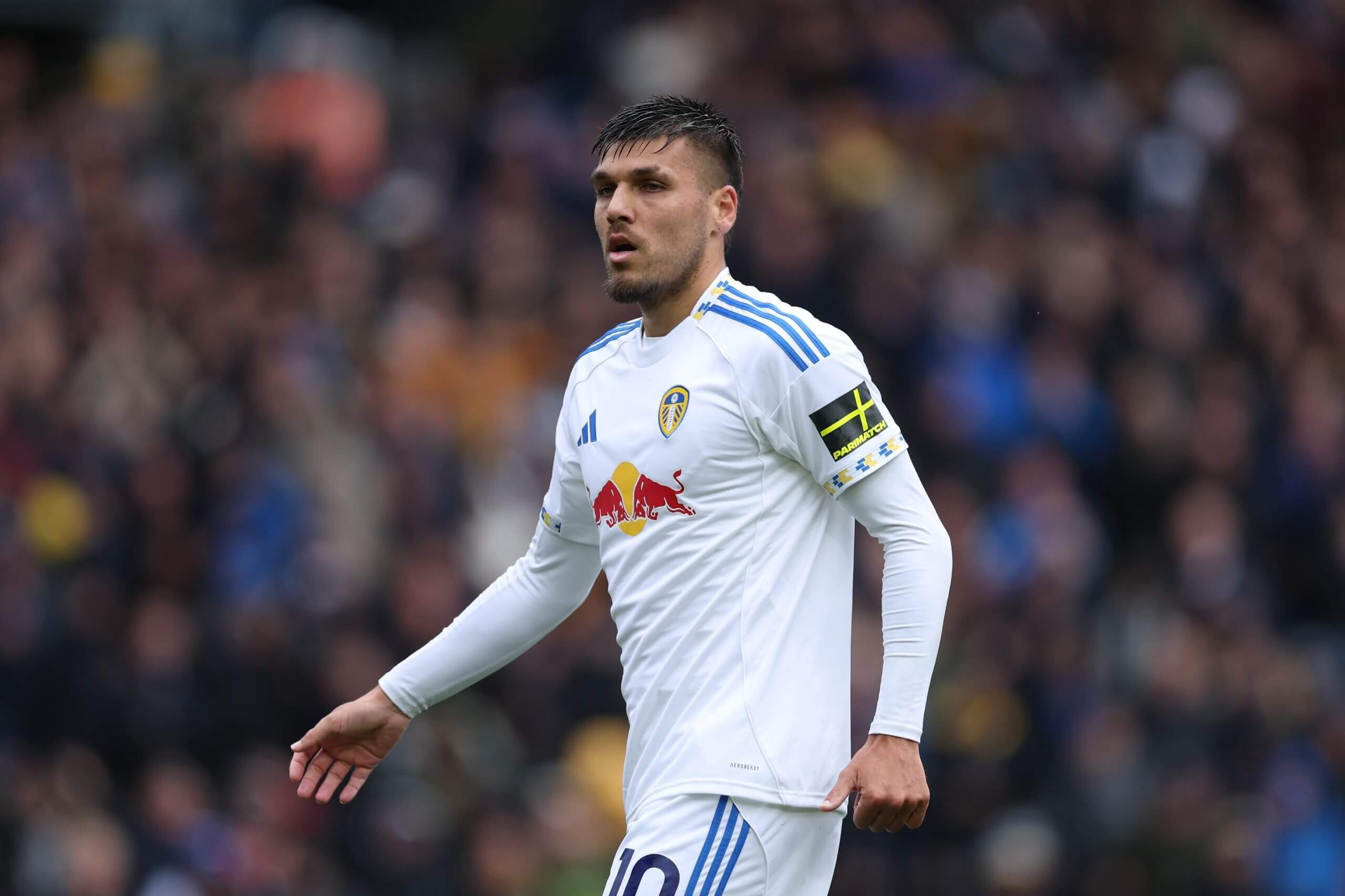
Piroe playing earlier this season (Michael Regan/Getty Images)
And with the January transfer window approaching, his status at the club feels like an elephant in the room. He is arguably the club’s most saleable asset of the players not currently featuring significantly on the pitch. He’s 26, his contract expires in 2027 and he has an impressive scoring record in the Championship of 73 goals in 179 appearances.
But, as it stands, Leeds are not going into the winter window with the aim or desire to move Piroe on. Yes, he is not featuring much, but this is not a huge squad and Farke wants to add attackers to his roster, not lose them.
As Nmecha’s current injury is proving and Calvert-Lewin’s own mixed availability in recent years has shown, having dependable backups is always sensible. If offers do come in for Piroe next month, as you would expect, Leeds will still weigh them up though. Though any deal would need to be right for the player, too.
When it comes to bringing players in during the window, loans are expected to be the most likely avenue the club pursues. If a permanent option does appeal, then finances will need to be manoeuvred to satisfy profit and sustainability rules (PSR). In that scenario, transfer revenue would need to be generated before the June 30 accounting deadline.
This is relevant because Piroe is among the players the club will be more willing to part with to raise that capital, either in January or between the end of the season and June 30.
However, he has waited many years to become a Premier League player. And after multiple seasons of proving he’s too good for the Championship, Piroe will not want to turn his back on the top-flight dream that quickly.
But how long is he prepared to wait for another chance this season and how firmly can Leeds resist any January advances for him? These are the key questions over the coming weeks.