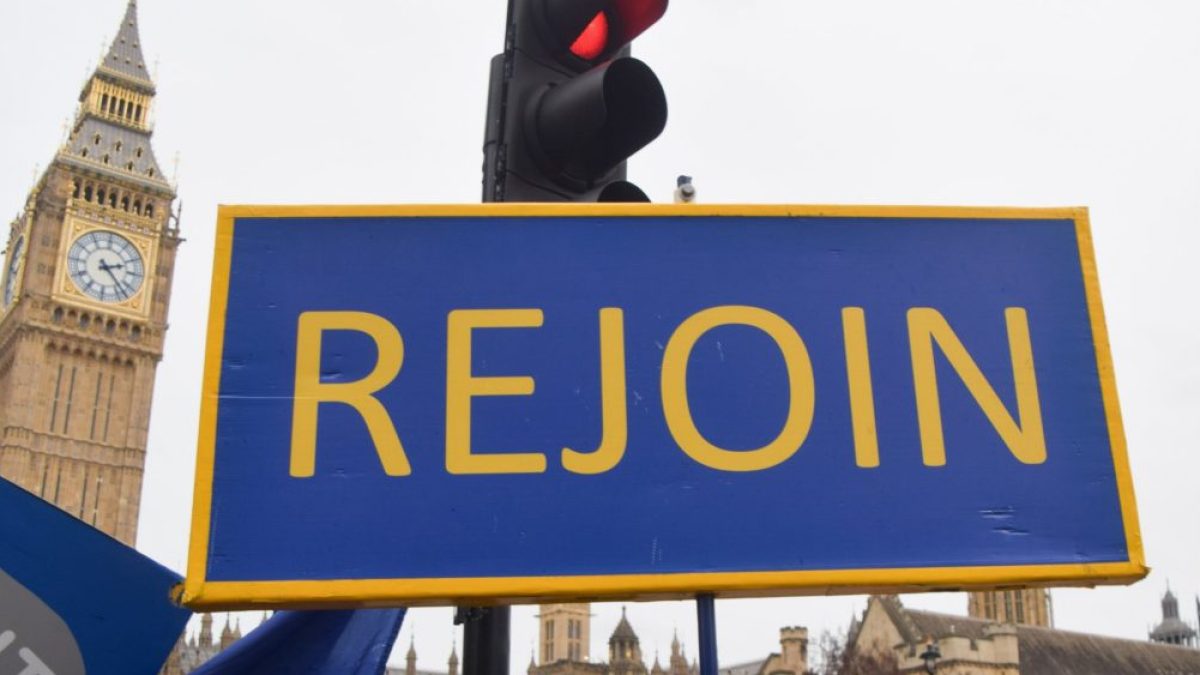
Wes Streeting has revealed the level of debate about rejoining the customs union within Labour
Rejoining the EU’s customs union would, serious voices inside Government believe, provide the trade boost needed to blow UK plc out of the economic doldrums.
Health Secretary Wes Streeting backed the idea this week, as did Deputy PM David Lammy earlier this month. Keir Starmer’s economic adviser, Minouche Shafik, has reportedly advocated for rejoining behind the scenes.
Polling shows eight out of ten Labour voters would support the move.
The political logic is clear. Brexit left the UK with higher trade barriers, weaker productivity growth and a complex web of paperwork that particularly affects exporters of food, drink and manufactured goods.
But rejoining the customs union is wishful thinking, Europeans think. Their message is blunt. The way back is hard, and won’t deliver the expected benefits.
Here’s why:
New FeatureIn ShortQuick Stories. Same trusted journalism.
EU-UK trade is already integrated
In Brussels, the idea that Britain could simply “rejoin” the customs union is seen as a misunderstanding of how the system works.
At its core, a customs union means that participating countries remove tariffs between themselves and apply the same tariffs to goods imported from the rest of the world.
That common external tariff removes the need for “rules of origin” checks – the paperwork firms now face to prove where a product was made in order to qualify for zero tariffs under the EU-UK trade deal.
But the economic gains of doing this are narrower than many assume. The main benefit would be removing rules of origin costs, which can add to the cost of some exports.
“A customs union can be helpful,” says Fabian Zuleeg, chief executive of the European Policy Centre (EPC), a Brussels-based think-tank. “But EU-UK trade is already very integrated. We don’t really have the kind of internal barriers which will make the customs union really that effective.”
Membership is for EU states
But a customs union does not, on its own, remove border checks, regulatory inspections, VAT/excise duty payments, safety controls or sanitary rules, unless Britain agrees to far deeper alignment.
Nor does it guarantee frictionless trade in services. In practice, it is just one piece of a much larger regulatory and legal framework – which is why experts warn it is often oversold as a quick fix.
EU officials stress that the existing EU customs union is not an à la carte arrangement but part of the bloc’s core economic architecture. Membership is effectively reserved for EU states, plus microstates Andorra, Monaco and San Marino, as well as long-time candidate country Turkey.
All 27 EU states need to agree
There is no off the shelf route back in for the UK. Any change would require a new treaty – negotiated from scratch and approved unanimously by all 27 member states.
That alone makes it a formidable political undertaking. Several EU capitals remain wary after years of fraught Brexit negotiations, and Brussels is now focused on delivering stability rather than reopening complex talks that could quickly become toxic.
It would hit existing trade deals
The price Britain would have to pay is also high. A customs union would require the UK to align its external tariffs with the EU’s – effectively surrendering its independent trade policy.
That would mean revisiting or unravelling recent UK trade deals with countries such as the US, India, Australia and New Zealand. In future trade disputes, Britain could also be forced to mirror EU tariffs even where its own interests diverged – decisions that would require more political courage than the current Government has been willing to show so far.
It would mean freedom of movement
EU officials warn that the customs union offered by Brussels in 2018 during the Brexit negotiations would no longer be on offer – and would likely include demands for free movement.
“Of course, we’re open to closer ties,” said one European Commission official. “But the UK should know what rejoining the customs union is really about. There are benefit and there are obligations too – including free movement. And it doesn’t look like Britain is in a place where it can have a serious debate about the trade-offs needed.”
David Henig, director of the UK Trade Policy Project, says that while most figures in Brussels do not give much thought to Britain rejoining the customs union, they have hardened their position.
“The very clear message is, ‘If you want any more, you have to give us what we want. And what we want is more on mobility and more on financial contributions,’” he says. “This reflects the longer-term concern that Britain is still trying to cherry-pick with a trade-only relationship with the EU.”
It could take years to negotiate
As there is no standard form in which a customs union takes, the European Commission has scope to determine its shape. Henig says: “It would take time: these are two-, three-, four-year processes. So, the talk about rejoining right now seems like wishful thinking. The same old UK talking to itself routine as has been going on for 10 years.”
For many EU policymakers, this is the core issue. A customs union only works if all members trust each other. That trust would require strong alignment on trade defence and freedom of movement – areas where the UK has explicitly sought flexibility.
The EU doesn’t want to reopen Brexit talks
Your next read

There is also little appetite in Brussels to push the issue. EU officials are focused on incremental co-operation under the existing EU-UK Trade and Co-operation Agreement – including veterinary agreements to reduce food checks, energy market links and youth mobility schemes – rather than reopening the Brexit settlement wholesale.
That leaves Labour facing a familiar dilemma. Talking up the economic damage caused by Brexit resonates with voters, but proposing a customs union risks reopening old divisions and colliding with both domestic red lines and new EU demands.