
The former Wales full-back, who now runs a supermarket in New Zealand, has spoken openly for the first time about the eligibility controversy that ended his international career in 2000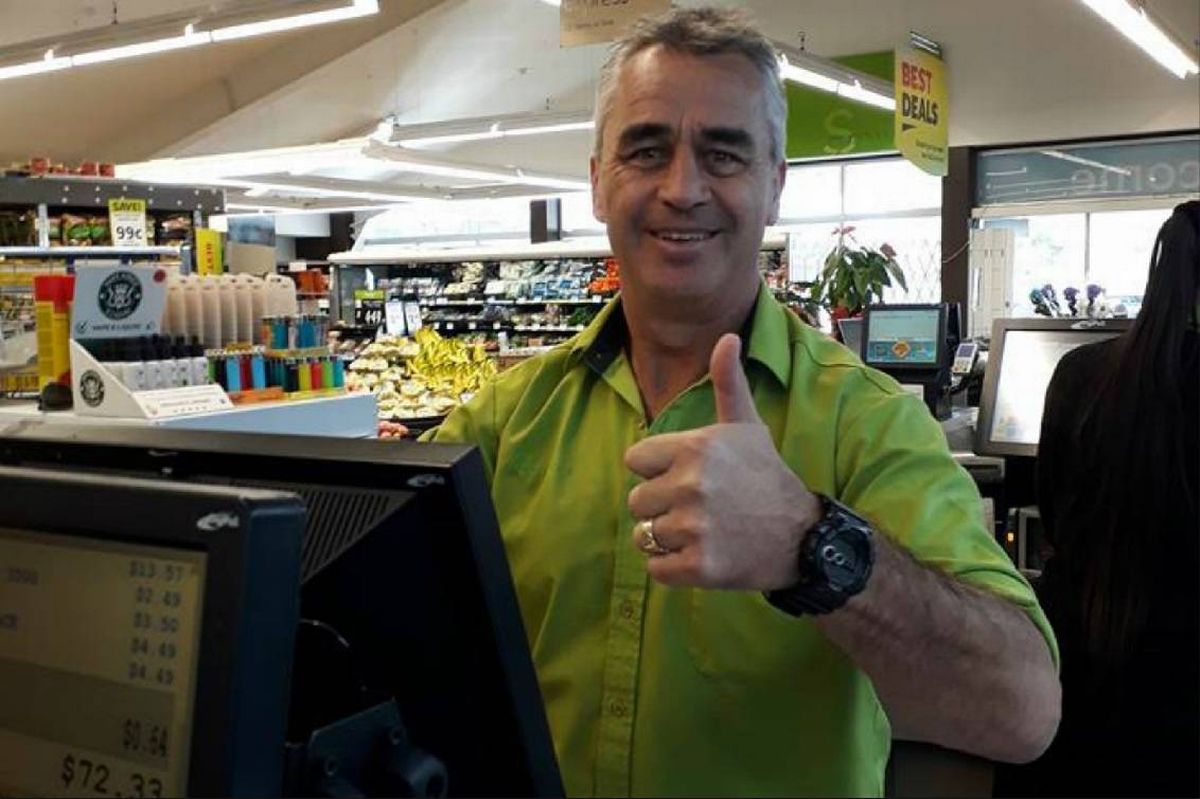 Shane Howarth now runs a supermarket in New Zealand(Image: Shane Howarth)
A quarter of a century has passed since Shane Howarth was informed he could no longer pull on a Wales jersey, yet the anguish lingers.
Regardless of what official paperwork might currently declare, his steadfast conviction that he is Welsh endures. In 2000, Howarth became embroiled in the Grannygate eligibility controversy that rocked Welsh rugby to its core.
The experience proved devastating for him and his family.
As a result, he has rarely spoken about the incident in any substantial way.
Nevertheless, during a conversation with WalesOnline, he was willing to discuss the entire episode candidly for the first time in 2020.
What unfolded was a tumultuous tale of newspaper front pages, hidden truths, deep regret and enormous anguish.
The story began in 1998 when Howarth received an unexpected call from his former Auckland coach Graham Henry.
He had already collected four caps representing his native New Zealand in 1994, but this occurred during an era when players could later turn out for another country if they met the criteria.
And so the narrative began to develop.
“England had approached me to play against the All Blacks at the end of 1997 and I said no,” Howarth recalled.
“I had played with a lot of the All Blacks boys, so it just kind of didn’t feel right to play against them.
“But then, the following year, Graham approached me and said ‘I’ve heard you have got English qualifications, have you got Welsh?'”.
“So I checked with mum and she said ‘Yeah, I think we have’.
“So that’s how I went down that avenue, with all the dramas and everything that fell on the back of it.”
Before the scandal and heartache came the elation, as Howarth relished some truly memorable moments with Wales.
He excelled at full-back during an extraordinary 10-match winning run that included impressive victories over South Africa, France, Argentina and, his personal pinnacle, England at Wembley.
Yet in February 2000, his world collapsed when doubts emerged about his Welsh eligibility and he was subsequently barred from representing his adopted country.
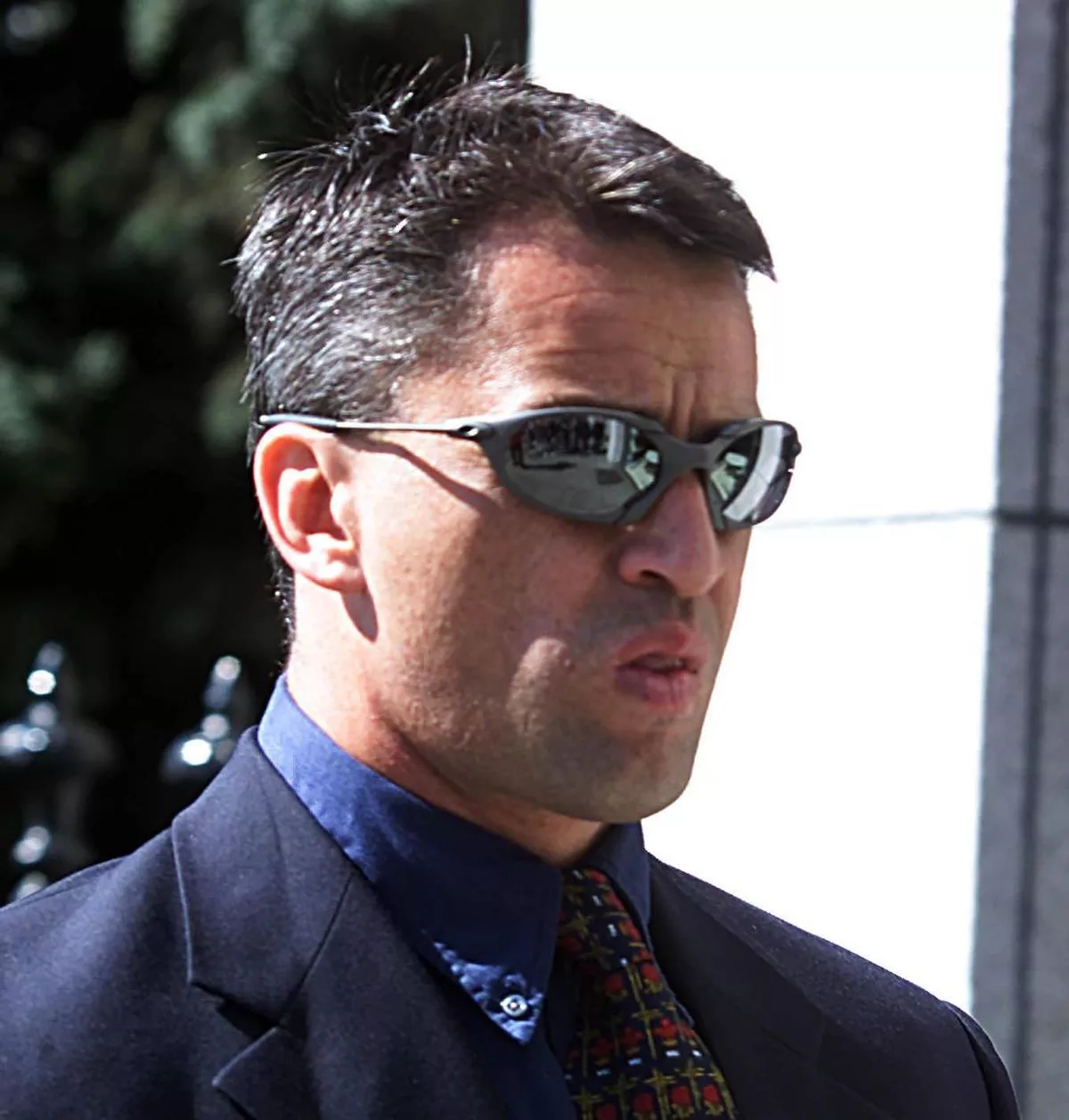 Shane Howarth arriving at the International Rugby Board hearing in 2000(Image: PA/EMPICS)
“I remember getting a phone call on the Saturday night telling me there was going to be a story in the Sunday papers,” he recalled.
“I just said ‘There’s no dramas, I’m fine’. I didn’t realise how much it would blow up.”
Howarth’s eligibility for Wales had been based on his grandfather, Thomas Williams, being born in Cardiff.
But after newspaper reports suggested his maternal grandfather was actually someone else entirely, it swiftly became apparent there was a problem. “I couldn’t prove he was my grandfather. It wasn’t on the birth certificate,” Howarth explains.
“But, in my heart, I truly believed, and I still believe now, that I had Welsh blood running through my veins.”
Nevertheless, without being able to furnish written evidence of his Welsh ancestry, he was compelled to withdraw from the Six Nations squad as the Grannygate scandal escalated, bringing his second international career to a sudden halt.
“There were a lot of players involved in it, but, unfortunately – I guess because I was an All Black – I kind of got singled out,” he said.
“That’s the way it is and you cop that on the chin.
“But, to this day, I am Welsh.
“If I can’t get papers to prove that, then have a look at the 20 games I played in the red jersey and see if I wasn’t Welsh.
“To have that taken away from me hurt, it hurt big time. But what upsets me the most is it hurt my mum’s side of the family.
“It dragged up things that didn’t need to be bloody dragged up. It all came out in the wash. The most disheartening thing for me, out of it all, was I let my mum and my grandmother down.
“That sits with me still today. As much as I could, I went up to see nana and apologise.
“It did bring skeletons up that didn’t need to be brought up. I took that pretty hard. It really gutted me.
“It hurt me a lot because it put mum and that side of the family under pressure, which was just crap to be honest.”
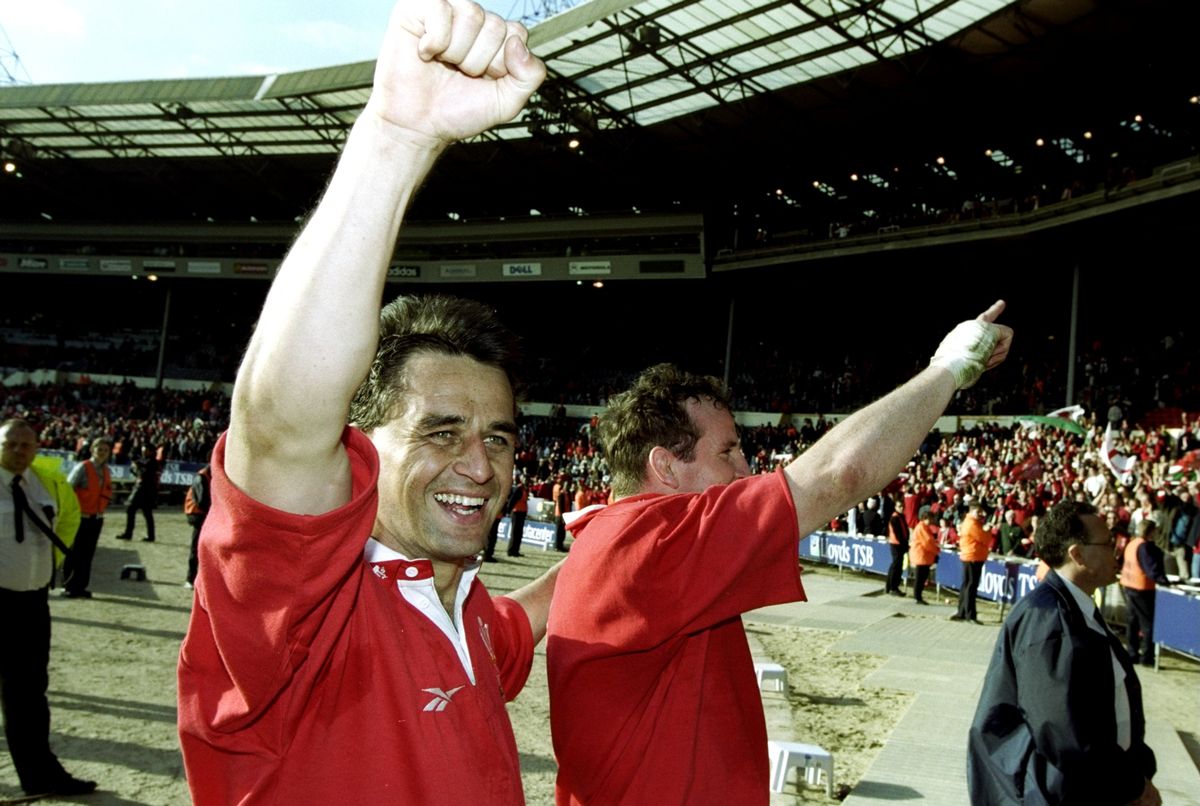 Shane Howarth and Brett Sinkinson of Wales celebrate(Image: David Rogers /Allsport)
Following his return to New Zealand, Howarth, now aged 57, moved into coaching roles with Auckland and the Blues, whilst also taking on positions with the Pacific Islanders, Worcester in the UK, and Honda Heat in Japan. Nevertheless, he then pursued an entirely different path – operating a supermarket in the Auckland suburb of Mangere Bridge.
“It’s something we talked about when I was playing over here back in the 1990s,” he disclosed.
“Myself, Robin Brooke and Eric Rush were just sat around having dinner with our wives and partners and wondering what to do after rugby.
“They both went on to work in the supermarket business, but I went up to Europe to play and then into coaching.
“So it was something that was put on the back burner.
“But then when I was coaching out in Japan, I was on my own and the family was back in New Zealand.
“I thought I can’t keep working this way and it was a question of what else can I do.
“So my wife just said, ‘Well, you’ve talked about it for 20 years, so go and work in a supermarket’.
“I did a year’s training with Fresh Choice unpaid, which was a bit of fun.
“Then I got approved to buy a shop in December 2017.
“It’s been a great thing to do.
“We own the franchise and all the products in the shop, so we have pretty much free rein on what we do in the store.
“We’ve been at it for just over a year now and it’s quite hard.
“When I started, I was doing about 75 hours a week. I’ve pulled it back to around 50 now!”.
“We knew it was going to be like that and we were going to be having to work our bottoms off.
“My wife does the admin side, which can be quite hectic, while I’m happier hands on in among all of it. It works well.
“It was quite a big thing that a rugby player had taken it over at first, but now I’m just one of the community, which is exactly what we wanted.”