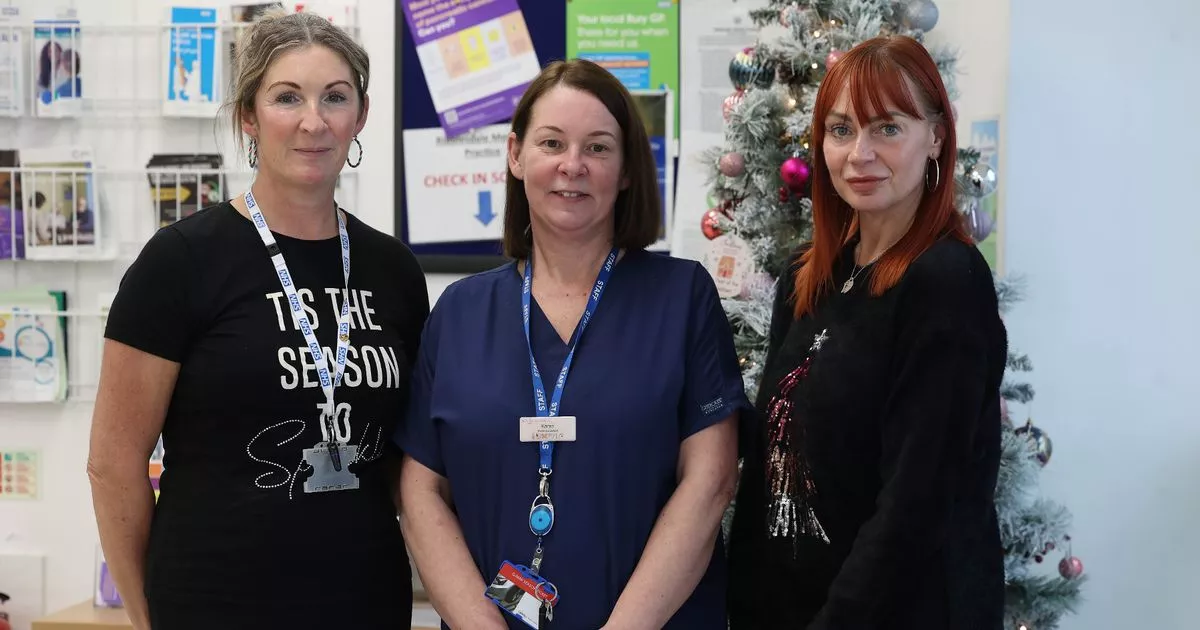
Meet the NHS workers taking healthcare to the streets of Greater Manchester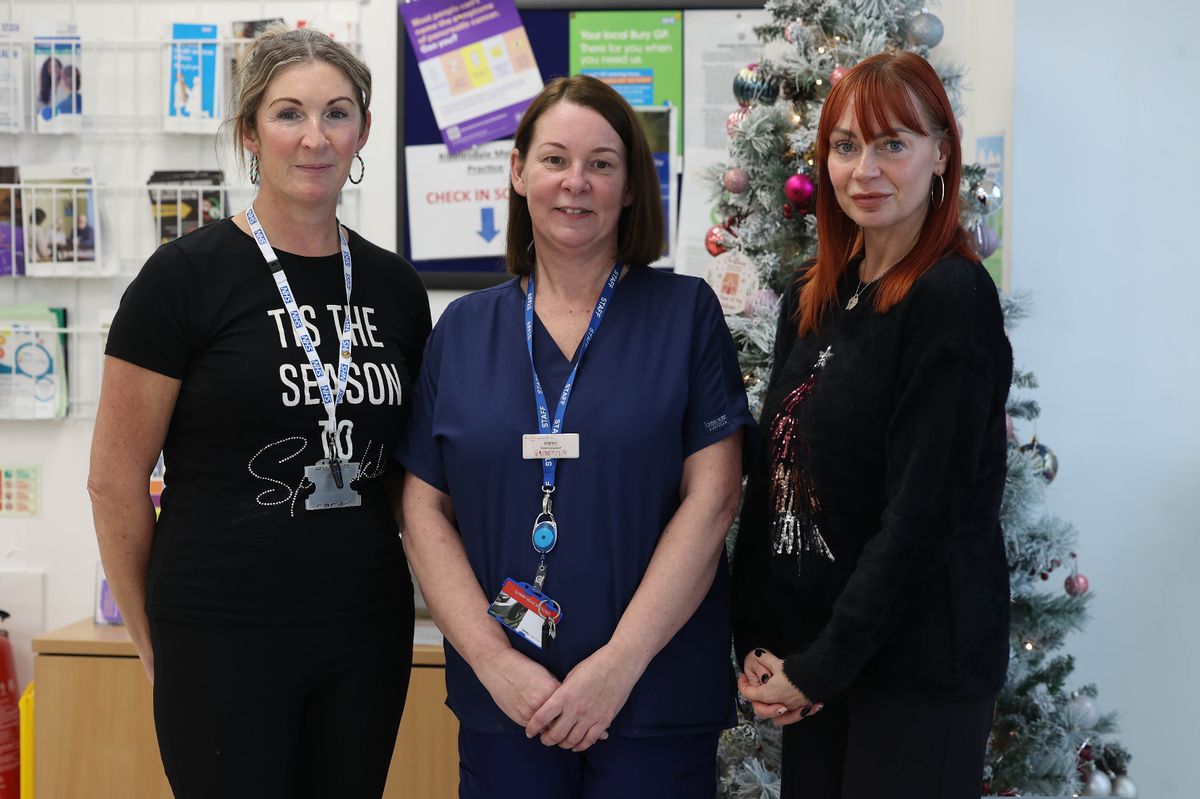 Karen with the rest of her team, Jayne Chapman (left) and Lynsey Philbin (right)(Image: Jason Roberts /Manchester Evening News)
For most GP practices, winter is about packed waiting rooms and trying to keep services afloat during the busiest time of year. But for one medical practice in Bury, this festive season has also meant taking healthcare beyond the surgery – and onto the streets.
Since October last year, Ribblesdale Medical Practice has been running a voluntary outreach clinic for people who are homeless, rough sleeping or at risk of homelessness, providing flu vaccinations, health checks and vital support to some of the most vulnerable residents in the run-up to Christmas.
The fortnightly clinic takes place at The Red Door Centre, a community hub run by Caritas, and is led by Nurse Consultant Karen Swift alongside Practice Business Manager Lynsey Philbin. Together, they are being recognised as Manchester Evening News Christmas Heroes for quietly stepping in where traditional healthcare often can’t reach.
‘They wouldn’t walk through our doors – so we went to them’
For many of the people accessing the outreach clinic, registering with a GP or attending appointments simply isn’t possible, leaving them without access to essential medical care or treatment.
The idea for the outreach clinic began last year when the practice linked up with a local homelessness charity to provide services for outpatients. “When we had our training, we felt like we wanted to do more,” Lynsey said. “Very quickly we established that there was an absolute need for it and they welcomed it with open arms.”
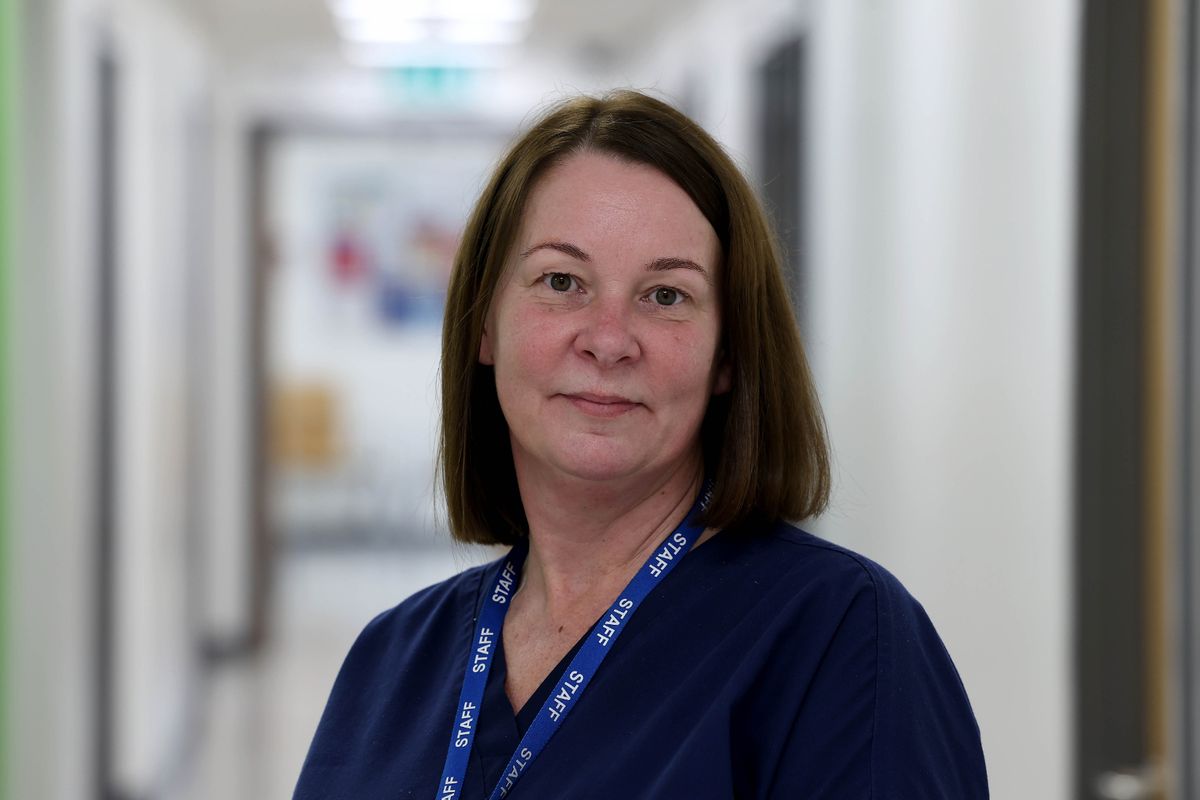 Karen is a Nurse Consultant who takes care directly to the streets.(Image: Jason Roberts /Manchester Evening News)
What started as one day a month soon became two. And crucially, it was Karen’s regular presence that helped break down barriers. “She goes out and she’s the person that the patients there have got to know,” Lynsey explained. “She’s established that trust with them. This is the vital thing – she’s that friendly face and non-judgemental.”
The model works because it takes place in an informal setting, in a place where the patients ‘feel safe’, Lynsey said. “None of them would traditionally have walked through the doors of this health centre…It’s just broken down those barriers and created an opportunity for a discussion,” she added.
Lifesaving care for those who need it most
At first, conversations between Karen and the patients were simple – often about aches and pains associated with sleeping rough. But as trust grew, so did the depth of care.
“When that trust has been established, it develops into more deep consultations,” Lynsey said. “We’ve collectively registered a lot of the patients because we’ve liaised with the Red Door to help support access and break down some of the barriers for them.”
As winter approached, flu vaccinations became the natural next step. “These patients are very vulnerable,” Lynsey said. “Some are rough sleeping, some are sofa surfing – they’re not looking after themselves well, so it makes them more susceptible to winter ailments anyway. And they are the very patients that are missing out on it.”
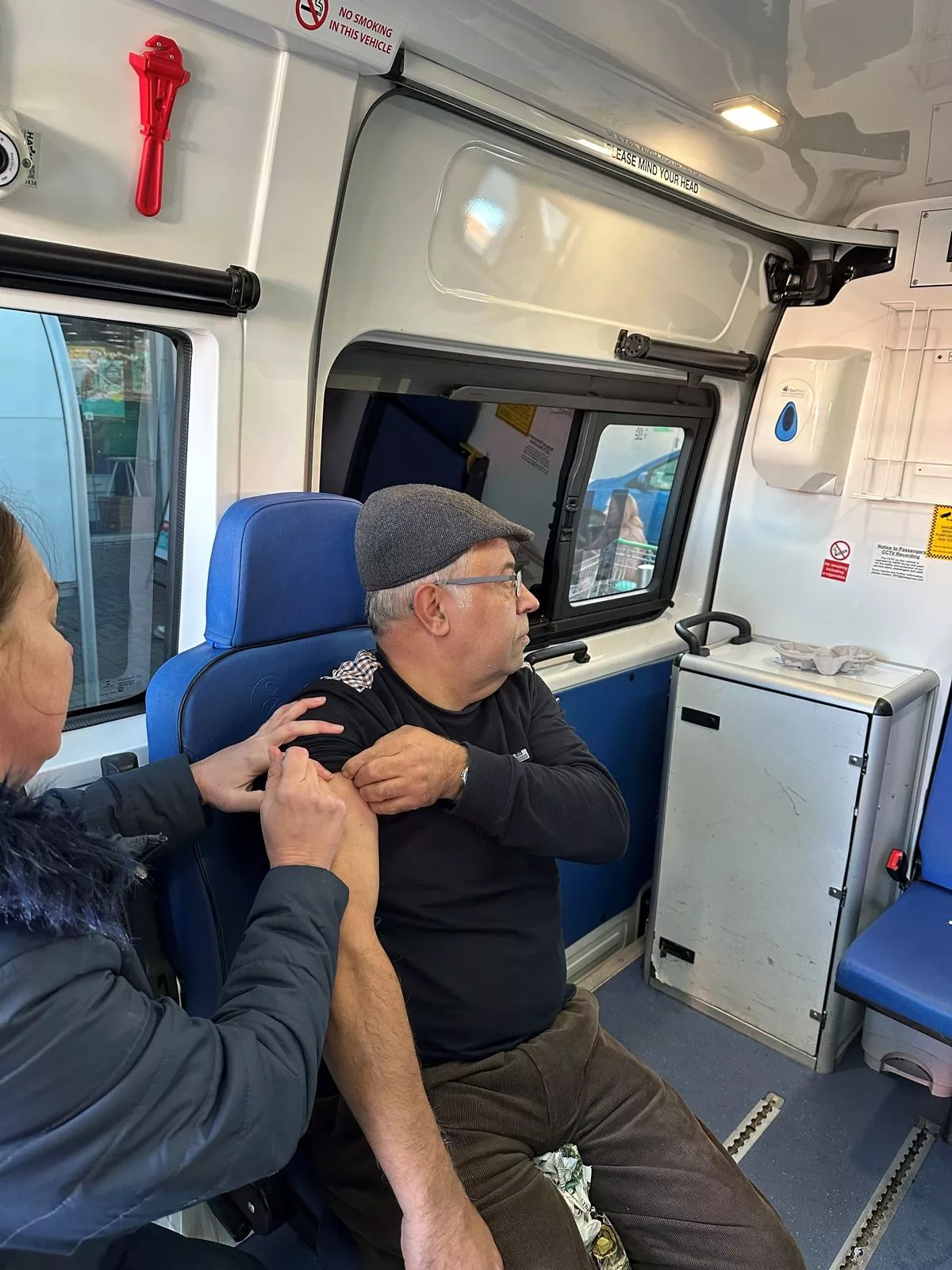 Karen vaccinating a patient during a voluntary outreach clinic(Image: NHS Greater Manchester)
The practice decided to act – without funding. “We wanted to be really proactive and to make a difference,” she added. “The practice has donated sessions to facilitate this. We’ve had absolutely no payment for it – it’s all done off contract.”
Karen has since been delivering flu vaccinations directly on the streets, actively seeking people out rather than waiting for them to come to a clinic or van. “I know where to find them and I know where to park the van and I know where to go looking for them,” Karen said. “It’s been really successful.”
That outreach work has already had life-changing consequences. Karen recalled one man who arrived at The Red Door having been sleeping rough for a year. “He was cold, he was freezing, he was dirty, he was confused, he was upset, he was all of those things,” she said. On that single day, the team were able to get him washed, assessed, blood-tested and connected to housing services.
“We found him to be diabetic,” Karen said. “And the other guys got him into accommodation within a week. That was massive.”
Alongside flu jabs, the team has carried out opportunistic blood tests, identifying undiagnosed conditions that would otherwise have gone untreated. “We all know about the massive inequality,” Karen said. “Rough sleepers and homeless people are dying a lot earlier and are sick for a lot longer than the rest of the population.”
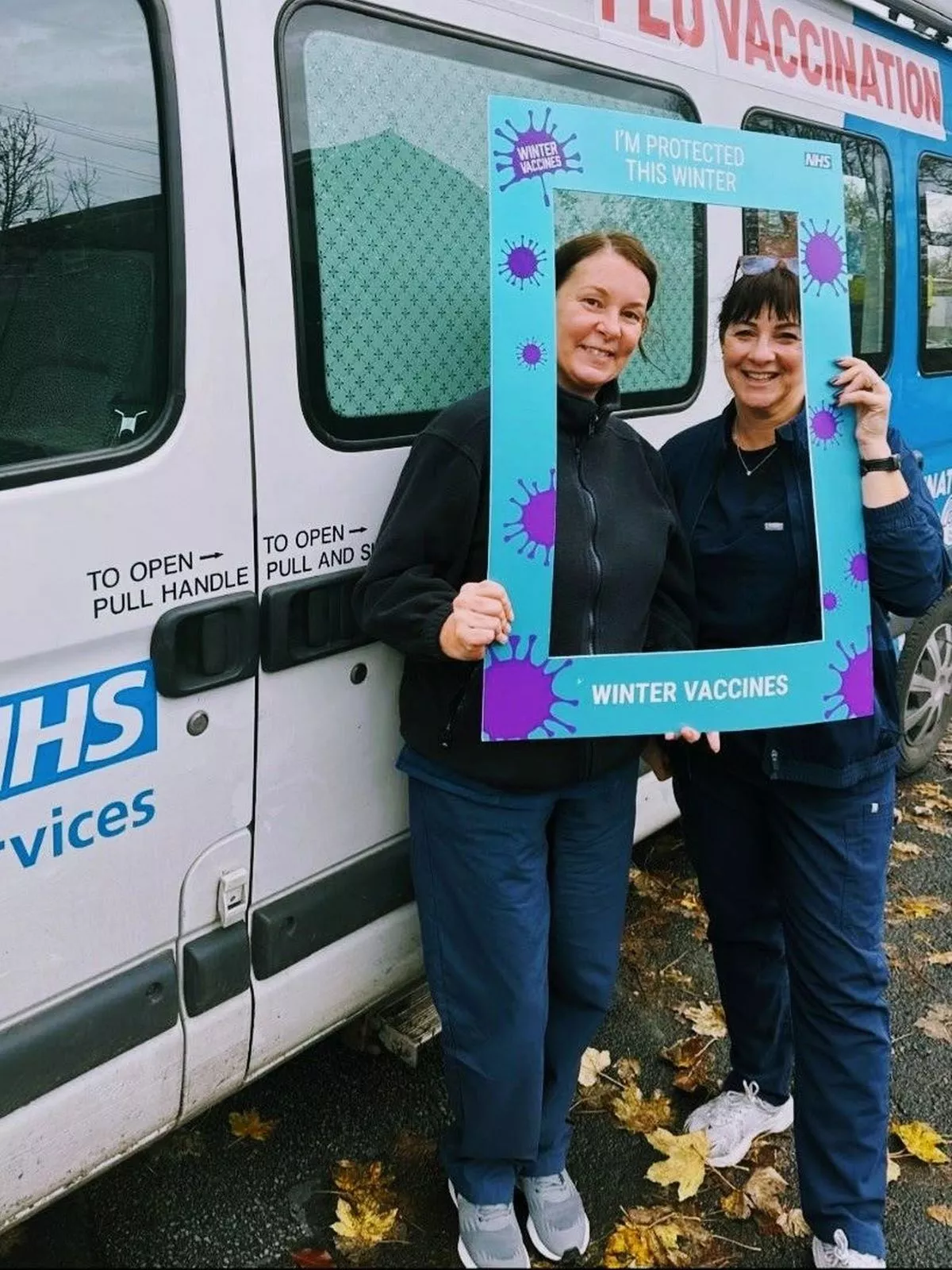 The flu outreach van helps to vaccinate vulnerable people across Bury(Image: NHS Greater Manchester)Working through Christmas
The work hasn’t been easy. Karen admits it’s been cold, wet and logistically challenging, balancing outreach with the pressures of a busy GP practice.
“My time is being taken away from seeing people in practice,” she said. “Trying to make sure we have enough cover. And they move around all the time – you’re constantly trying to find them.”
But the motivation hasn’t wavered. “It is immensely satisfying for the practice and personally,” she said, adding that the work would not be possible without the support of Lynsey and the partners.
“It’s just who we are,” Lynsey added. “We’ve worked extensive careers in the NHS for way over 20 years. It’s a way of life for us. We don’t clock off because it’s time to clock off. We clock off when we’ve got a safe environment.”
As Christmas approaches, their next outreach clinic will take place after the festive period – but the impact of their work will last far longer. By taking flu vaccines, healthcare and compassion directly to those who need it most, this small NHS team has become a lifeline for people who are too often forgotten.