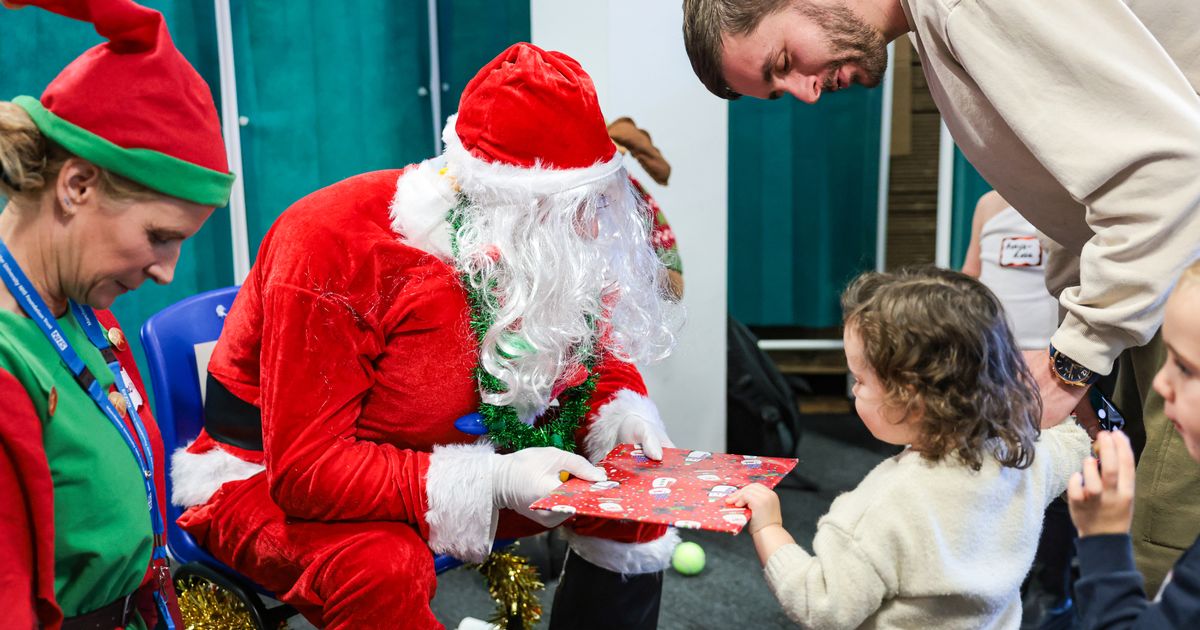
In an unassuming corner of Wythenshawe, a meeting room is transformed into a unique Christmas party one day of the year – and the children here often come away with something much bigger than a nice gift. Ethan Davies reports.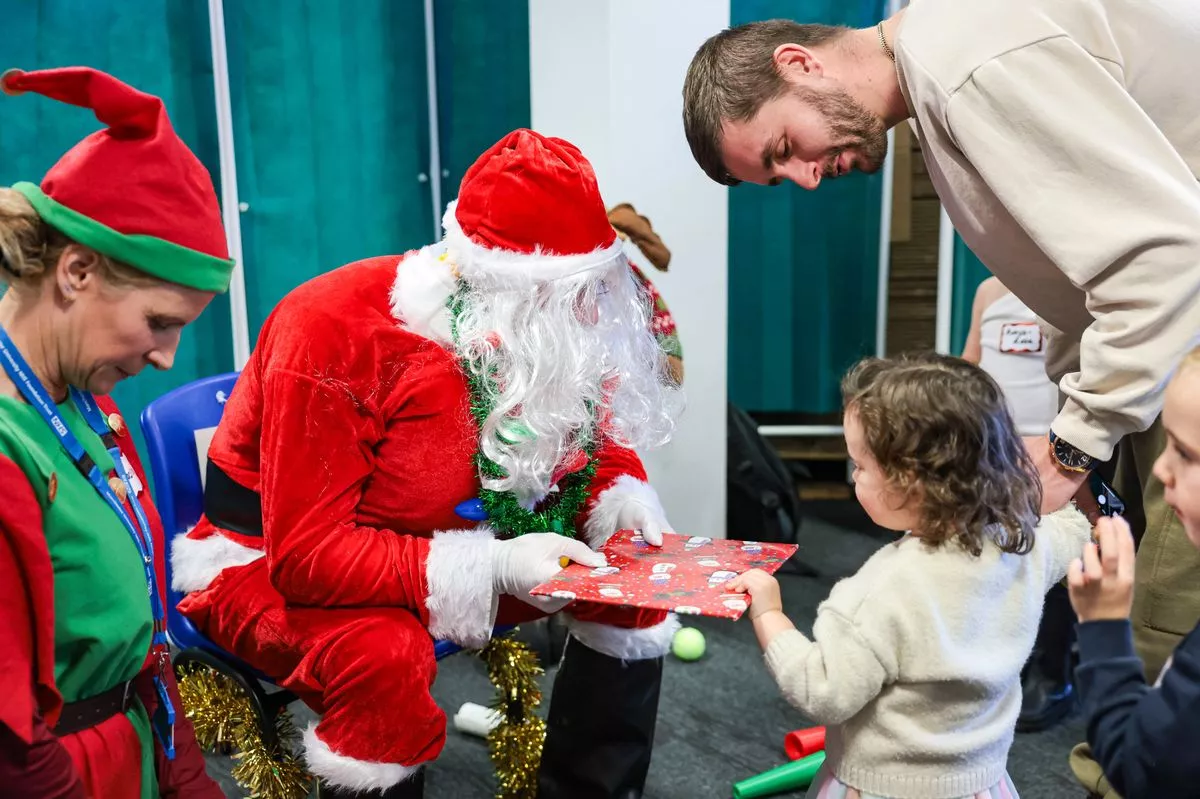 (Image: Kenny Brown | Manchester Evening News)
Aurora is three-years-old and she’s just realised something about herself. She’s at a Christmas party surrounded by toddlers just like her. There are roughly 30 parents, 20 children, and 10 staff are watching on as laughter, festive songs, and squeals of excitement fill the air.
Santa Claus has just walked in, but Aurora’s not realised she’s about to get a gift. She’s realised something much more fundamental.
On the other side of the play kitchen, Teddy ‘the Tornado’ Scott, six months her junior, is in the midst of tearing through the Christmas bash, playing with tractors and reading books, similar to Elijah, age four. Micah, a little older at six, contented himself with the magnetic darts.
The games were specially selected because this is a special party. It’s the Christmas party where children finally get to know who they are.
Micah already knew, as did Elijah. Aurora learned today, and Teddy won’t be far behind.
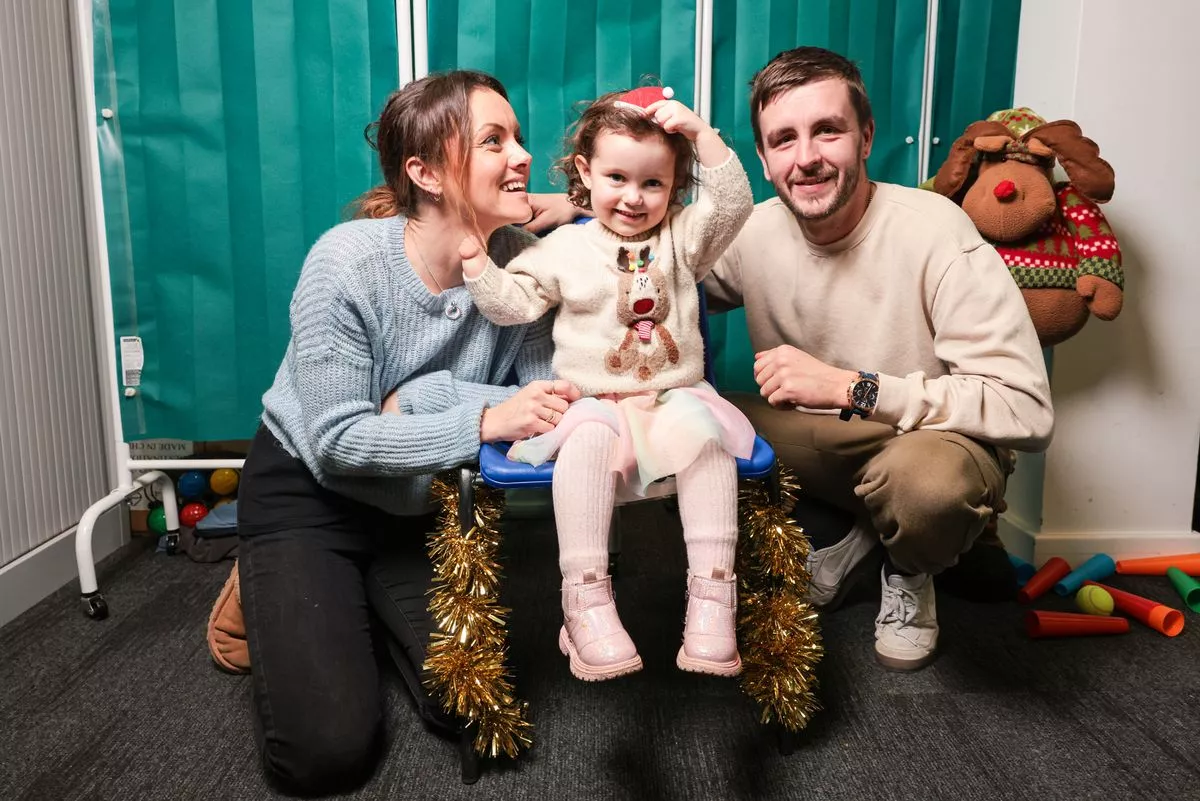
“Today is the first time she has noticed it on another child,” Aurora’s mum, Ella Newton, explained on December 3.
“She has asked why she only has one hand, but she’s not been bothered [before]. Today she’s realised that other people have the same thing. It’s nice to meet them.”
 (Image: Kenny Brown | Manchester Evening News)
Like most children here, Aurora has ‘limb difference’. Some party guests are missing fingers, others may only have one hand, or something different about their feet.
All were born with their conditions, and are now seen at the Specialised Ability Centre (SAC) in Wythenshawe, home to Manchester University NHS foundation trust’s ‘cradle-to-grave’ prosthetics service.
Ella, watching Aurora and her dad Tom Challenor get stuck into the kitchen, added: “She has adapted really well. She is not fazed by it at all.”
Aurora was only two months old when she first came here, but her parents came before her birth. Congenital limb difference can be spotted on a 20-week pregnancy scan, so most parents begin talking to NHS staff about how their child can adapt before they arrive.
Once doctors meet the baby, the child will receive custom-made prosthetic limbs for life. There’s also counselling for parents, coming to terms with the fact their children’s lives will probably look different to how they imagined.
 (Image: Kenny Brown | Manchester Evening News)
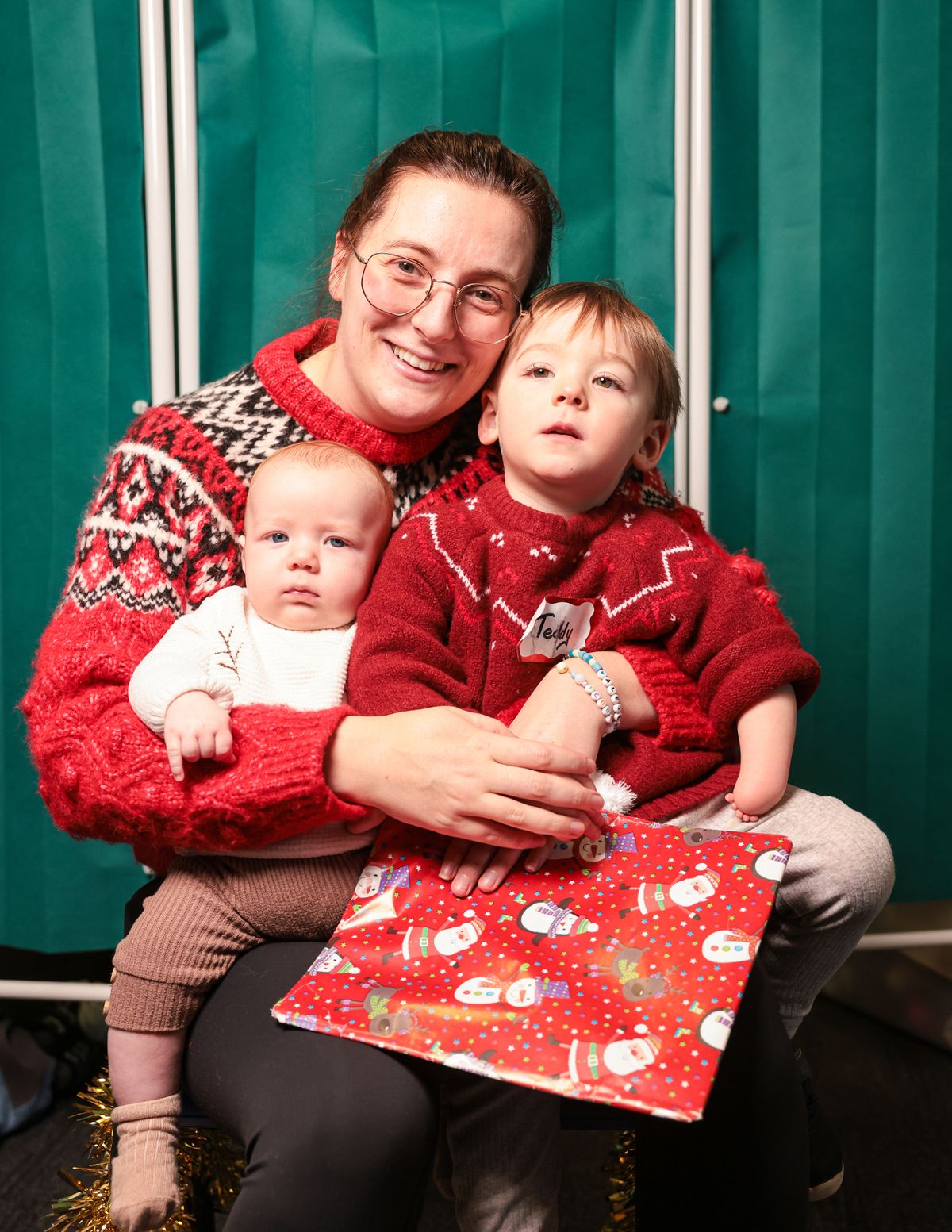
Kerry Scott, 34, called that service ‘wonderful’: “A lot of people, when we were telling them about his hand, minimised it. That’s lovely because you do not want to label it but that meant we could not open up about our worries for him.
“My husband is really into gaming, so he was upset because he thought he would play video games with Teddy. Karen has been amazing at seeing past that. They have been a lifeline.”
Kerry, from Eccles, is Teddy’s mum. At the moment, he shows no signs of being anything other than a ‘fearless’ toddler and loving big brother to three-month-old Alfie, whom he kissed. Although he doesn’t use a prosthetic now, he has options.
“[Charity] Limbo introduced us to open bionics,” Kerry added. “That’s an option for Teddy, a bionic hand, if he wants to do that. I’m quite excited about that because if he wants to do it, it would open up so many opportunities.”
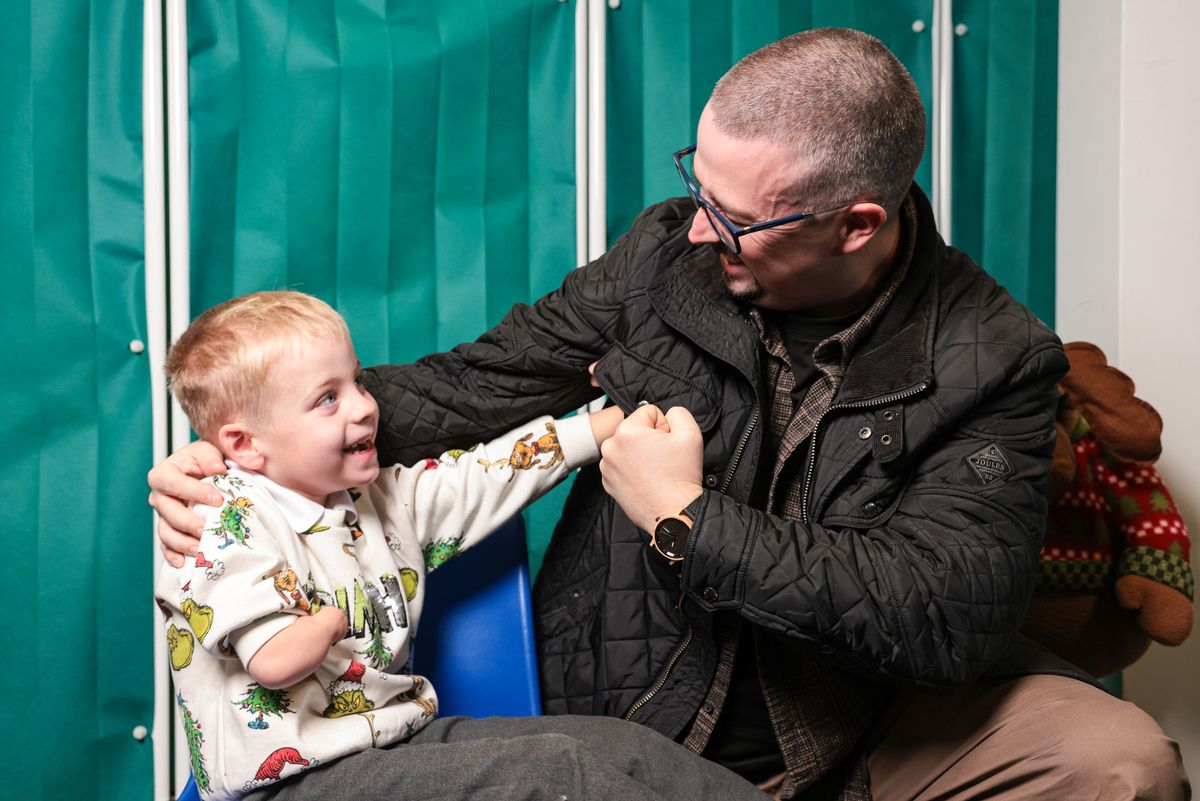
In the opposite corner of the room, Elijah is transfixed by Hot Wheels. Unlike Teddy, he has a few prosthetic arms to help overcome his amniotic banding syndrome on his right side.
“He has an arm extension and the bottom of it is hard grip so he can do a handstand,” dad Alex Poole, from Salford explained. “He also has one for swimming that looks like Nemo. The therapist here sorted us with a prosthetic for bikes.”
 (Image: Kenny Brown | Manchester Evening News)
Elijah’s prosthetics means he does gymnastics, goes swimming, and plays rugby, just like his twin sister Esme, just like any other four-year-old.
“It’s about showing the kids there are others like them,” Alex added. “The centre here ignites the next stage of development. That means he is not behind.”
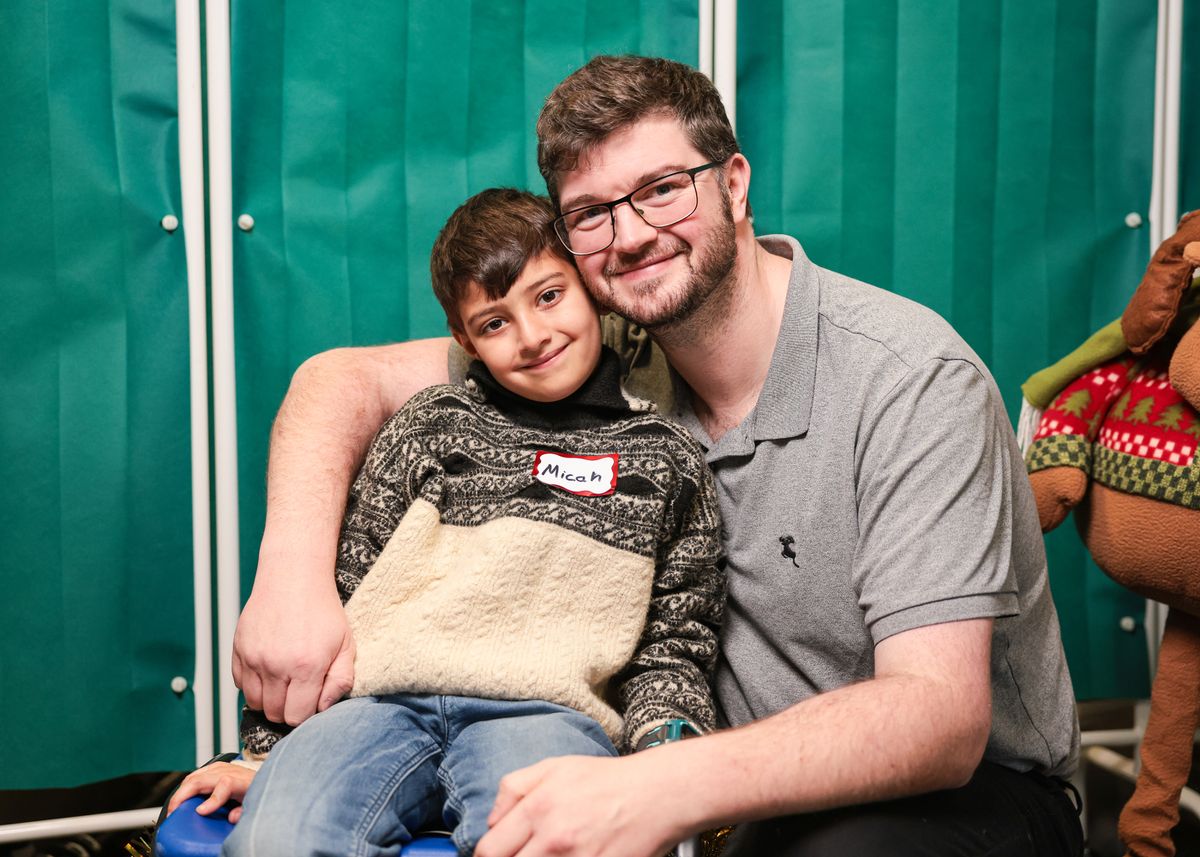
Orthotist Daniel Wardle, playing with six-year-old son Micah, says the SAC has helped his lad ride his bike to class — before Micah interrupted his dad to pertinently point out he sometimes scoots to school.
 (Image: Kenny Brown | Manchester Evening News)
But it’s given Micah so much more, he went on: “Overall for him to come to this is about meeting other kids with disabilities. It’s about having the opportunity to see them in a social setting rather than an appointment.”
One of the last to leave, Micah has a big smile on his face before going back to school in hulme>Cheadle Hulme. It’s exactly what Lara Littler, SAC manager, wanted.
“There’s no reason these children will be held back,” she reflected while watching the organised chaos of Santa Claus’ visit.
“A lot of parents say they have not met a child with limb difference or their child has not met children with limb difference. So it’s about children being able to meet other children and parents with younger children can speak to older children’s parents, about development stages and getting a network of friends. That’s a really good thing for parents.”
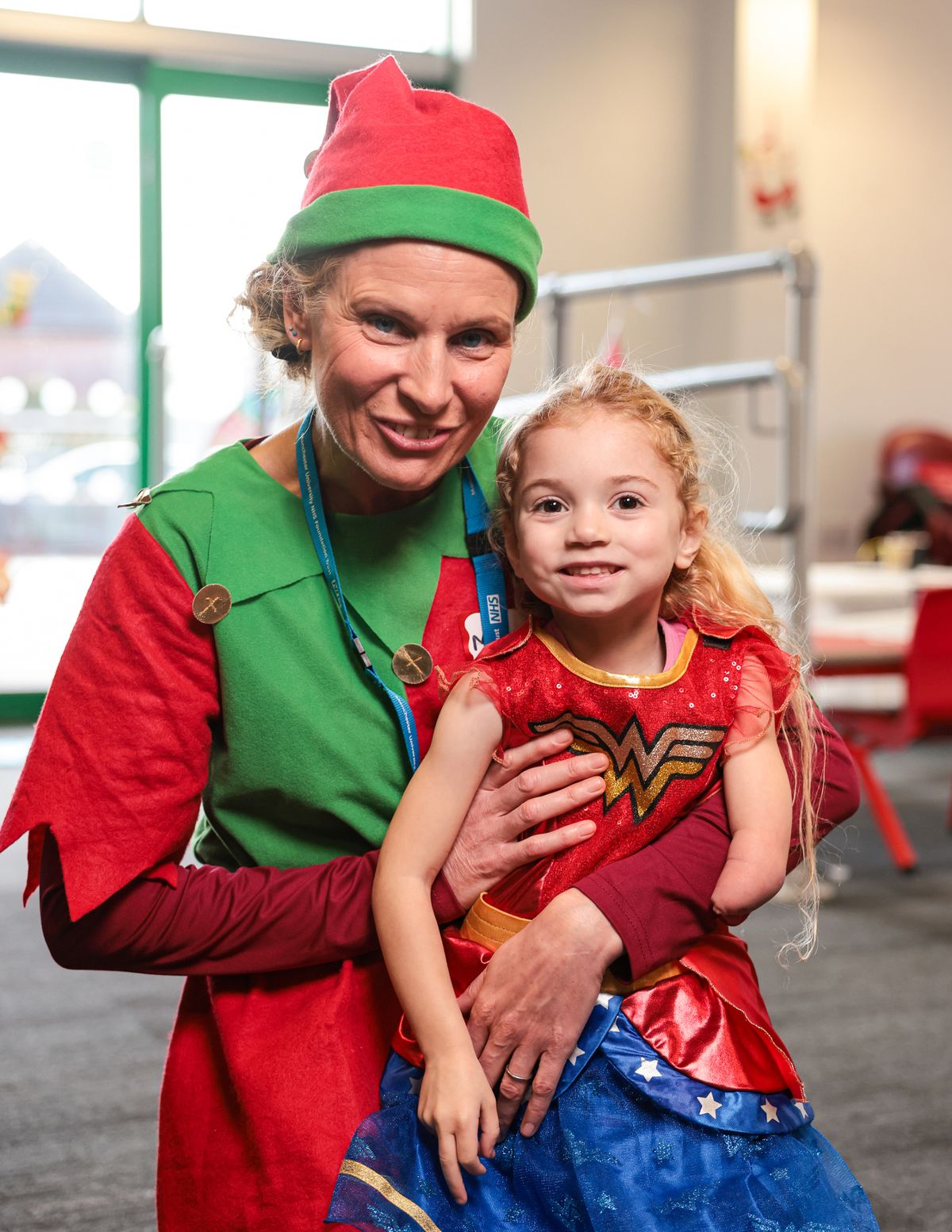
The party provides some opportunity for hidden therapy, with the specially-selected games of ‘colouring, throwing, role-playing with the kitchen, playing with cars’ chosen by occupational therapist Macrina Storer. She explained: “We are trying to get them to use both hands together like any child would.
 (Image: Kenny Brown | Manchester Evening News)
“They can do exactly the same thing as any other child just in a different way. Occupational therapy is about getting them to do their activities as easily as possible.”
Macrina’s been here for a decade, seeing hundreds of children. Dressed as an elf and beaming with glee, you’d think the party is the best part of her working life.
It’s not.
“This is lovely, it brings everyone together, parents get to meet other parents and say children with other limb differences,” she said thoughtfully, “but the highlight is seeing how well they do later.”