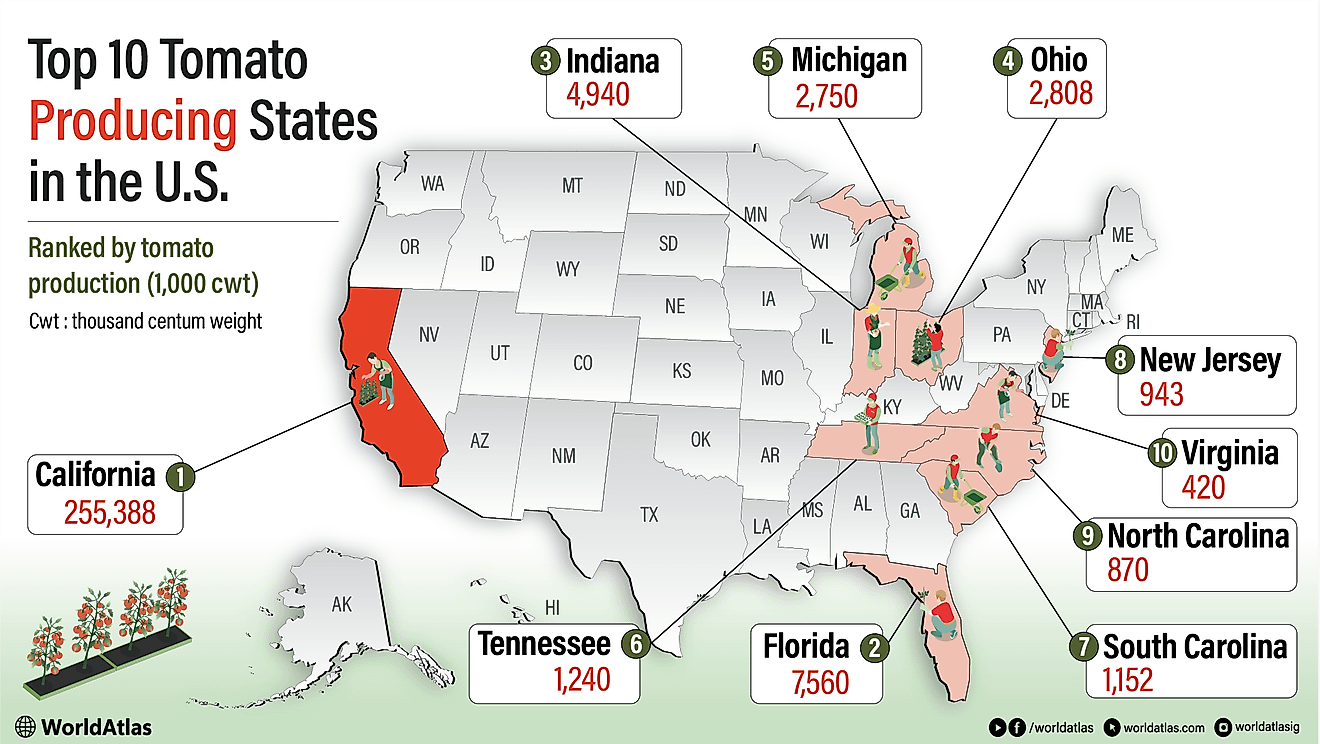
Tomatoes are one of America’s most important vegetable crops, filling everything from ketchup bottles and pizza sauce vats to fresh produce aisles year-round. Behind that steady supply stands a surprisingly concentrated network of powerhouse states. The top tomato-producing states in the US are California, Florida, Indiana, Ohio, Michigan, Tennessee, South Carolina, New Jersey, North Carolina, and Virginia, together accounting for the vast majority of commercial production.
Each state plays a distinct role in this system. California dominates total volume, especially processing tomatoes for sauces and canned products. Florida anchors the fresh-market winter supply, stepping in when much of the country is out of season. Indiana, Ohio, and Michigan are core processing hubs for the Midwest, while Southern and Atlantic states like Tennessee, the Carolinas, New Jersey, and Virginia specialize in fresh-market tomatoes that move quickly into nearby metro areas. Below is a ranking of these top 10 tomato-producing states by tomato production in 1,000 cwt (100 lbs or ~43.36 kg).
Top 10 Tomato-Producing States in the US
1. California
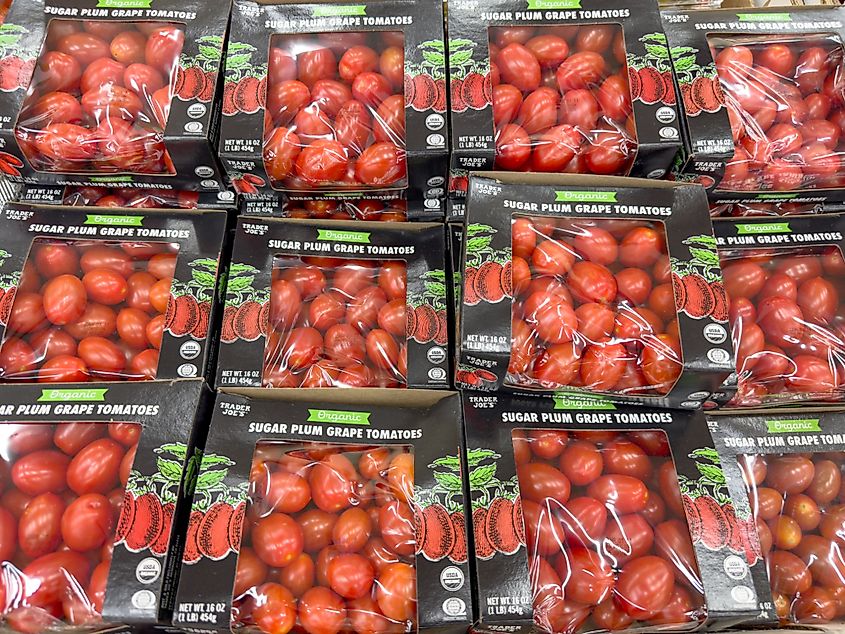 Los Angeles, California, United States: A view of several packages of Trader Joe’s organic sugar plum grape tomatoes, via The Image Party / Shutterstock.com
California is the nation’s agricultural powerhouse, with thousands of farms producing hundreds of commodities and generating nearly $50 billion in agricultural revenue. The state’s scale and Mediterranean climate support intensive fruit and vegetable production, although farming also drives major water use, often around 40% of statewide consumption, and can contribute to environmental impacts such as runoff and water pollution.
Within California’s diverse farm economy, tomatoes remain a major crop. In the state’s 2017 commodity rankings by value, tomatoes brought in about $1.05 billion, placing them among California’s top farm products alongside dairy, grapes, almonds, and lettuce. Tomato production is also geographically concentrated: the text notes that roughly 90% of California’s fresh-market tomatoes come from a cluster of key counties (including areas in the Central Valley and Southern California).
2. Florida
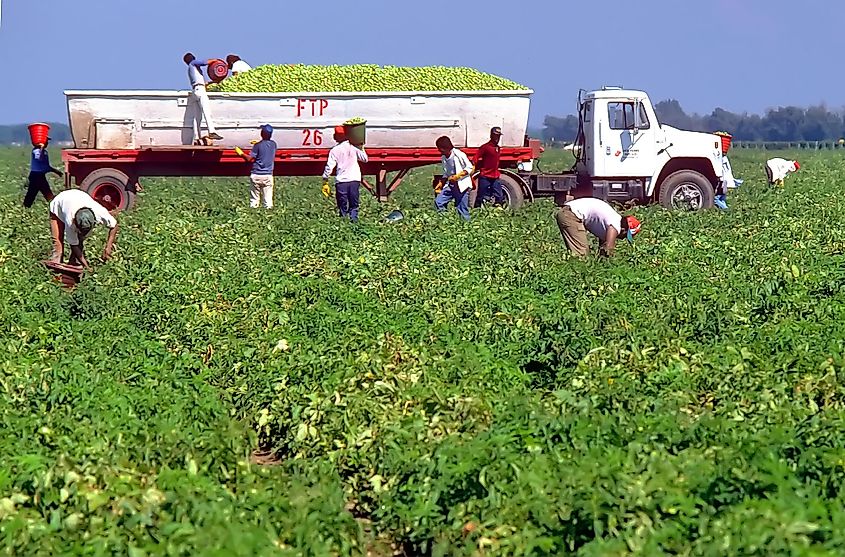 Mexican migrant worker picks tomatoes – Ruskin, Florida, via Dennis MacDonald / Shutterstock.com
Florida’s warm climate gives it an edge in U.S. produce markets, and tomatoes are one of the state’s signature crops. While Florida is famous for citrus, it is also a national leader in fresh vegetables, especially tomatoes, bell peppers, and strawberries. The state is consistently ranked No. 1 in fresh-market tomatoes, with production timed to supply much of the country when other regions are out of season.
Tomato harvest runs almost year-round, generally from October through June, with peak volumes in late fall, winter, and spring when temperatures are more favorable. Recent figures in the text note that Florida planted about 24,000 acres of tomatoes in 2024, harvesting 23,200 acres and producing 6.38 million cwt, worth roughly $331 million. Tomatoes are also a major driver of Florida’s farm economy overall, regularly ranking among the state’s most valuable crops and typically the most valuable vegetable, even though greenhouse and nursery products, citrus, and sugarcane still generate more total cash receipts.
3. Indiana
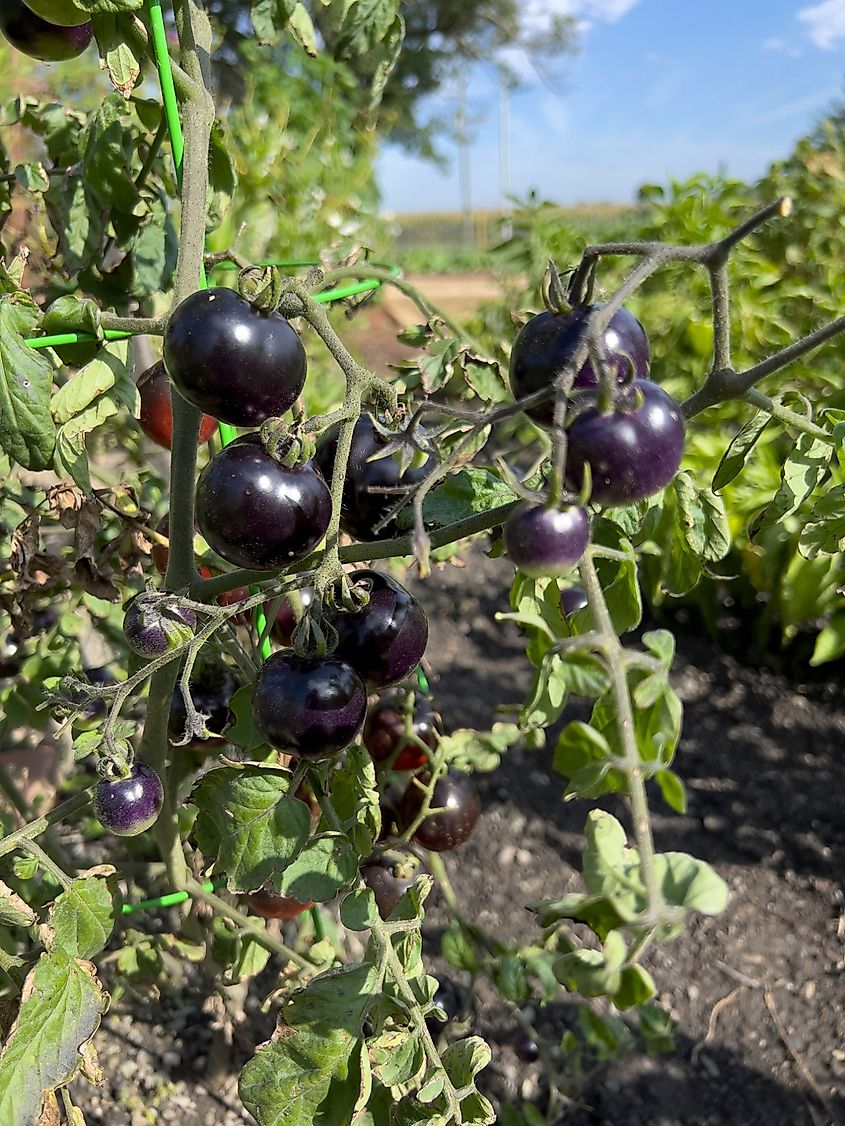 Purple tomatoes are ready for harvest. Indiana.
Indiana’s farm economy is large, diverse, and nationally competitive, an important foundation for its strong tomato output. Agriculture contributes an estimated $35.1 billion to Indiana’s economy, and the state ranks among the nation’s leading agricultural exporters, shipping $6.358 billion in agricultural goods in 2023. Production is driven largely by family operations: 94% of farms are family-owned or operated, across 53,599 farming operations with an average farm size of 272 acres.
Within this broad farm landscape, tomatoes stand out as a signature specialty crop. According to the Indiana State Department of Agriculture’s USDA-based rankings, Indiana is No. 2 nationally for tomatoes for processing and No. 3 for tomatoes overall, placing it firmly among the top tomato-producing states in the U.S. These rankings reflect both the scale of Indiana agriculture, nearly 14.6 million acres of farmland, and the state’s ability to compete in high-volume, market-oriented production.
4. Ohio
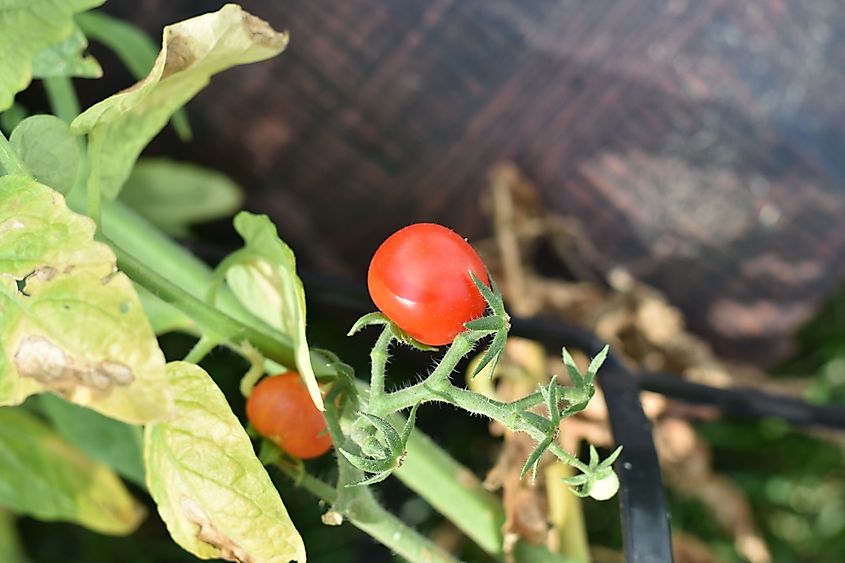 Grove City, Ohio, Tomatoes, via Pals4life / Shutterstock.com
Ohio’s large and diverse agricultural sector underpins its status as one of the top tomato-producing states in the U.S., particularly for processing tomatoes. Food and agriculture are Ohio’s leading industries, supporting one in seven jobs statewide and covering more than half of the state’s land area. With roughly 77,000 farms, nearly 14 million acres of farmland, and over 200 crops grown, Ohio has the scale and infrastructure needed for high-volume production. Tomatoes thrive in this system, benefiting from fertile soils, established supply chains, and close proximity to food processors and major Midwestern markets.
Agriculture contributes an estimated $124 billion to Ohio’s economy, and tomatoes are part of the state’s long tradition of supplying staple foods to the nation. As farmers adopt regenerative practices that improve soil health and water management, Ohio’s tomato production remains productive and resilient.
5. Michigan
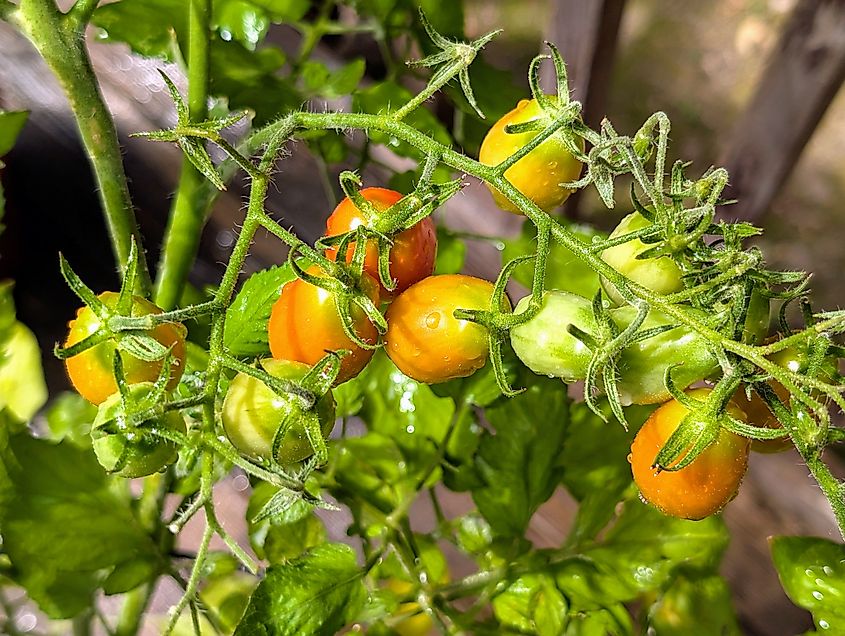 Tomatoes in Michigan
Michigan is one of the nation’s most agriculturally diverse states, producing more than 300 commodities and supporting a farm economy that touches nearly every region. Agriculture is the state’s second-largest industry, contributing over $125 billion to Michigan’s economy and supporting close to 1 million jobs. Most farms, about 95%, are family-owned, reflecting a strong multi-generational farming culture. This broad base of fruit, vegetable, grain, and dairy production helps Michigan stand out nationally, including in crops grown for processing.
Michigan farmers are among the nation’s leading producers of several high-volume crops such as tart cherries, blueberries, dry beans, pickling cucumbers, and squash, alongside major field crops like corn and soybeans. The state also emphasizes food safety and environmental stewardship, operating under regulations and oversight from agencies such as the Michigan Department of Agriculture, the USDA, and the EPA.
6. Tennessee
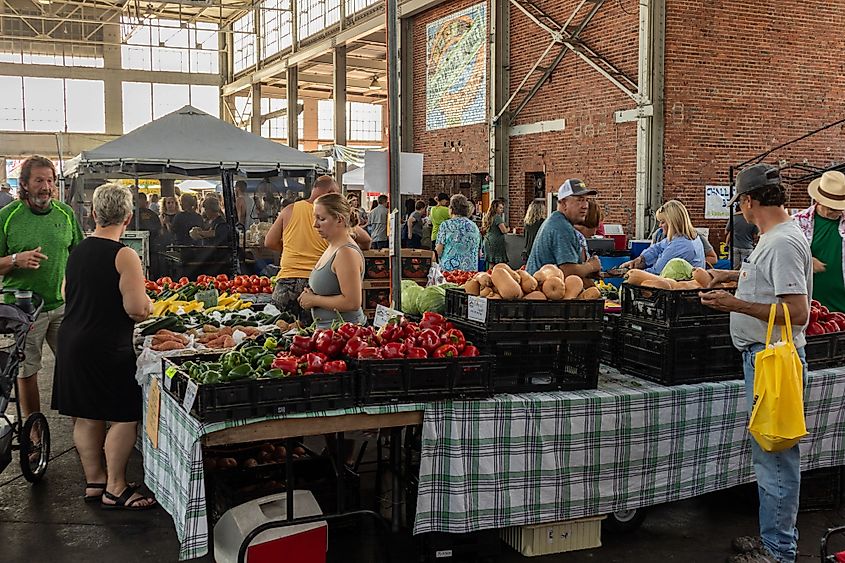 Chattanooga, Tennessee: Vendors selling fresh vegetables at the First Tennessee Pavilion Chattanooga Market, via Tim Childers / Shutterstock.com
Tennessee’s agriculture sector is a major driver of the state’s economy and helps explain why it can rank among the nation’s notable tomato producers. The state has 63,100 farms covering 10.7 million acres, with an average farm size of about 170 acres, supporting a broad base of growers and diversified production. In a typical year, Tennessee’s agriculture and forestry sectors contribute about $81 billion to the economy and employ roughly 342,000 people, showing the scale of the state’s farm and food system.
Tennessee generated more than $5.2 billion in agricultural cash receipts in 2023, including about $3.15 billion from crops. While soybeans, corn, cotton, hay, wheat, and tobacco are among the top commodities highlighted, this strong crop infrastructure and large farming footprint also support vegetable production, helping Tennessee maintain a meaningful presence in U.S. tomato output compared with many other states.
7. South Carolina
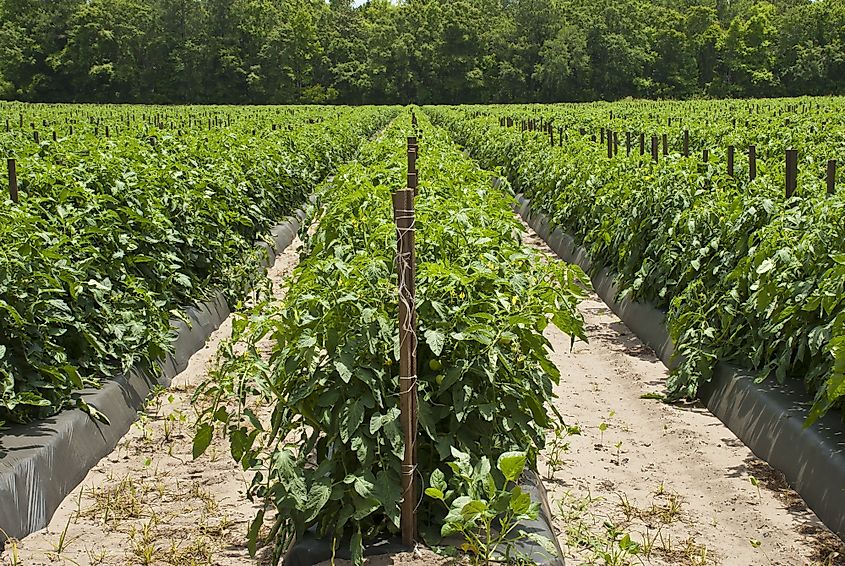 A field of rows of tomato plants on a farm in the Low Country of South Carolina.
South Carolina’s long agricultural tradition has laid the foundation for its position as one of the top tomato-producing states in the United States. Although the state’s early economy centered on rice, indigo, and later cotton, South Carolina has continually diversified its crop production in response to shifting markets and environmental conditions.
By the late 19th and early 20th centuries, vegetable cultivation expanded across the state as farmers sought alternatives to declining cotton prices. South Carolina’s warm climate, extended growing season, and well-established farm infrastructure created ideal conditions for commercial tomato farming. Today, tomatoes are one of the state’s leading vegetable crops, supporting a robust fresh-market industry that ships widely up the East Coast.
8. New Jersey
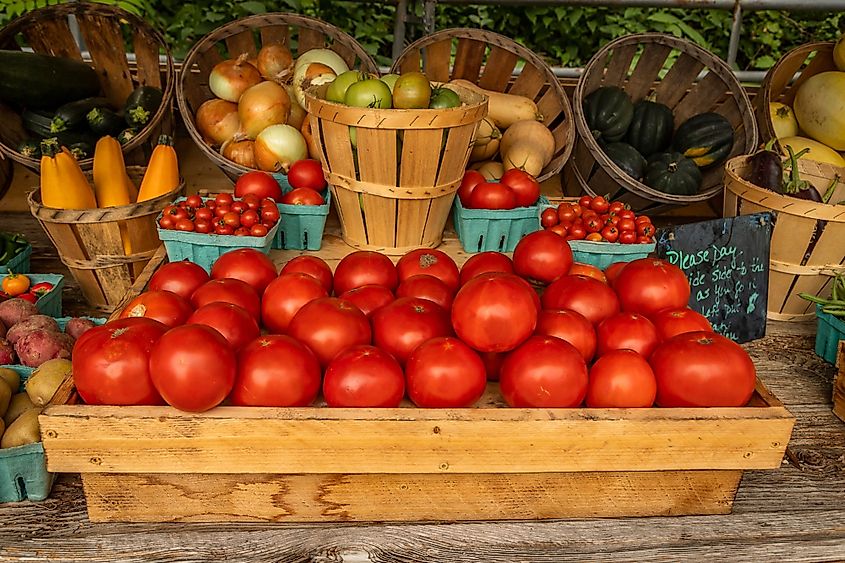 Local Farm Stand in New Jersey Selling Fresh Produce
New Jersey’s long agricultural tradition and diverse growing conditions help make it one of the top tomato-producing states in the U.S. Known as the “Garden State,” New Jersey supports a highly productive fruit and vegetable sector, strengthened by state-led programs like Jersey Fresh, which promotes more than 100 varieties of locally grown produce. Tomatoes remain one of New Jersey’s signature crops, benefiting from the state’s fertile soils, relatively long growing season, and proximity to major urban markets along the East Coast.
With thousands of family-operated farms and a strong marketing infrastructure, New Jersey growers supply both fresh-market tomatoes and processed tomato products throughout the region. The New Jersey Department of Agriculture further supports the industry through food safety programs, farm-to-school partnerships, and grants that help farmers maintain high-quality production.
9. North Carolina
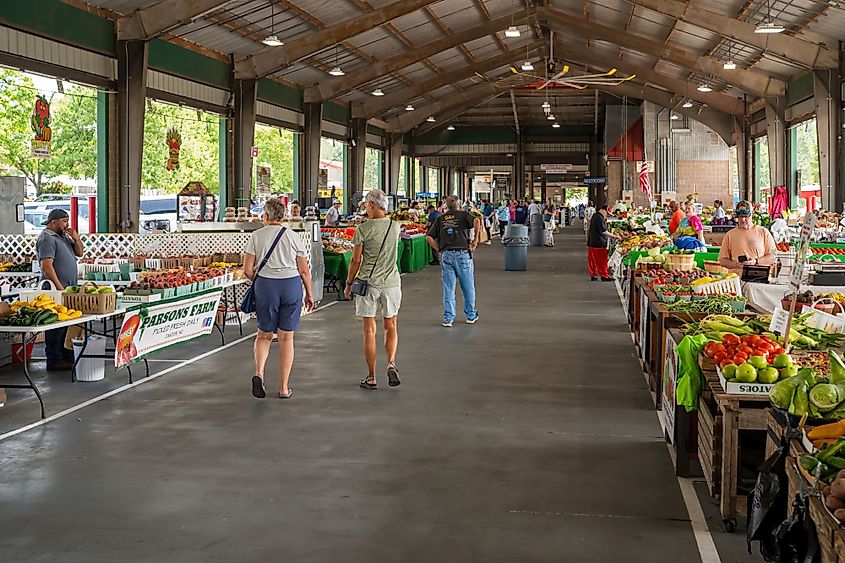 The North Carolina State Farmer’s Market Offers Ripe Peaches, Tomatoes and Squash, via Wileydoc / Shutterstock.com
North Carolina’s diverse agricultural landscape, from the Appalachian Mountains to the coastal plains, creates ideal conditions for growing tomatoes, helping the state secure its place among the nation’s top producers. With nearly 43,000 farms spread across 8.1 million acres of farmland, North Carolina has a long tradition of cultivating high-value fruit and vegetable crops.
The state ranks among the top five nationally for multiple specialty crops, including cucumbers and bell peppers, reflecting the same warm-season conditions and skilled labor that support strong tomato production. Many small and mid-sized farms in the mountain and piedmont regions focus on fresh-market tomatoes, supplying both regional and East Coast markets during the summer and early fall. North Carolina’s agricultural sector also benefits from extensive research, innovation, and food-safety programs that help producers maintain quality and adapt to changing growing conditions.
10. Virginia
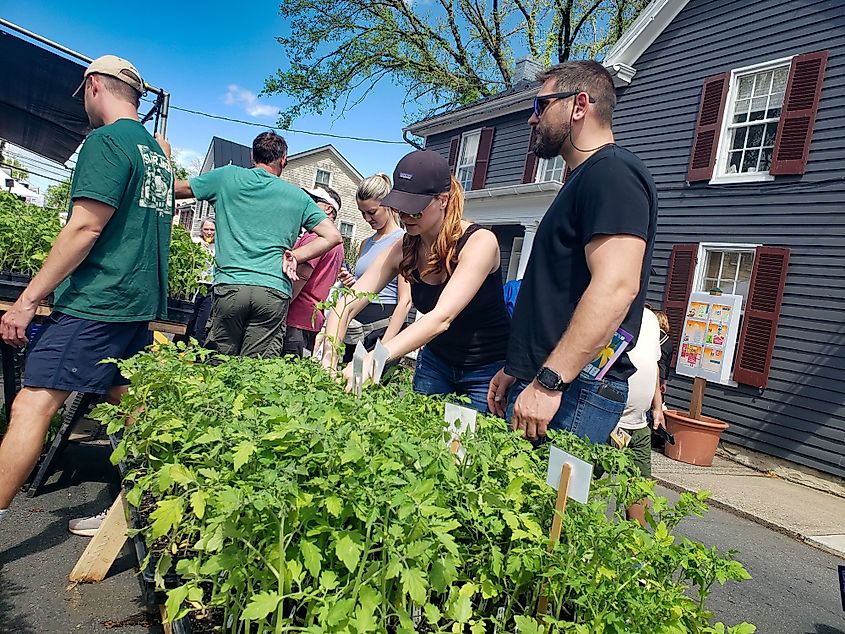 Leesburg, Virginia: woman selects tomato seedlings at a farmers market in Virginia, via Kosoff / Shutterstock.com
Virginia stands out as one of the top tomato-producing states in the nation thanks to its strong agricultural foundation and ideal growing conditions. Home to more than 39,000 farms spread across 7.3 million acres, the Commonwealth benefits from a diverse landscape and a long growing season that supports high-value specialty crops like tomatoes. Agriculture is Virginia’s largest industry, contributing $105 billion annually and supporting over 490,000 jobs, which helps sustain robust vegetable production.
Tomatoes thrive particularly well in Virginia’s coastal and piedmont regions, where warm summers and fertile soils enable both fresh-market and processing varieties to flourish. While the state also excels in apples, peanuts, soybeans, poultry, and marine products, tomatoes remain a key crop that consistently places Virginia within the top national rankings for vegetable production.