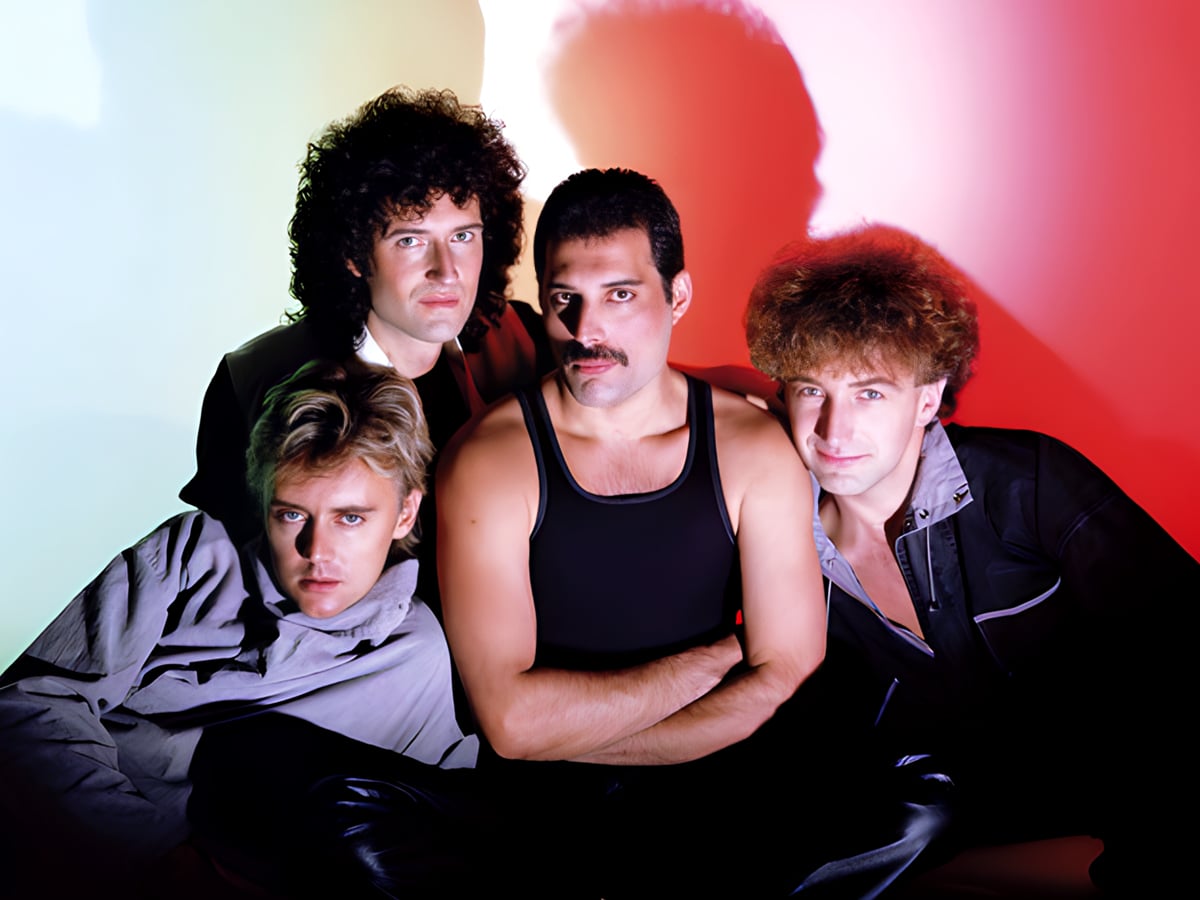
(Credits: Spotify)
Thu 25 December 2025 13:00, UK
It’s hard to really imagine that Queen could have added anything to their catalogue by the end of their career.
Sure, Freddie Mercury would have surely been making music to this day had he not passed away so quickly, but on every record, they seemed to throw everything and the kitchen sink into the mix if it made for a better record. But just because an album sounds pristine and has millions of overdubs over top of it doesn’t necessarily mean that it’s one of the best albums of all time.
Overproduction is a real problem for even the greatest artists of all time, and Brian May knew when things were going a bit too over the top. He already had a problem with ‘We Are the Champions’ being too dramatic when they were first working on it, and even the band’s heroes like George Harrison had problems when mixing perfect records like All Things Must Pass when Phil Spector was brought in.
If you look at the actual production of any Queen album, though, you would have sworn that they were determined to use up every single track they had. ‘Bohemian Rhapsody’ already had a master tape that was nearly see-through by the end, so overdubs were never a bad word. It all comes down to how you use them, and they were clearly working through the bugs before they landed on albums like A Night at the Opera.
There are a few rough edges behind records like Sheer Heart Attack and Queen II, but that’s also a part of their charm. ‘Stone Cold Crazy’ would probably not have sounded as menacing as it does if it had a brighter sheen on it, and since Queen II is probably the closest they would ever come to making heavy metal, hearing the roar of the guitars on ‘The March of the Black Queen’ is a lot better than May throwing in a guitar symphony on a song that doesn’t really need it.
Those records were all well and good, but the debut is a much different story. Their self-titled record was a fine test-run for what they were going to sound like, but if their sophomore effort was a heavy metal extravaganza, then this was their own version of garage rock. They still had more layers of vocals than any other garage act, but as far as May could see, that wasn’t always a good thing.
When listening back to the record, May felt that the whole thing was a lot more blemished than he thought, saying, “It was a mess to be honest with you. You’ve waited all your life and then you get shoved in between people who want to do different bits of stuff and because they break for a cup of tea, you get five minutes in the studio. We were stuck on the end of a record company that was already busy with stuff. Not entirely bad, but it was tough [because] we couldn’t get priority.”
Then again, hardly anyone would have needed much persuading after listening to a song like ‘Keep Yourself Alive’. The hook is already there, and from the breakdown of the tune with Mercury, Roger Taylor, and May all swapping vocals to the guitar harmonies on the solo, the song is practically a mission statement for Queen that they would live up to on every other song to follow.
So while May could be a bit more candid about some of the uglier pieces of the band’s history, Queen is still a fantastic announcement of what the band would become. They were still a small group, but listening to every single track, you would swear that they could have held their own if they were placed next to the Led Zeppelins of the world.
Related Topics