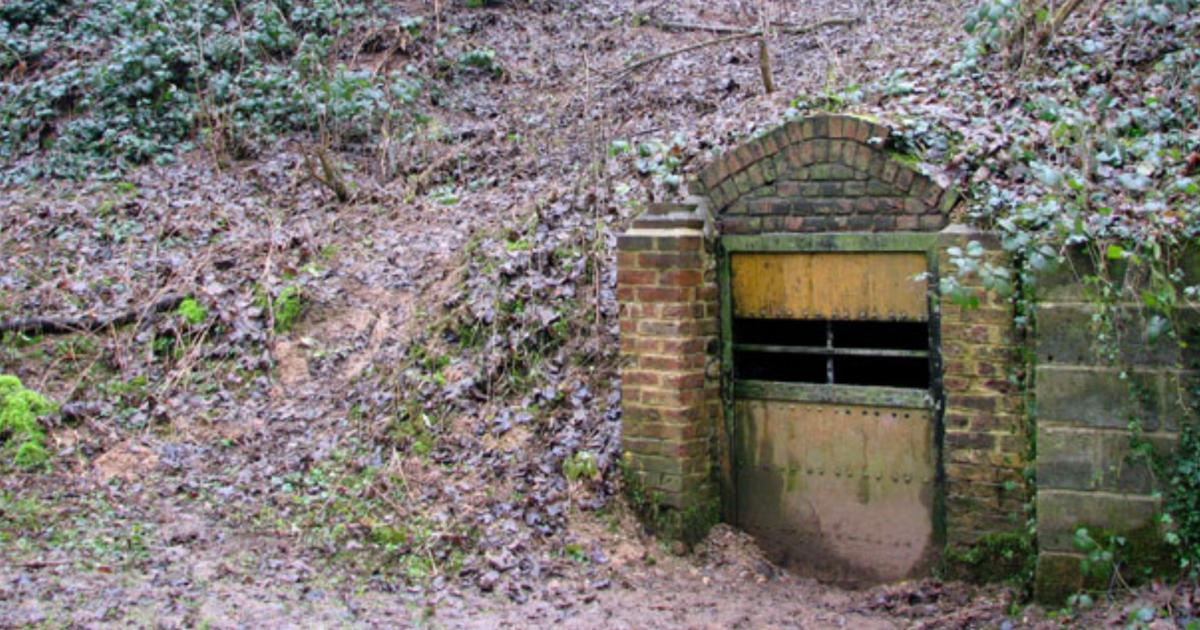
Jane Harris, an expert from the Norfolk and Norwich Bat Group, revealed daubenton’s, natterer’s and brown long-eared bats have been hiding away in a Victorian lime kiln at Whitlingham Country Park near Trowse.
The structure, which was used to produce limestone in the 1800s, is insulated from the cold weather and is considered by Ms Harris as the “perfect” home for the animals during the winter.
She said: “Because the kiln is built into the hillside, it maintains low, stable temperatures without the risk of freezing.
“Bats can stay inactive without the danger of being woken in warmer weather and using up vital body fat.”
The kiln, located in Whitlingham Wood, past the BBQ and picnic site at the park, is no longer in use but is in “good condition”, said Kate Villalgordo, spokeswoman for Whitlingham Charitable Trust.
She added: “It’s a hidden gem with so much history.
“The kiln is accessible by both steps and a slope.
“We want to encourage people to walk down to this part of the park.
“The other one at the park is difficult to see and completely ruined.
“There might even be more that we don’t know about.”
READ MORE: Repair works on grade II listed ruins at country park set to start
LIMESTONE PRODUCTION AT THE PARK
During the 1800s, a tram, said to be pulled by ponies, would run along from the extremely steep banks of Whitingham Woods to the River Yare.
Limestone production at Whitlingham Country Park (Image: Submitted)
Limestone production at Whitlingham Country Park (Image: Submitted)
READ MORE: Plans submitted to permanently shut gate of Victorian bridge in the city
The lime from the kilns would then be picked up from the River Yare by wherry boats.
From there, it would be transported to Burgh Castle and Berney Arms.
The Berney Arms Windmill in Reedham would use the materials from Whitlingham to make cement.