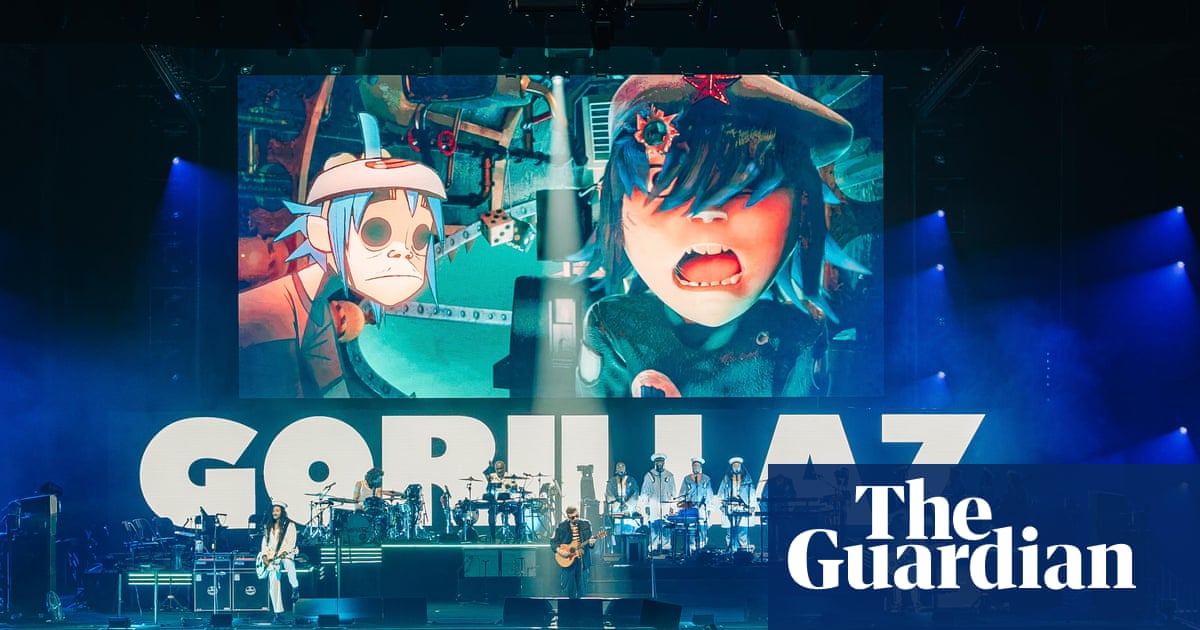
Gig-goers who bought tickets for Gorillaz at Tottenham Hotspur Stadium in June next year have been refunded some of their booking fee by the ticket seller Gigantic after the Guardian queried the pricing.
A reader contacted us asking why he had been charged a £1 “restoration fee” for a concert at the £850m stadium in north London. The Gigantic website also listed the same fee for the recently built Co-op Live arena in Manchester.
Restoration fees and levies have become a familiar feature on venue and ticketing websites in recent years – but the reader asked how they could be applied to these two almost brand-new venues, which opened in 2019 and 2024, respectively.
When we contacted Gigantic, the company said we needed to speak to the promoter, and it changed its website to explain that this fee was to support grassroots venues.
Tottenham Hotspur Stadium opened in 2019 and cost £850m. Photograph: View Pictures/Universal Images Group/Getty Images
Closer inspection of the other fees that had been charged revealed that while the website listed a 10% booking fee, the reader had been charged 13% – with the 3% adding on almost £3 extra for each ticket purchased.
A spokesperson from Kilimanjaro Live, the promoter of the Gorillaz tour, confirmed that the ticketing website had made an error and that all affected buyers would be given a refund of the difference.
The story highlights how the plethora of fees being added to tickets mean that fans can quickly lose track of how much they should pay.
Last year, research by the consumer body Which? found that extra charges including delivery and transaction fees, booking fees, service fees and order processing fees, can add up to 25% to the cost of concert and festival tickets.
However, the 2025 Music Fans’ Voice survey found that only 35% of respondents were aware of all charges before reaching the checkout stage, while only 34% of respondents said they were aware of what each charge was for.
Lack of transparency
Alice Andrews recently bought tickets to see the pop-rapper Pitbull at London’s BST Hyde Park in July 2026. The price of the three tickets without fees was £329.85. There was an added £3 transaction fee, a £3 sustainability levy, and a £37.50 service fee – making a total of £373.35.
Like many music fans, she says she wants greater transparency over how much tickets will cost in total, and where this extra money goes.
“I would like to know what my money is going to be used for if I’m going to pay a fee,” she says. “It has put me off big gigs before.”
Andrew Simpson, a regular gig-goer, says that when looking at tickets for Haim at Manchester’s Co-op Live, on top of the £51.75 face value for a general admission ticket to stand, there was an £8 service fee, £2.35 handling fee, and £2.95 facility fee – bringing the total up to £65.05.
The Clapham Grand, an independent venue in London, now tells customers what additional fees will be used for. Photograph: Tim P Whitby/Getty Images
When he looked for a breakdown of what the fees covered, the website said the facility fee “keeps the venue running, helping us to improve our services and experiences for all fans …”
“This is just a meaningless sentence and tells me nothing,” Simpson says.
Some independent venues, such as the Clapham Grand in London and Saint Luke’s in Glasgow, have listened to feedback from ticket buyers and now include a breakdown of expenses online that show what additional fees, such as a restoration levy, are for. Some specify what an added charge is for at the time of purchase – for example, it may be used to finance a new floor.
When the Guardian approached Gigantic, it said the restoration fee was in fact a £1 Live Trust donation, where the money is given to smaller, independent venues via a scheme by the Music Venue Trust, a charity which acts to “protect, secure and improve UK grassroots music venues for the benefit of venues, communities and upcoming artists”.
The reader who got in touch has received their overpayment back from Gigantic.
Total cost
Mark Davyd, the chief executive officer of the Music Venue Trust, says the reason there are so many fees is because of the number of players that are involved in selling tickets. Often fees are set by different parties involved in the process, all of whom argue that they need the money in order to deliver the service or product.
He says transparency is actually “irrelevant” to fans, and that they actually just want the total cost to be what is displayed to them on the landing page.
“That’s what fans want,” he says. “Delivering that requires government and trading standards bodies to recognise that, and a total rewiring of the terms of the contract.”
Last month, the UK’s Competition and Markets Authority (CMA) launched what it described as a “major consumer protection drive” focused on online pricing practices across a range of sectors including entertainment. These practices include “drip pricing”, which is where online shoppers are shown an initial price for an item or service, but then more fees are revealed (or “dripped”) as people progress through the buying process.
A fan said a ticket to see Haim at Co-op Live had £13 of additional fees on top of the face-value ticket cost. Photograph: Ben Birchall/PA
The CMA cited a 2023 government report that found that drip pricing was particularly common when it came to event tickets (it indicated they were present at 93% of the businesses looked at).
The competition watchdog said it had begun investigations into eight companies about their pricing practices, two of which were sellers of event tickets: StubHub and Viagogo. It said these two companies were under review over the mandatory additional charges applied when consumers buy tickets, and whether or not these fees were included upfront. However, it said that at this stage it had reached no conclusions about whether the law had been broken in any of these investigations.