On October 9, 1909, the Liberal chancellor David Lloyd George addressed a group assembled at the Palace Theatre in Newcastle. The subject was his “people’s budget” and his target was the dukes, the top rank of the aristocracy.
They had, he said, “been scolding like omnibus-drivers, purely because the budget cart has knocked a little of the gilt off their old stagecoach”. And then the zinger. “A fully equipped duke,” Lloyd George said, “costs as much to keep up as two dreadnoughts [a new class of battleship]; and dukes are just as great a terror and they last longer.” Cue much merriment.
It was always likely that the wealthy dukes would set themselves against Lloyd George in protest at his tax-raising budget. On November 30, 1909, they got their revenge on the government when they rejected the budget in the House of Lords.
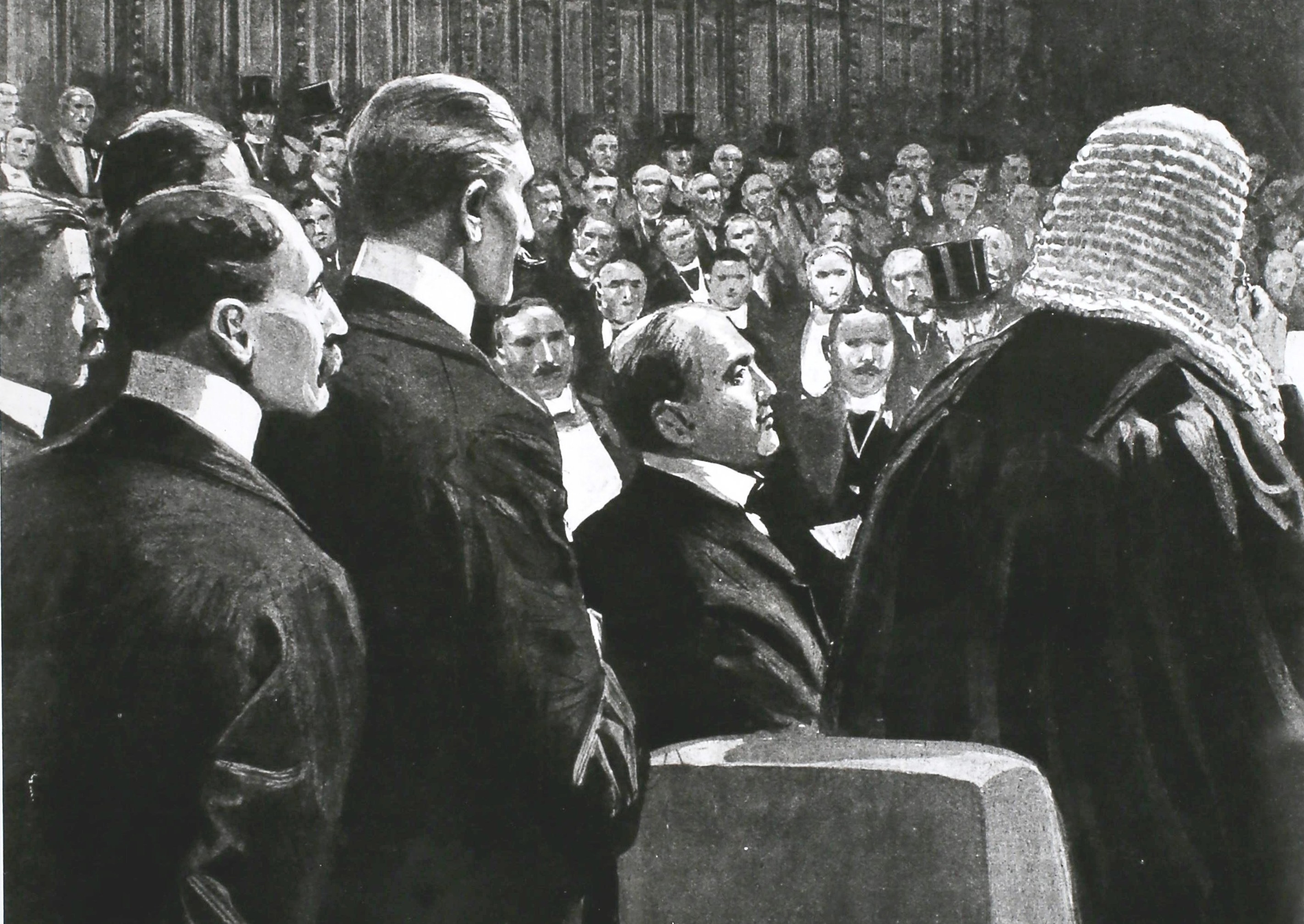
The Lords reject the budget in 1909, as depicted in the Illustrated London News
HULTON ARCHIVE/GETTY IMAGES
It proved a misstep by their graces. Two elections, a hung parliament and some undignified negotiations with George V later, the budget was passed and the Lords’ power was curbed. The Parliament Act of August 1911 that followed removed the Lords’ power to veto money bills and reduced it to a scrutinising chamber.
More than a century later, the last handful of dukes and other hereditary peers are on the verge of leaving the Lords for good. In its election manifesto, Sir Keir Starmer’s Labour Party promised to abolish the remaining connection between the hereditary peerage and the Lords. In 1999, a New Labour reform had limited their number to 92.
Consequently, the Hereditary Peers Bill has spent the past 15 months being batted back and forth between the Commons and the Lords, where a rearguard action of Tory peers has sought to water it down. If it achieves royal assent in this parliamentary session, the year 2026 may well see the back of the remaining hereditary peers.

The House of Lords at the state opening of parliament, 2024
SUNDAY TIMES PHOTOGRAPHER JACK HILL
Should we mourn the passing of the last “hereds”? For my book Heirs & Graces I spent four years speaking to hundreds of peers. Very few defend the hereditary principle in public life today; people who do, said one, “slowly go mad”. But the removal of the last batch of hereds does also represent a significant moment in the history of this country — and it is one worth marking. It is the final decoupling of landowners and overt political power, a moment the old country elites finally pass the baton — or, perhaps, have it removed.
‘A paradise of bores’
The Lords has been the political home of what is now the hereditary peerage since the 14th century. Local representatives from counties and towns began meeting as the House of Commons, while noblemen — the Lords Temporal — and archbishops and bishops — the Lords Spiritual — formed the House of Lords. It has ebbed and flowed within the nation ever since. In 1649, during the Cromwell interregnum, the Lords was abolished along with the monarchy and was likewise reinstated at the Restoration in 1660.
The Lords as we know it today, a patchwork of bishops, aristocrats, political cronies and independent experts, is the result of various attempts by Commons politicians to reform the place that Robert Gascoyne-Cecil, 3rd Marquess of Salisbury, once described as “the paradise of bores” and Clement Attlee compared to “a glass of champagne that has stood for five days”.

Robert Gascoyne-Cecil, 3rd Marquess of Salisbury
UNIVERSAL HISTORY ARCHIVE/GETTY IMAGES
The most consequential of these reforms was Harold Macmillan’s introduction of life peers — those that aren’t born into a title — in 1958, when Lords attendance was pitifully low. Some hereds objected to this erosion of their privileges.
The 1999 reforms excluded more than 600 hereditary peers from sitting in the Lords, breaking up an environment that could certainly be described as quirky. Bertie Bowyer, 2nd Baron Denham and the Conservative Party chief whip from 1979-91, ran his party in the Lords like a private fiefdom. With a theoretically enormous built-in Tory majority, as one peer described, “instead of trying not to lose votes, he would work out in advance which four or five he was going to lose” to ensure the Lords did not look like a chamber of Conservative poodles.
‘A civilised life’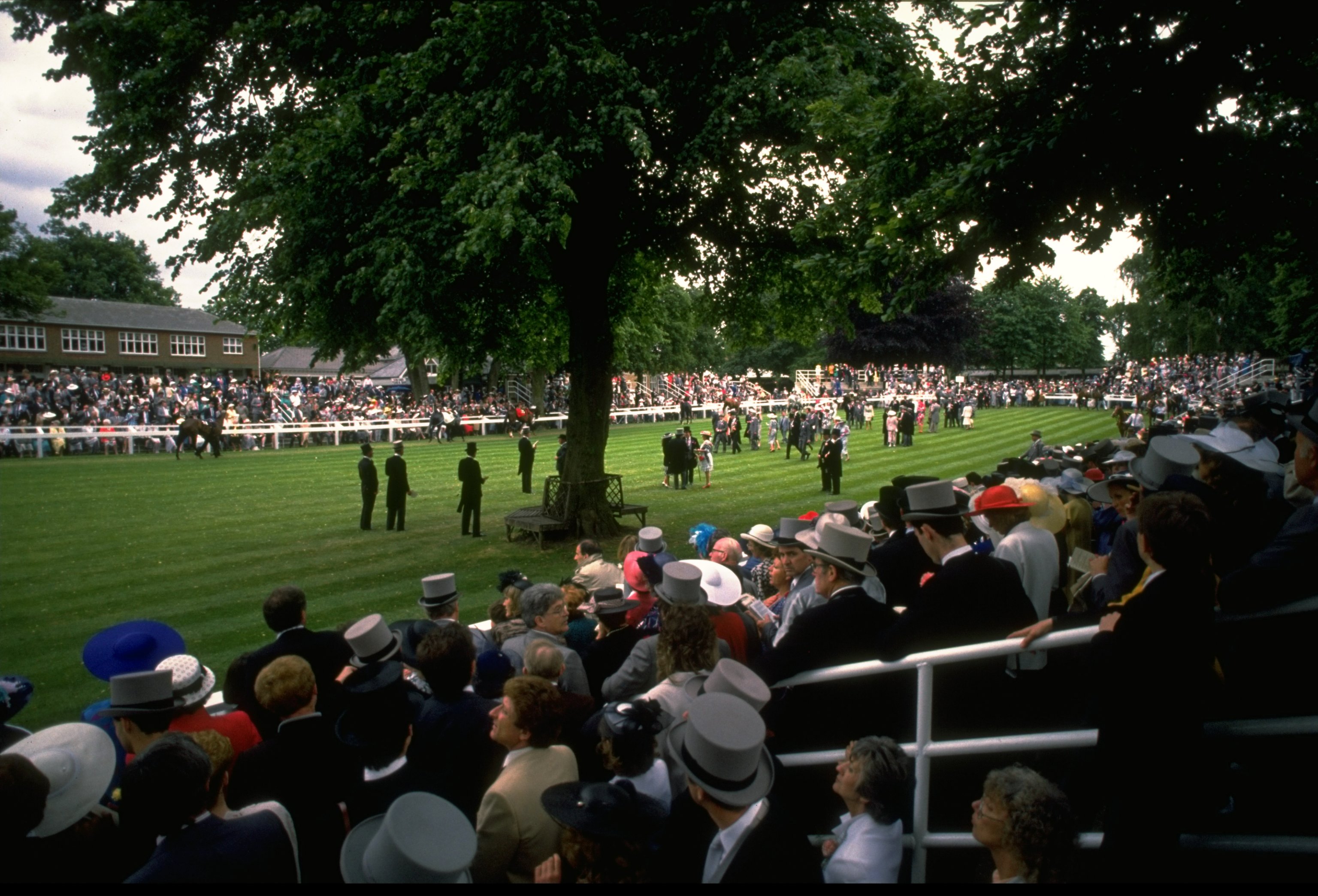
Ascot, 1988
PASCAL RONDEAU/ALLSPORT
In keeping with Denham’s idea of a civilised life, there was no voting during Ascot week, nor was contentious business expected to be programmed during Cheltenham races. Denham’s system involved the convenient mobilisation of the “backwoodsmen”, those rural peers who rarely visited the Lords except for a three-line whip. In 1988 the poll tax vote — scheduled, much to Denham’s grief, during prime salmon-fishing season — drew in enough peers from the counties to produce the second-highest attendance in 150 years, which helped along the government’s victory on a policy that ultimately failed. As the former Labour MP Woodrow Wyatt observed at the time, it was when he noticed the rarely spotted Henry Thynne, 6th Marquess of Bath, in the chamber that he realised just “how intense the whipping had been”.
Though backwoodsmen like Henry Bath, who never once spoke in his 46 years in the Lords, have been vilified, they could also play an important role. Many would turn up at an appropriate moment to speak about a subject on which they were expert.
The idea was and remains, said the Conservative peer Freddie Curzon, 7th Earl Howe, that individuals would “bring their skills from whatever their line of work into the deliberations of parliament”. For many hereditary peers, these skills related to the countryside. Howe, an agriculture minister in the 1990s, remembered how he was “very hard-pressed, usually from behind me, in the legislation I put through. The collective knowledge amongst peers around how the countryside works was fantastic.”
Some of the grander aristocrats made the rationale for their survival thinner by rarely attending. Between 1955 and 1960, only eight of the 27 non-royal dukes spoke in the Lords at all. One peer remembered the Maastricht vote in 1993, won by the government as “the most important political issue of the day and the turnout was only 50 per cent”.
A world without hereds?
What does the abolition of the hereds mean for the aristocracy, and the country? For the former, probably very little. The 92 peers leaving the Lords represent only 11 per cent of the hereditary peerage. They will return to their professional jobs, and some to their estates and local responsibilities, while others will retire. The aristocracy has survived since 1999 and arguably, it has thrived without too much politics to worry about.
My analysis showed that the wealth of the 24 peers that appeared on both The Sunday Times’s top 400 richest people in 1990, and on its Rich List in 2020, has increased by an average of more than 314 per cent. Even accounting for inflation, this represents an extraordinary degree of staying power. The fate of Britain’s various aristocrats has been shaped far more by the land and wealth they inherit and how carefully it has (or has not) been preserved.
Still, the loss of a strong connection to politics and public service will affect some. The barrister Charles Courtenay, 19th Earl of Devon, joined the Lords as a crossbencher in 2018. The custodian of Powderham Castle near Exeter, which has been in his family since the 14th century, he is the personification of the modern aristocrat and he is proud of his heritage. “The only real purpose of being a hereditary peer is to sit in the House of Lords,” he said. “It’s not to get an upgrade on a plane, or to make yourself feel better than anyone else — social leadership is important.”
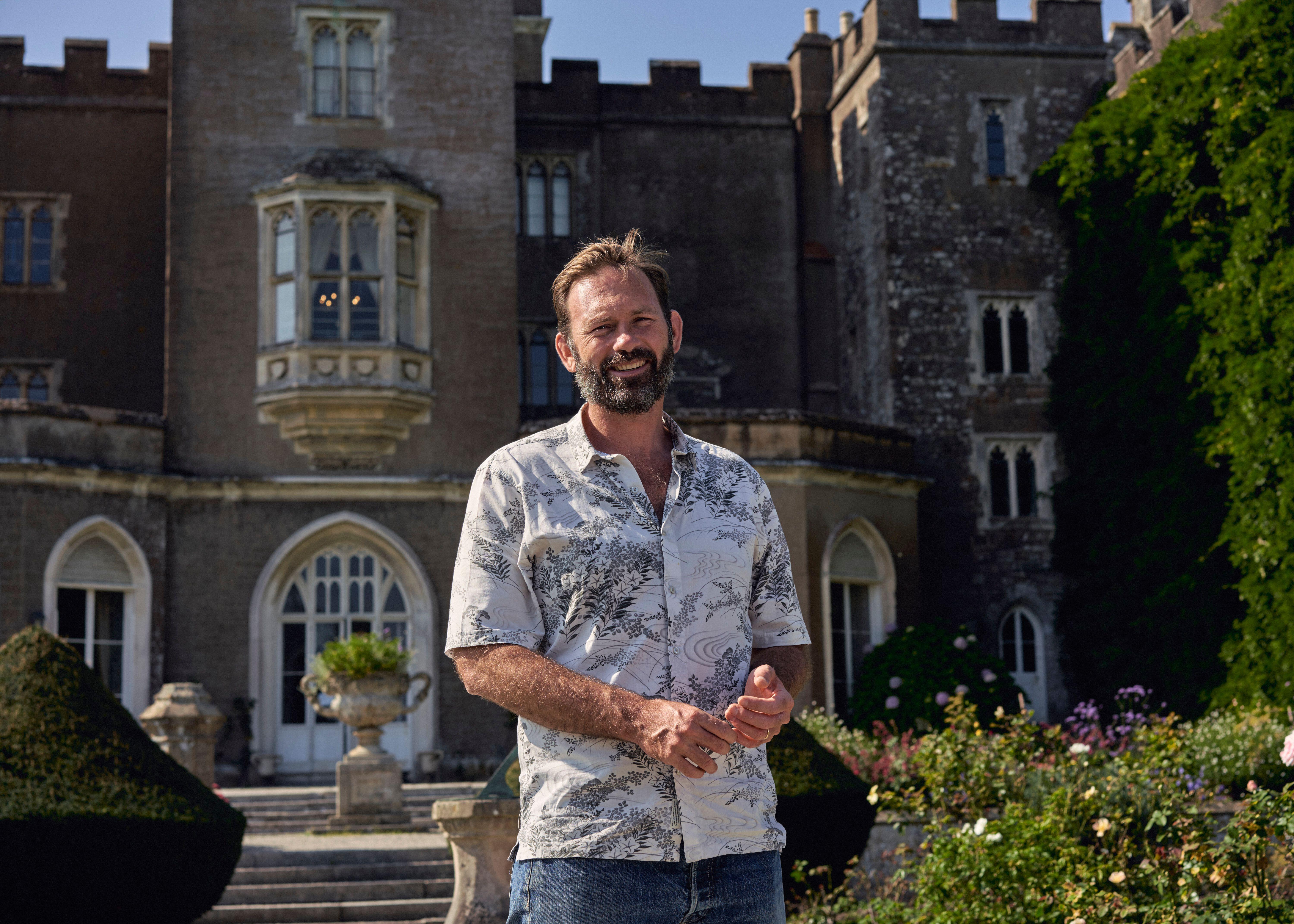
Charles Courtenay, 19th Earl of Devon, at Powderham Castle
ALAMY
When Robert Gascoyne-Cecil, 7th Marquess of Salisbury, retired from the Lords in 2017, it was the first time in about 450 years that the main line of Cecils did not have a public political role. The removal of families such as this from the body politic represents a significant moment in British history, whether one supports it or not.
The detectable feeling among peers is not sadness at their own departures, for many have long seen it coming, but that their relative independence will also depart the Lords for good. Ralph Percy, 12th Duke of Northumberland, one of the country’s largest landowners, is the patriarch of a family with an ancient history of public service. The contribution of the hereditary peers, he said, “comes from a sense of duty and obligation, and they form a sensible buffer against increasingly polarised politics”.
Real reform?
The real issue is whether the opportunity is taken to properly reform the second chamber.
Pensioning off the dukes is all well and good, but will the right, independent-minded replacements be found, or will the chamber continue to fill up with political cronies? Alongside his reforms, Starmer also recently took the opportunity to appoint several political allies to the chamber.
Getting the balance of peers must include all parties and political persuasions — after all, in 1962, Wogan Philipps, 2nd Baron Milford became the first and last member of the Communist Party to take his seat in the Lords. This month the Conservative leader in the Lords, Nicholas True, Baron True, argued that if Reform was represented in the Commons then it ought to be in the Lords too.
Howe said: “If we can ensure that people who have a lot to give can contribute, that is a win. Whether they are members of the peerage or not, we have to maintain that element of expertise and independence of mind, and not colour a second chamber exclusively with party politics. Retaining that kind of contribution is going to be the ultimate test of a long-term reform.”
Heirs & Graces: A History of the Modern British Aristocracy by Eleanor Doughty (Cornerstone, £30)To order a copy go to timesbookshop.co.uk. Free UK standard P&P on orders over £25. Special discount available for Times+ members.