As most of the country wound down for Christmas, the Trump administration had other ideas. On Tuesday night, the State Department announced sanctions against five Europeans. The charge? Not corruption, terrorism or espionage. Instead, it was crimes against freedom of speech.
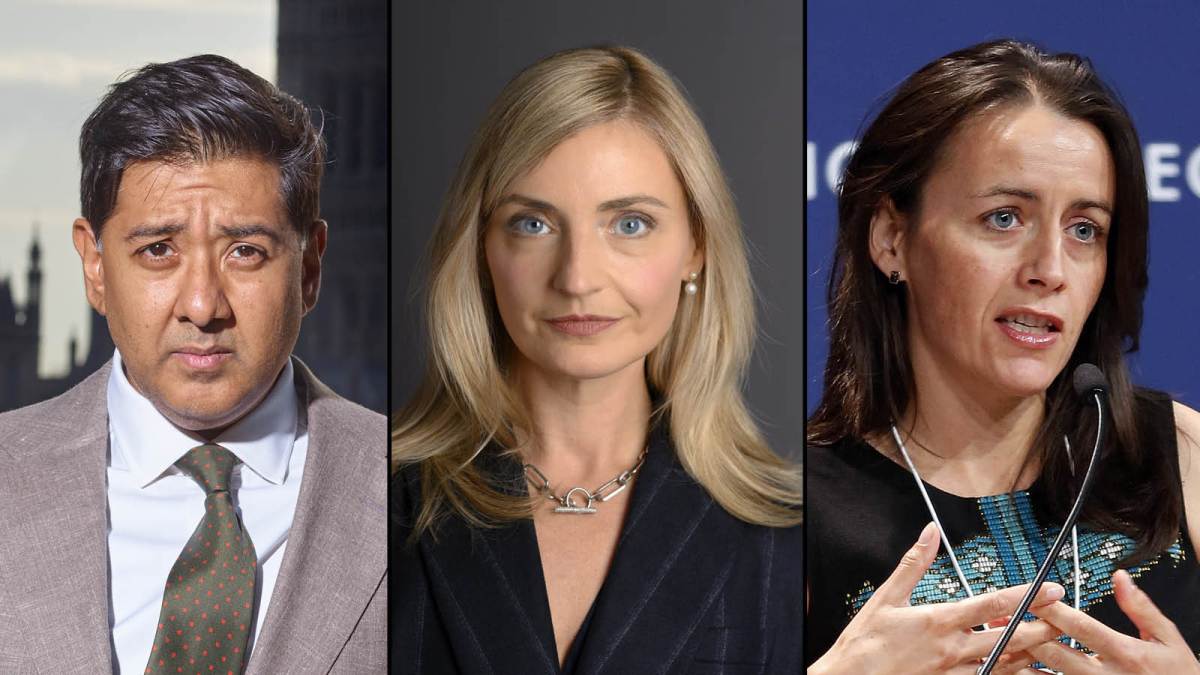
After Marco Rubio, the secretary of state, announced the sanctions, Sarah Rogers, the undersecretary of state for public diplomacy, followed up with details of the five individuals, who include the former European commissioner, Thierry Breton, and two British citizens, Imran Ahmed and Clare Melford.
She said Ahmed, head of the Centre for Countering Digital Hate, and Melford, chief executive of the Global Disinformation Index, were guilty of “extraterritorial censorship of Americans”. “Our message is clear,” she said: “if you spend your career fomenting censorship of American speech, you’re unwelcome on American soil.”
In the hours that followed, tweets from Rogers detailing the sanctions quickly went viral. Elon Musk, the owner of X, was one of many Americans to celebrate, replying: “This is so great.” In contrast, European diplomats shared outrage and suggested Big Tech was calling the shots (President Macron has accused Washington of “coercion and intimidation”).
• Sign up for The Times’s weekly US newsletter
Five days on and facing legal action from one recipient — Ahmed — Rogers says the administration stands by its decision. “These are people who in many cases took government money to destroy American businesses for the purpose of suppressing American speech,” Rogers said.
“As Secretary Rubio stated, we stand ready and willing to expand our sanctions list. That doesn’t mean we want to.” She added: “These are, ultimately, serious decisions that rest with the secretary of state and take into account all of our foreign policy priorities. But free speech is one of those priorities, and so is the continued ability of the American tech sector to lead and innovate. If an AI chatbot calls a politician ‘fat’ and this leads to a criminal investigation in Germany, AI innovation is obviously chilled.”
Freedom of speech is becoming an increasingly sore point between the US and Europe. American politicians cite as evidence of the problem pro-life campaigners jailed for breaking abortion buffer zones and the arrest of the Father Ted co-creator Graham Linehan over his views on challenging “a trans-identified male” in “a female-only space”.

Graham Linehan was cleared of harassment in November at Westminster magistrates’ court
BEN WHITLEY/PA
The White House’s recent national security strategy warned that Europe risks “civilisational erasure” as a result of a toxic mix of mass migration and censorship of free speech.
What does Rogers say to those who feel there is one standard being applied to Europe and the UK whereas less natural allies — such as Russia — get let off lightly?
“We already have sanctions against Russia and Iran, and those sanctions are far more extensive,” she said. Europe naturally became “high-profile”, she said, due to a range of factors such as the European Commission fining X €120 million for breaching its transparency obligations under the Digital Services Act. Another factor, Rogers said, was that “the western free world” was one of the “fundamental alliance clusters of the postwar order that we want to honour and preserve in some way”.
The Trump administration is also paying attention to “places like Australia, places like South Korea which are considering similar kinds of legislation”.
What about the Gulf States? This year Saudi Arabia and the United Arab Emirates joined other Gulf nations in imposing restrictions on the popular US-based gaming platform Roblox.
“I think another prong of the strategy when you talk about Middle Eastern countries is we also want to consider the history and trajectory of a country,” she said. “So if it’s the case that in Britain and in Saudi Arabia you get punished in each country for blaspheming Islam but Saudi Arabia is moving incrementally away from that behaviour and Britain is incrementally intensifying it then we might respond differently in each case.”
As for the UK government, Rogers sparked headlines last week when she retweeted a post on X of her in a Santa hat with the caption “Hey McSweeney. Merry Christmas.”
This led to claims that she was taunting the Downing Street chief of staff, Morgan McSweeney, who is a friend of Ahmed (the pair set up the Centre for Countering Digital Hate together). Rogers said this was a misunderstanding: “The media coverage treats this as this sly Straussian taunt. But really it was the opposite of that. It was a festive Christmas retweet.”
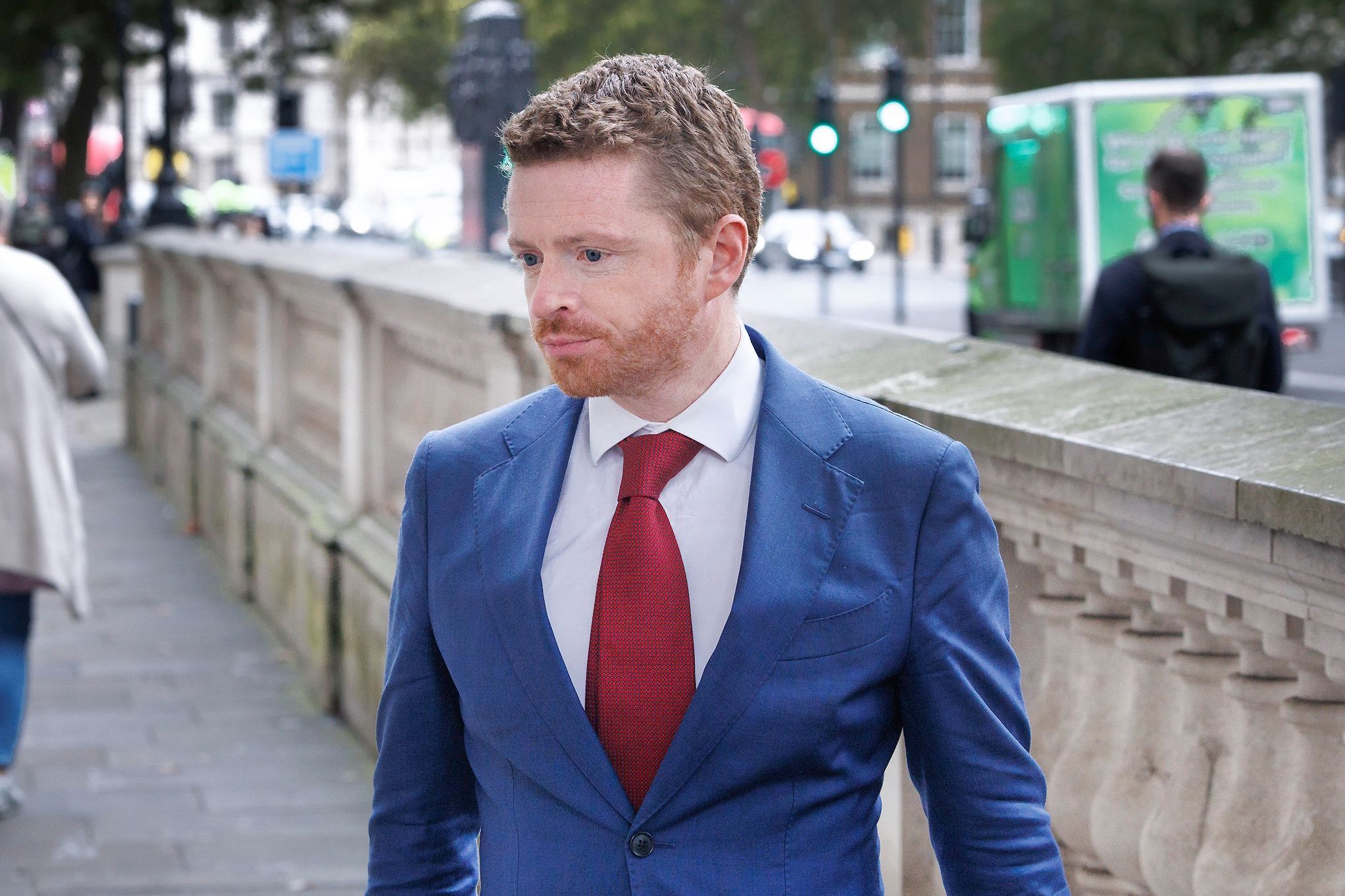
Morgan McSweeney co-founded the Centre for Countering Digital Hate
PETER MACDIARMID/SHUTTERSTOCK
Rogers said that the administration’s main hope was for a “sane resolution” on this. What would she like to see from the UK side? “A theme of it would be that American speech on American platforms on American soil, about American politics, gets governed by the American First Amendment [protecting free speech], period.” She said that didn’t mean there aren’t other grounds to negotiate on. The paused tech prosperity deal, she suggested, was an area where the US and UK could work together.
Rogers began her role in October after a career as a lawyer fighting censorship. She has quickly made freedom of speech a key plank of her brief — embarking on what is effectively a “freedom of speech” tour of the UK and Europe early on. While in Milan she saw a tweet from a European diplomat criticising JD Vance, the vice-president, for talking about censorship in Europe — declaring there wasn’t any. She had “a completely off the cuff” reaction and recorded a video listing things that Brits and Europeans have been in trouble with the law for saying. It received more than seven million views. The response, she said, was largely encouraging. “There were numerous supportive messages on Twitter and in person. I had never really been recognised by strangers in public before and that did happen in a couple of instances.”
A former State Department intern, Rogers started off in New York as a “generic sort of big law firm corporate lawyer” in a “media class scene” that “went woke early”. She developed an interest in clients who faced uphill battles when the arguments “against them aren’t just technical or regulatory, they are targets of moral panics”. She has represented the tobacco industry and the gun lobby as well as working against censorship, such as in the case of the late conservative activist Charlie Kirk.

Charlie Kirk
MICHAEL HO WAI LEE/SOPA IMAGES/LIGHTROCKET/GETTY IMAGES
The Trump administration faces claims of hypocrisy over its sanctions. The Labour MP Chi Onwurah said: “Banning people because you disagree with what they say undermines the free speech the administration claims to seek.”
• Gerard Baker: Now Maga world struggles with free speech
The Lib Dems have gone further, suggesting that a forthcoming government inquiry into interference by hostile foreign states in the UK should be extended to cover the actions of Trump’s America. Rogers said: “The UK’s internet regulator, Ofcom, has declared its intent to enforce British law against Americans in America. Americans have unsurprisingly objected. Characterising this as ‘interference’ in British affairs is too ridiculous to warrant a response.
“So, too, is the Liberal Democrat reaction to our national security strategy — a document which states that we want to support our allies in preserving the freedom and security of Europe.
“This is a longstanding foreign policy plank, a basis of our Nato mutual defence pact, and a theme which has surfaced repeatedly in our support for Ukraine.”
What does Rogers say to those who contend that America is acting in a hostile manner to the UK/EU and curtailing the free speech of these citizens? For example, one idea being considered by the US government is to make disclosure of an individual’s past five years of social media history mandatory for the visa waiver programme.
“This is just a proposal submitted for comment by our customs agency — it is not American law,” she said. However, she suggested there was some merit to the idea. “Having said that, if somebody did come to America and conduct a terrorist attack, and we discovered that on the day he applied for his visa he tweeted ‘death to America’, we’d feel remiss for having welcomed him in. So this is a reasonable issue for countries to consider, but nothing has been enacted.”
Part of Rogers’s soft power brief is cultural, which means she will be focusing on America’s 250th birthday in July and its forthcoming Decade of Sport, which includes the Fifa World Cup.

President Trump with Gianni Infantino, the Fifa president, at a White House event for the World Cup
JONATHAN ERNST/REUTERS
There are statistics suggesting that the number of Britons travelling to America is falling amid fear of interrogation by US immigration and customs enforcement (Ice) and a generally frosty reception: the number of UK residents visiting the US was down 14.3 per cent in March. What’s her message to Britons wondering if it’s worth the trip — is the US still a welcoming place? “It is, and I hope more Brits and Europeans visit,” she said. “The sanctions issued last week are laser-targeted at specific, high-profile individuals whose presence in America impairs our foreign policy.
“Again, if your purpose in America is to destroy American businesses or curtail American citizens’ free speech, it’s not in our interest to let you benefit from our hospitality, our job markets, or our institutions. But that’s not most Brits.”
Rogers said that while Britons don’t generally need visas to visit America, there were plans to make the system more convenient and efficient, employing more than 450 visa officers for those who needed an appointment slot before the World Cup.
Visitors in transit in American airports would no longer need to remove their shoes, Rogers added, reflecting “the America we want: one that’s safe and sane, where we target a small number of malicious actors so that law-abiding citizens aren’t tyrannised. You get to keep your shoes on, and you get to say what you want online, too.”