Home » AIRLINE NEWS » Spain, Germany, Italy, And The UK Benefit From Ryanair’s Dominance With The World’s Largest Boeing 737-800 Fleet, Transforming Low-Cost Travel
Published on
December 28, 2025

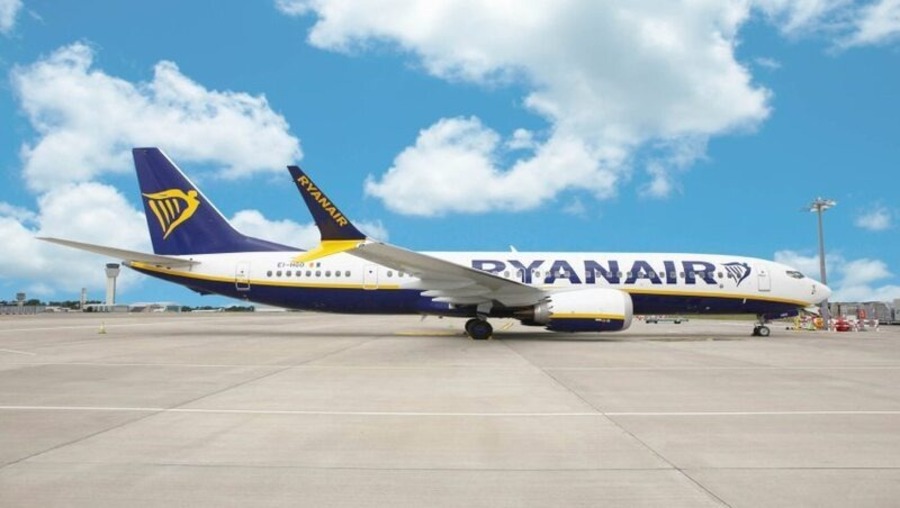
Ryanair’s dominance in Europe, with the world’s largest Boeing 737-800 fleet, is reshaping the low-cost travel landscape, benefiting countries like Spain, Germany, Italy, and the UK. The airline’s expansive fleet enables more frequent, affordable flights across major European hubs, driving increased connectivity, tourism, and economic growth in these regions. By providing cost-effective travel options, Ryanair is not only enhancing passenger accessibility but also supporting local economies and further cementing its role in Europe’s aviation market.
Ireland is home to the world’s largest operator of the Boeing 737-800, a title firmly held by Ryanair. The low-cost carrier, renowned for its efficient operations and cost-effective strategies, has been able to dominate the European skies by leveraging this particular aircraft model. With its roots in Dublin, Ryanair has built a powerful and expansive network, and the Boeing 737-800 has become a core pillar of its success. This article explores how Ryanair has capitalized on its fleet of 737-800s and why this aircraft type remains central to its operations.
Headquartered in Dublin, Ryanair operates one of Europe’s most extensive short-haul networks. Its operations span numerous routes across Europe, and the airline’s primary hub, London Stansted, serves as its largest base. The airline’s business model relies heavily on the Boeing 737-800, with nearly 400 of these aircraft in operation across its network. These planes not only form the backbone of Ryanair’s fleet but also play a significant role in shaping its overall strategy, from fleet management to cost control.
Ryanair introduced the Boeing 737-800 into its fleet in 1999, gradually expanding its numbers to meet the demand generated by the airline’s rapid network growth. The 737-800, part of Boeing’s 737 Next Generation family, has become the workhorse of the airline, enabling it to operate one of Europe’s largest and most profitable low-cost fleets. Over time, Ryanair has become the world’s largest operator of this aircraft type, a title it has earned by keeping the model in high demand across its short-haul network.
The key to Ryanair’s success with the Boeing 737-800 lies in the airline’s ability to standardize its fleet. A single aircraft type across its entire operation brings several advantages. For one, it streamlines pilot training, meaning pilots can easily transition from one 737-800 to another without undergoing extensive re-training. Similarly, the airline benefits from simplified maintenance procedures, reducing both costs and turnaround times. The fleet’s uniformity also allows Ryanair to maintain high aircraft utilization rates, ensuring that its planes are consistently in the air, maximizing revenue.
Although Ryanair is gradually introducing newer Boeing 737 MAX variants into its fleet, the 737-800 still represents the majority of its operations. This is particularly evident on many high-frequency European routes, such as London to Dublin, Dublin to Manchester, and Rome to Palermo, all of which are regularly served by over 100 round-trip flights per month. These busy city pairs showcase how essential the 737-800 is to Ryanair’s success, as it can handle large volumes of passengers on some of Europe’s most popular routes.
In addition to short-haul routes, Ryanair also uses the Boeing 737-800 for longer intra-European sectors, such as flights from northern Europe to the Canary Islands. Despite the introduction of newer aircraft, including the 737 MAX, the 737-800 continues to serve some of the airline’s longest routes. Capable of flying distances of over 2,500 miles, the aircraft offers Ryanair the flexibility to serve a variety of route lengths, ensuring the airline can cater to both short and medium-haul demand.
London Stansted, Ryanair’s largest base, is a critical part of the airline’s operations. The base hosts the highest number of aircraft in the fleet and serves as an operational hub, feeding traffic to a wide range of destinations across Western, Central, and Southern Europe. Ryanair’s point-to-point model, which relies on direct routes without connections, has been a key factor in its success. By avoiding the complexities of connecting passengers and hub-and-spoke operations, Ryanair is able to keep its costs low while providing passengers with fast and convenient travel options.
Ryanair’s cost-efficient model is built on a combination of high seating density, quick turnaround times, and the ability to charge for ancillary services. By maintaining a single-class cabin configuration and fitting a large number of seats on each aircraft, Ryanair is able to keep its unit costs low. Turnaround times are kept to a minimum, with each aircraft spending as little time on the ground as possible between flights. This focus on operational efficiency has allowed Ryanair to remain one of the lowest-cost carriers in Europe.
Ancillary revenue is another key component of Ryanair’s business strategy. While its base fares are extremely low, the airline generates a significant portion of its income from optional services, such as baggage fees, seat selection, and priority boarding. These additional services allow Ryanair to maintain its low-cost model while ensuring profitability. This approach has enabled the airline to offer competitive fares that attract price-sensitive travelers, while still generating the revenue necessary to support its operations.
Ryanair also views its aircraft as flexible assets. If airport fees or government taxes rise, the airline can quickly adjust its capacity by shifting aircraft from one location to another. Recent moves to reduce seat capacity and scale back certain bases are examples of how Ryanair can respond to changes in the economic environment. This flexibility ensures that the airline can maintain profitability even as operating conditions fluctuate.
Ryanair’s dominance, powered by the world’s largest Boeing 737-800 fleet, is transforming low-cost travel in Spain, Germany, Italy, and the UK by increasing connectivity and boosting tourism, making air travel more affordable and accessible.
As the world’s largest operator of the Boeing 737-800, Ryanair’s success is built on a strategy of scale, simplicity, and cost control. While the airline continues to modernize its fleet with newer aircraft types like the 737 MAX, the 737-800 remains a cornerstone of its operation. The aircraft continues to be the workhorse that powers Ryanair’s expansive European network, helping the airline maintain its dominant position in the low-cost carrier market. Through its continued use of the Boeing 737-800, Ryanair shows how a single aircraft type can be a powerful tool for achieving both efficiency and market leadership.
