© Emelie Isaksen
Rubber is essential to modern manufacturing, yet most of the world’s supply comes from fossil-based synthetic rubber or natural rubber from plantations in Southeast Asia. Both routes come with environmental and supply-chain risks, from carbon-intensive production to climate-driven threats to rubber tree plantations.
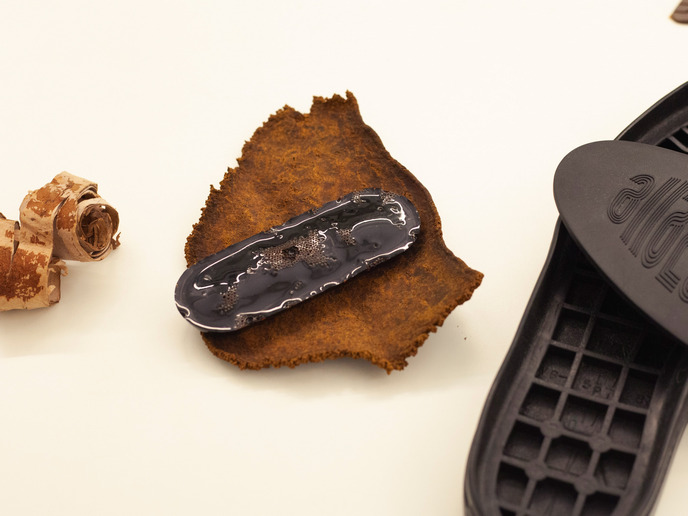
The EU-supported NORDIC BIO-RUBBER project(opens in new window) set out to change this by advancing a fully bio-based alternative made from birch bark, an abundant residue of the pulp, paper, and plywood industries.
A bio-rubber addressing environmental and supply-chain risks
Through its work, the project refined a birch bark bio-refinery process and demonstrated that the resulting material, known as Reselo Rubber, can match performance needs while offering a more sustainable foundation for Europe’s rubber supply.
Reselo Rubber tackles challenges associated with both fossil-based and plantation-derived rubber. As technical lead Thomas Baumgarten explains: “Our material is 100 % bio-based and, when produced at scale, it will have an up to 90 % lower carbon dioxide footprint compared to traditional, fossil-based rubbers.”
In addition to lowering emissions, the material avoids the environmental damage associated with natural rubber plantations, including deforestation of tropical rainforest and biodiversity loss from monoculture farming. Birch bark, on the other hand, is widely available across the Northern Hemisphere and often comes from FSC-certified forests, supporting responsible resource management.
Scaling biorefinery processes for industrial production
A core task for the project was preparing the technical groundwork for industrialisation. The team focused on optimising solvent recovery, improving process steps with input from engineering consultants and suppliers, and ensuring the overall process design supports efficient manufacturing scale-up.
Birch bark availability has already been assessed, revealing that Europe produces enough birch bark to support the production of industrial volumes of Reselo Rubber each year. This positions the material as a viable feedstock for a Europe-based rubber value chain. Baumgarten notes that many stakeholders within the forestry industry “have started to explore alternative use cases for birch bark,” and the project’s progress provides them with a high-value commercial opportunity.
Expanding applications and validating performance with industry partners
Performance testing is essential for any new material entering established markets. The team has already collaborated with companies within footwear, automotive and tires to develop products that meet or exceed existing benchmarks. As Baumgarten confirms, “Projects with multiple industrial partners have demonstrated that it is a real drop-in solution, as it can be processed with existing production infrastructure.”
Beyond the main bio-rubber fraction, the project has also begun exploring potential applications for two additional fractions produced during Reselo’s bio-refinery process. One fraction already has an established market, and partnerships are helping growing this sector. The final fraction requires further research before it can be used in non-energy applications.
Matching production capacity with market demand
Scaling the technology requires investment in a commercial production plant. The technical foundation is solid, and manufacturing costs decrease at scale, but ensuring that market demand grows in parallel is a key challenge. As Baumgarten explains, “Matching production capacity to market demand presents the greatest risk when scaling our technology.”
Supportive policy measures, such as carbon-based taxation or incentives for bio-based materials, could accelerate adoption and strengthen Europe’s path towards a more resilient and sustainable rubber supply.