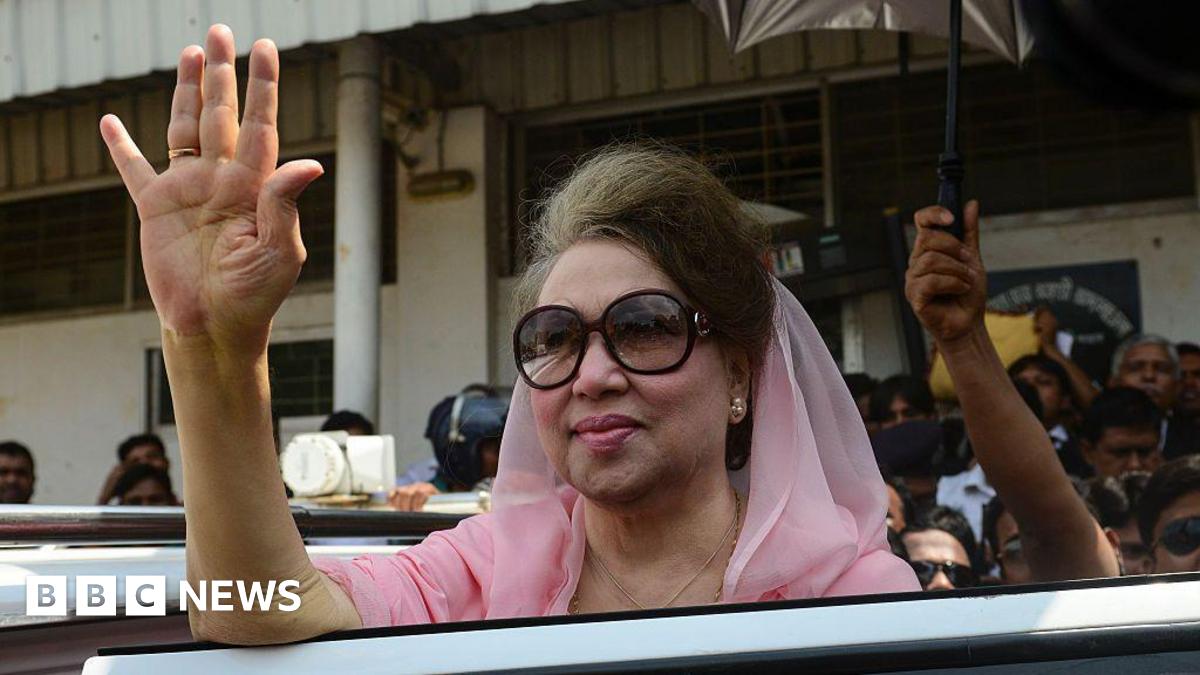
She was released last year, shortly after mass anti-government protests in Bangladesh toppled Hasina, forcing her into exile. The BNP had said in November that Zia would campaign in the upcoming general elections.
The BNP is eyeing a return to power, and if that happens, Zia’s son Tarique Rahman is expected to become the country’s new leader.
Rahman, 60, had only returned to Bangladesh last week after 17 years in self-imposed exile in London.
Zia had been in hospital for the past month, receiving treatment for kidney damage, heart disease and pneumonia, among other conditions.
Despite being kept away from public life due to her health, Zia remained a figurehead for opposition forces.
During her final days, interim leader Muhammad Yunus had called for the country to pray for Zia, calling her a “source of utmost inspiration for the nation”.
In a statement on Tuesday, Yunus offered his condolences for the passing of Zia, whom he described as a “symbol of the democratic movement”.
“The nation has lost a great guardian… Her role in the struggle to establish democracy, a multi-party political culture, and the rights of the people in Bangladesh will be remembered forever,” he said in a statement.
India’s Prime Minister Narendra Modi said he is “deeply saddened” by Zia’s passing and paid tribute to her contributions towards the development of Bangladesh, and its relations with India.
“We hope that her vision and legacy will continue to guide our partnership,” he wrote on X.
Zia’s family members, including Rahman, his wife and his daughter, were by her side in her last moments, BNP said.
“We pray for the forgiveness of her soul and request everyone to offer prayers for her departed soul,” the party said in its statement on Tuesday.