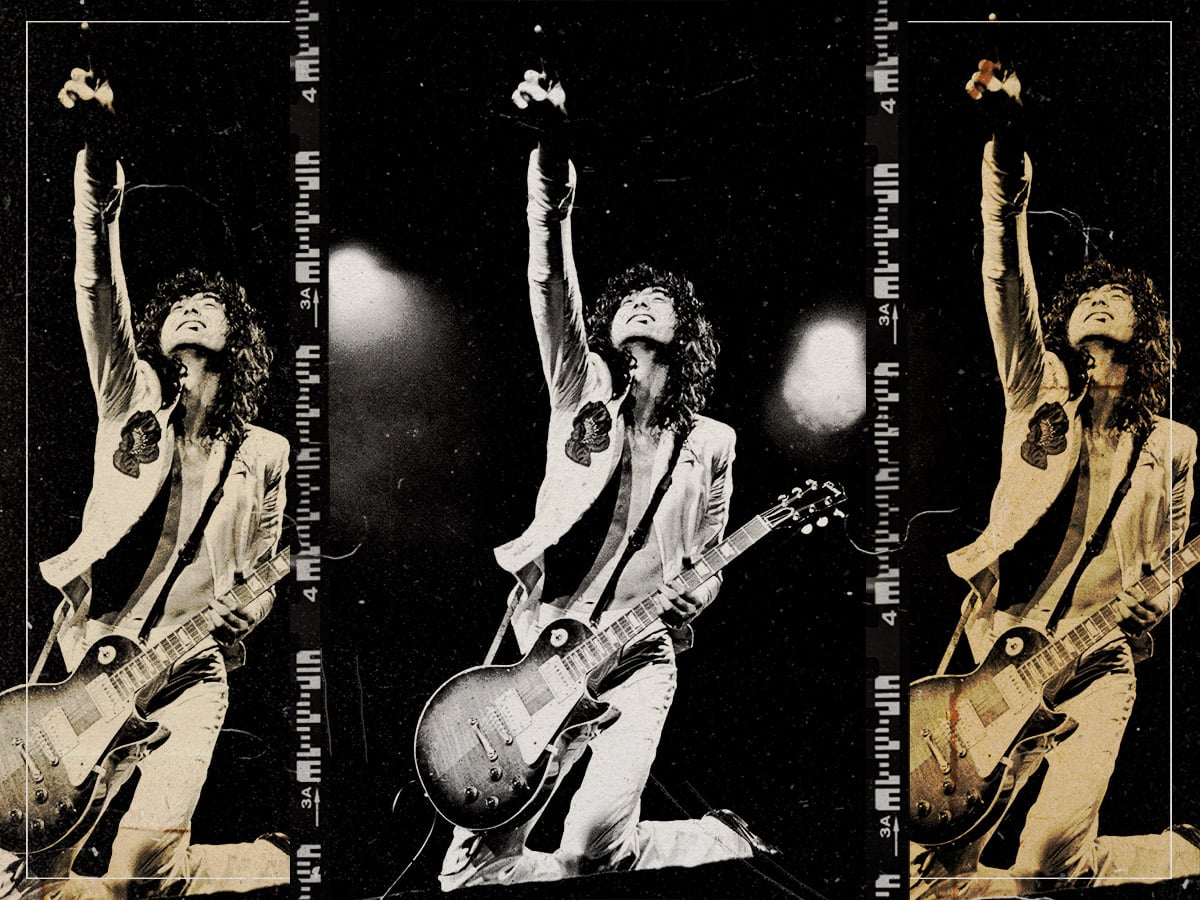
(Credits: Far Out / APA-Agency)
Tue 30 December 2025 3:00, UK
As we reach the quarter mark of our current century, it feels like as good a time as any to lament how sharply music has declined, and artists are scratching around for royalties, venues are closing like clockwork, and the looming threat of artificial intelligence seems less dystopic by the day. So with that in mind, I’m now willing to reluctantly agree with my parents, who told me music in the 1970s was as good as it got.
While I will always passionately defend the modern artist, it’s hard to disagree when the landscape is so desperately pitted against them. Then, when my musical forefathers try to hammer down on their point of historic supremacy by playing me bootleg tapes of Led Zeppelin’s raucous live shows, I find myself cornered into a defenceless position.
Simply listening to Led Zeppelin in that fervent decade of musical celebration is enough to make you green with envy. It was rock in its most unfiltered form, with soaring guitar riffs and relentless drum fills, the band represented somewhat of a musical machine, rolling from town to town across the Western world to bathe lucky music fans in noise.
The Beatles opened the door to this idea of musical mania in the late 1960s, only for Led Zeppelin to smash through it in the following decade, going on to define what a live show should look like. But this didn’t come at the expense of their records. After releasing their first record in 1969, they backed it up with another four more in the space of the same years, with Houses Of The Holy coming out in 1973.
Within those albums, some of their most iconic tracks were released, be it ‘Ramble On’, ‘Stairway To Heaven’ or ‘The Immigrant Song’. It made the prospect of a 1973 live show tantalising, as the setlist could bounce between endless rock hits, which would be played by a band operating truly at the peak of their powers.
“By the time you see us in New York in 1973, we were simply a much better, more accomplished band,” Jimmy Page explained, reflecting on their rise to live show supremacy.
He continued, “We were a very musical band, working together with almost a telepathy at times, playing comfortably together for three hours without any trouble at all. We really felt we could do it all now – play the music and put on a show. And we could. It was so exciting; it was hard to contain yourself after a while.”
The difficulty in containing themselves is ultimately what led to the band becoming the epitome of rock and roll hedonism. The very mantra of ‘sex, drugs and rock and roll’ was centred around the lifestyle of the band, who seemed to master the art of all three facets.
While the off-stage antics are deemed important by the salacious fans among us, ultimately, the truth is the band were a live force to be truly reckoned with and through that legacy, have given all of us jealous modern music fans something to look at, with deep envy.
Related Topics
The Far Out Led Zeppelin Newsletter
All the latest stories about Led Zeppelin from the independent voice of culture.
Straight to your inbox.