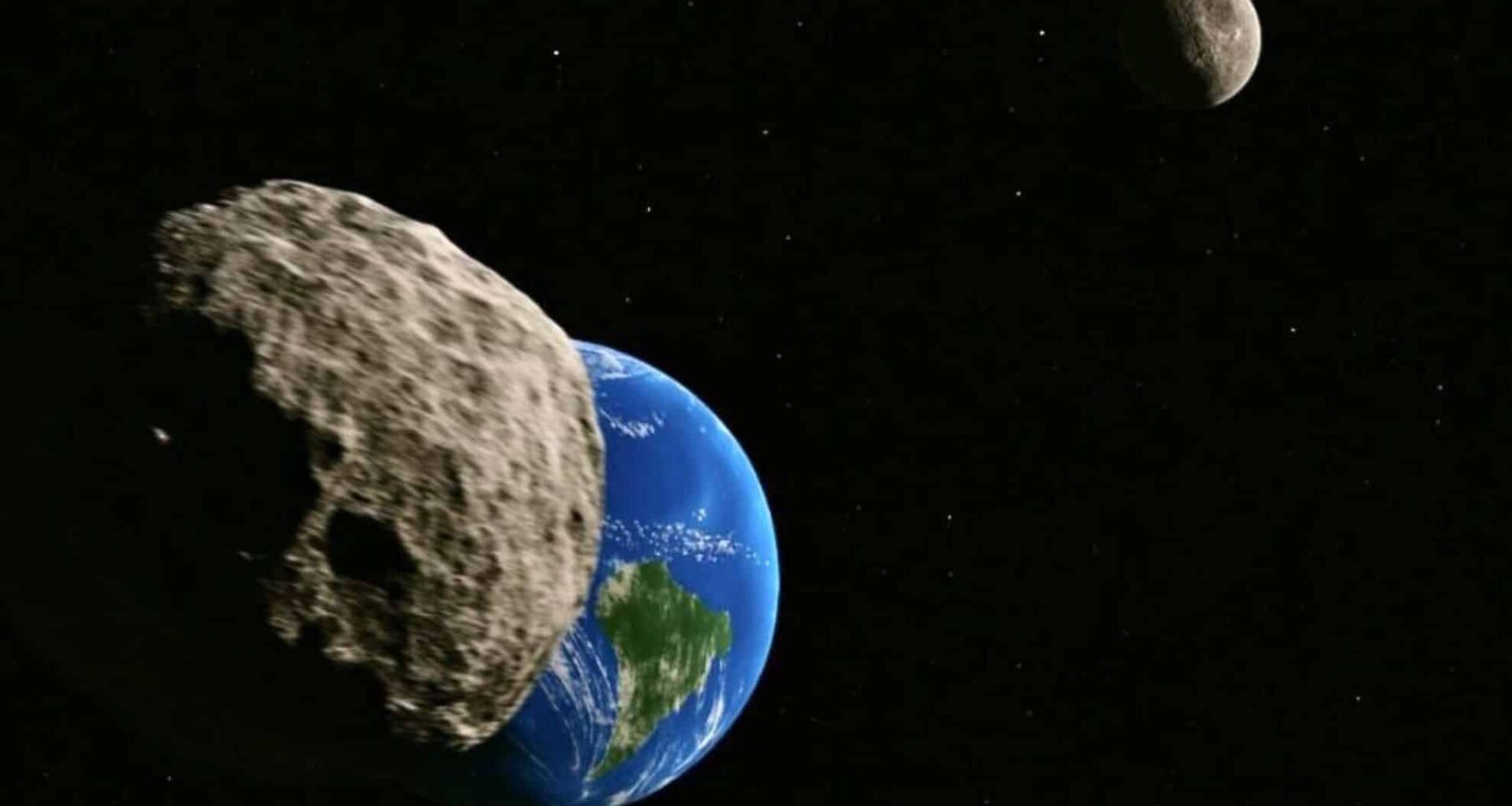
A newly tracked asteroid has been confirmed in a rare orbital configuration that keeps it moving in near-synchrony with Earth. The object, officially designated 2025 PN7, is roughly 19 metres in diameter and is expected to remain in a stable co-orbital relationship with Earth until the early 2080s.
Detected in August 2025 by the Pan-STARRS survey in Hawaii and later confirmed by international observatories, the asteroid has been classified as a quasi-satellite. This status refers to a type of near-Earth object that appears to orbit Earth from our perspective but is in fact independently orbiting the Sun with an orbital period nearly identical to Earth’s.
The identification was formally documented by the Minor Planet Center, with orbital parameters calculated by teams using optical tracking data collected over multiple nights. The Center for Near-Earth Object Studies (CNEOS), operated by NASA’s Jet Propulsion Laboratory, has since added 2025 PN7 to its public asteroid database.
Unlike natural satellites such as the Moon, quasi-satellites are not gravitationally bound to Earth. Instead, their orbital paths resonate with Earth’s in a way that causes them to remain nearby for extended periods, despite orbiting the Sun independently.
Long-Term Orbital Stability Without Direct Capture
According to data published in the Minor Planet Electronic Circular, 2025 PN7 has a semi-major axis of 1.003 astronomical units (AU), an eccentricity of 0.1075, and an inclination of just under 2 degrees. These parameters place it in a heliocentric orbit that closely mirrors Earth’s, enabling it to remain in the planet’s vicinity for decades.
Its Minimum Orbit Intersection Distance (MOID) is calculated at 0.0024 AU, or approximately 360,000 kilometres. This is close by astronomical standards but not indicative of any impact threat. The asteroid’s absolute magnitude is recorded at 26.36, which suggests a relatively small size, consistent with its observed brightness.
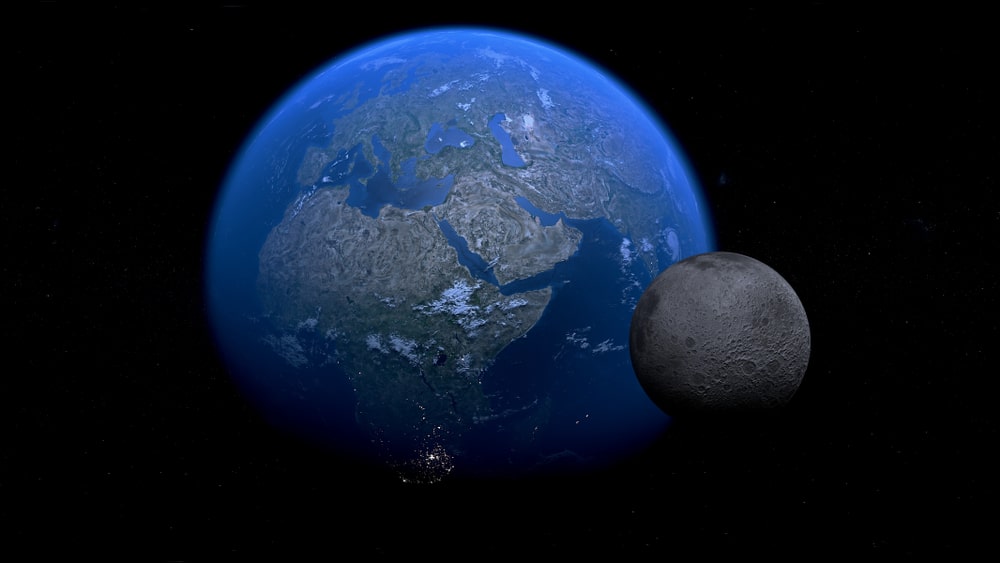 It’s not a second Moon—but it’s closer than you think. Credit: Shutterstock
The orbital configuration is a result of mean-motion resonance, a dynamic condition in which two orbiting bodies exert regular, periodic gravitational influences on each other. For 2025 PN7, this means its orbital period remains effectively matched with Earth’s without being drawn into a true satellite orbit.
The object’s faintness and slow apparent motion made it difficult to detect initially. The Pan-STARRS system, which performs continuous wide-field scans of the night sky, identified the object by comparing multiple images across nights and isolating objects with consistent motion patterns.
Relevance for Asteroid Dynamics and Mission Planning
Although small, 2025 PN7 provides valuable data for refining models of orbital dynamics in the near-Earth region. Its orbit is stable enough to make it a practical reference point for testing spacecraft navigation systems, proximity operations, and low-energy trajectory planning. The object’s slow relative velocity enhances its potential value as a near-future mission target.
Other quasi-satellites, including 469219 Kamoʻoalewa, have drawn scientific interest due to their unusual spectral properties. Surface analysis of Kamoʻoalewa suggested similarities to lunar material, though its origin remains uncertain. These findings have raised questions about whether quasi-satellites may be ancient planetary fragments or ejected surface material from larger bodies.
The presence of 2025 PN7 expands the set of known objects in quasi-stable orbits near Earth. The NASA CNEOS database lists a small number of comparable objects, and each new discovery allows further calibration of gravitational models and non-gravitational forces, including the Yarkovsky effect, which can cause gradual changes in asteroid orbits due to uneven thermal emissions.
Mission designers also monitor such objects to identify candidates for potential rendezvous or sample-return operations. While 2025 PN7 is not currently linked to any planned mission, its stable path and relatively low approach velocity could make it viable for future exploration efforts that prioritise accessibility and mission simplicity.
Tracking Precision and Observation Limits
The confirmation of 2025 PN7’s orbital properties relied on coordinated observations from several major facilities. After initial detection by Pan-STARRS, additional positional data came from the Canada-France-Hawaii Telescope and the University of Hawaii’s 88-inch reflector at Maunakea. Observers collected more than 20 measurements across several nights in August 2025 to build a robust orbital solution.
The asteroid reached a visual magnitude of approximately 21.6 near its closest approach, placing it beyond the reach of most amateur telescopes. Its position and brightness have been logged with high precision, but key physical characteristics remain unknown, including surface composition, spin rate, and shape.
Given the object’s small size, even minimal non-gravitational forces such as solar radiation pressure can influence its motion over time. Continued observation will be required to detect and interpret any deviations from the predicted orbital path.
Ephemeris data indicates the asteroid will maintain an observationally favourable geometry for several more months, allowing astronomers to gather additional tracking data and potentially constrain further properties such as rotation and reflectivity.