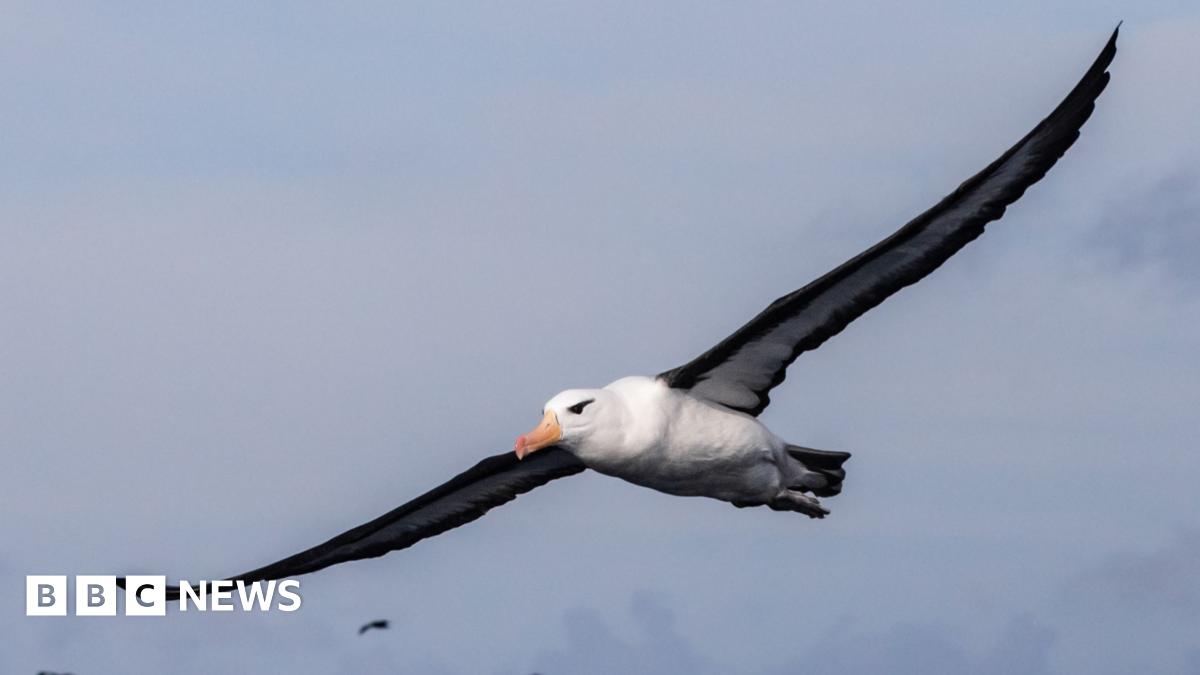
On a small boat in the Atlantic, about 27 nautical miles (50km) away from South Africa’s Cape Point, a group of bird watchers are calling out seabird names: “Atlantic yellow-nosed! Black-browed albatross!”
The tour boat takes bird watchers from Cape Town to see endangered seabirds, including albatrosses, that are hard to find on the mainland.
It’s a warm summer’s day and the sky is blue and clear, perfect conditions for bird-watching. The skipper is speaking on his radio – he’s looking for fishing trawlers.
He soon finds one, and makes a beeline towards it. The closer the boat – operated by Cape Town Pelagics, a non-profit organisation – gets to the fishing vessels, the more seabirds appear.
As he stops right next to the fishing boat, hundreds of birds trail behind it.
They’ve learned to associate these boats with food. They follow the trawler, waiting for discarded fish heads and guts which fishermen throw into the sea as they sort through and process their catch.
The birds fight over the discarded pieces, occasionally diving into the nets to catch some of the fish there. But looking for food this way can cost these seabirds their lives.
“They get caught on what they call long lines,” explains Tim Appleton, a British conservationist and the founder of the Global Bird Fair, referring to a commercial fishing method that uses long fishing lines dotted with hooks to catch large fish like tuna.
“Some of these long lines that go out the back of fishing boats are 100 kilometres (62 miles) long. They have 4,000 hooks on them. Every 4,000 hooks are baited with a bit of squid or fish and of course the birds try and get the bait and end up getting caught on the hooks, dragged under and drowned.”
The accidental deaths of animals by fishing boats are called bycatch. And it’s not just long-line fishing that kills these birds: they also get tangled in the cable lines that pull the fishing nets up towards the boat.
Albatrosses spend almost half of their life on the high seas, making them particularly vulnerable to being injured or killed by fishing boats.