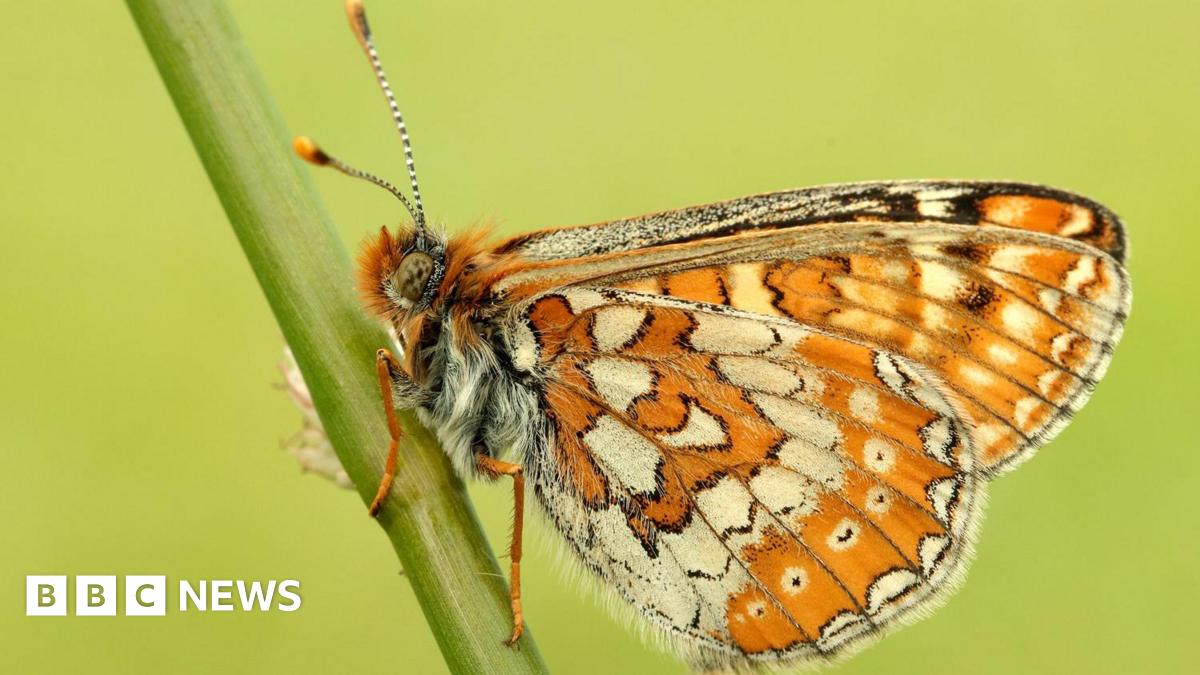
Marsh Fritillary caterpillars only eat one plant, the Devil’s-bit Scabious, which only grows in grassland and heathland sites, most often grazed by cattle.
Butterfly Conservation volunteers have been working with local landowners to preserve and restore habitats for the butterfly over the last 30 years.
At Lydlinch Common, volunteers have cut back brambles and other plants that threatened to take over. In addition, cattle grazing was reintroduced to the site.
This year, the UK had the warmest spring and the hottest summer on record. But while this should have provided perfect conditions for many butterflies, the number of insects recorded was average. The charity says this shows that weather conditions are not enough to reverse decades of decline.
Rachel Jones, Butterfly Conservation senior ecologist, said: “Marsh Fritillaries need a landscape-scale approach, so when populations are doing well on multiple sites like this year, the effect can be greater than the sum of its parts.
“This work to maintain wildflower habitat also benefits numerous other species, so it’s good for nature, livestock and people. If anyone in Dorset would like to get involved, please get in touch.”